DESCRIPTION

High-quality 3D assets at affordable prices — trusted by designers, engineers, and creators worldwide. Made with care to be versatile, accessible, and ready for your pipeline.

Included File Formats
This model is provided in 14 widely supported formats, ensuring maximum compatibility:
• - FBX (.fbx) – Standard format for most 3D software and pipelines
• - OBJ + MTL (.obj, .mtl) – Wavefront format, widely used and compatible
• - STL (.stl) – Exported mesh geometry; may be suitable for 3D printing with adjustments
• - STEP (.step, .stp) – CAD format using NURBS surfaces
• - IGES (.iges, .igs) – Common format for CAD/CAM and engineering workflows (NURBS)
• - SAT (.sat) – ACIS solid model format (NURBS)
• - DAE (.dae) – Collada format for 3D applications and animations
• - glTF (.glb) – Modern, lightweight format for web, AR, and real-time engines
• - 3DS (.3ds) – Legacy format with broad software support
• - 3ds Max (.max) – Provided for 3ds Max users
• - Blender (.blend) – Provided for Blender users
• - SketchUp (.skp) – Compatible with all SketchUp versions
• - AutoCAD (.dwg) – Suitable for technical and architectural workflows
• - Rhino (.3dm) – Provided for Rhino users

Model Info
• - All files are checked and tested for integrity and correct content
• - Geometry uses real-world scale; model resolution varies depending on the product (high or low poly)
• • - Scene setup and mesh structure may vary depending on model complexity
• - Rendered using Luxion KeyShot
• - Affordable price with professional detailing

Buy with confidence. Quality and compatibility guaranteed.
If you have any questions about the file formats, feel free to send us a message — we're happy to assist you!

Sincerely,
SURF3D
Trusted source for professional and affordable 3D models.

More Information About 3D Model :
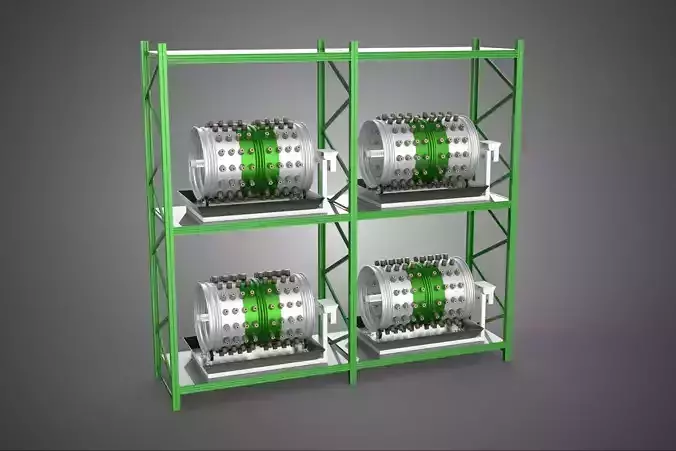
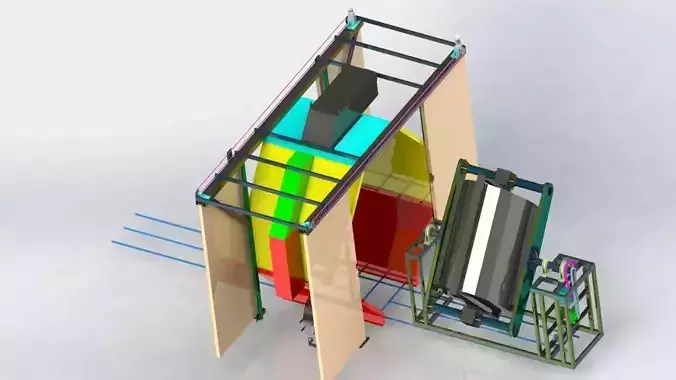
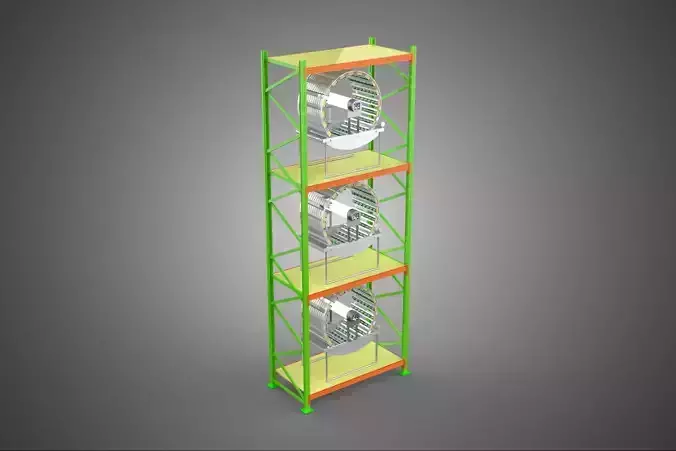
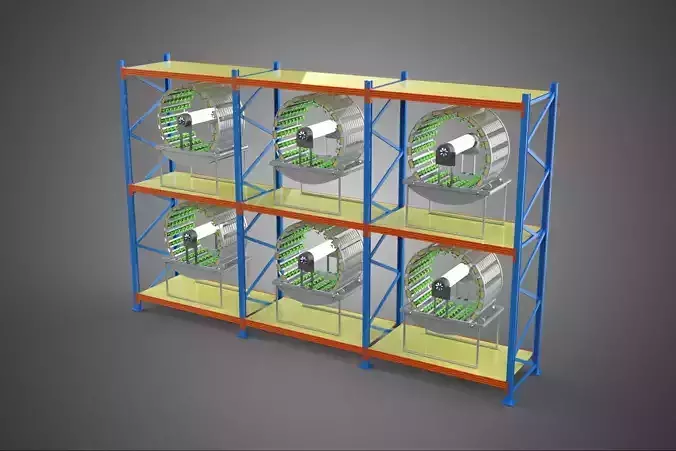
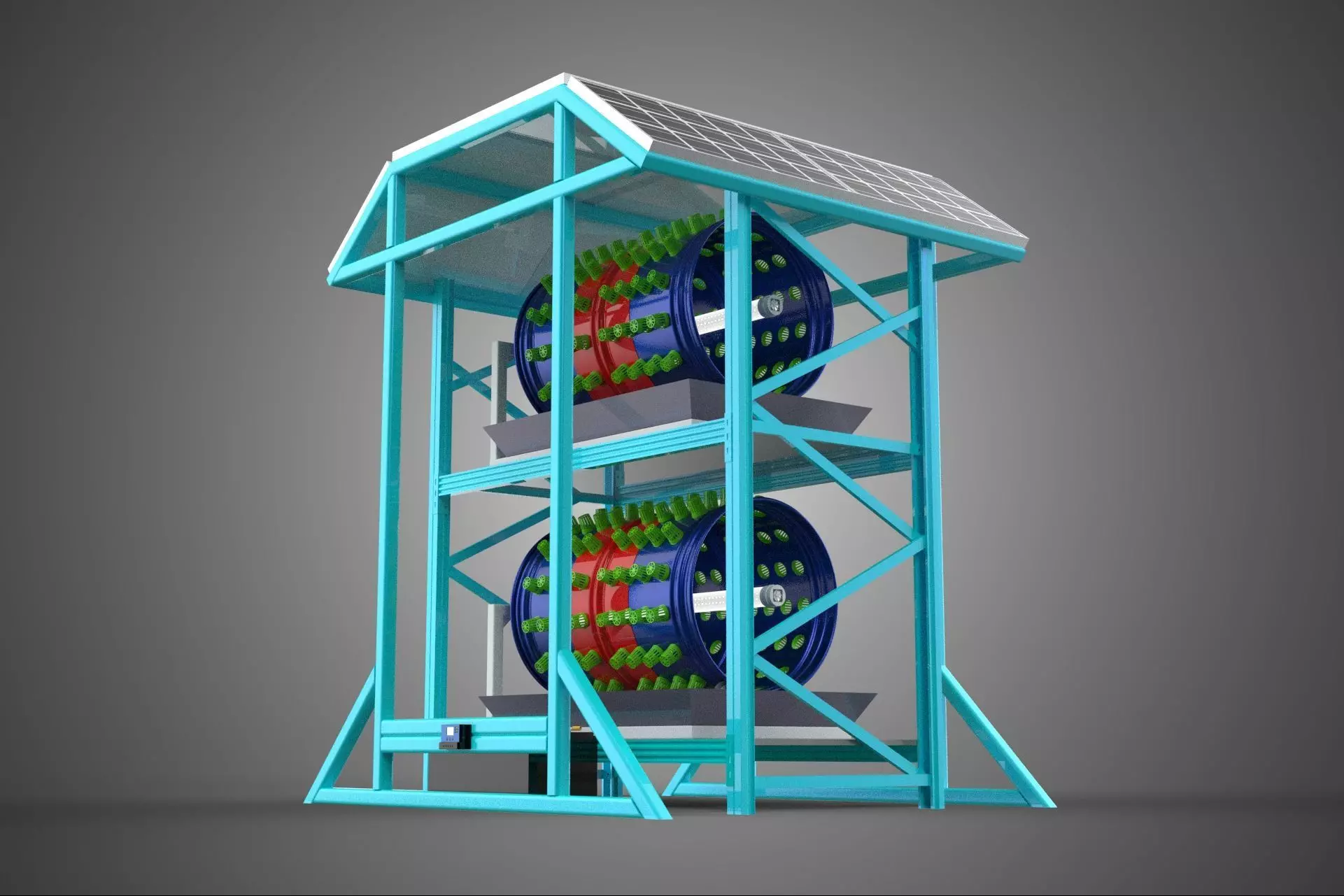
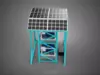
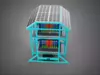
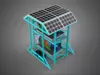
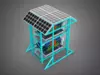
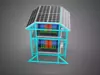
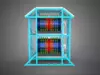
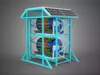
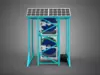
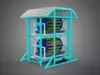
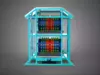
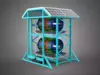
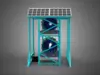
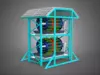
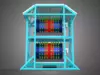
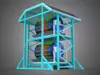
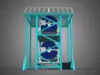
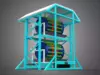
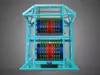
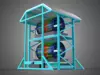
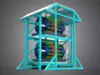
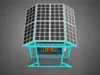
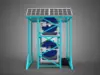
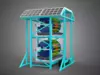
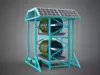
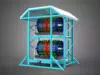
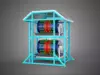
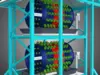
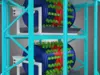
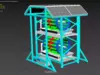
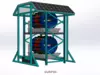
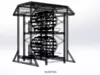
A Tower Powered Solar Panel Photovoltaic (PV) Rotary Hydroponic Garden Plant Farm constitutes an advanced, integrated agricultural system engineered for high-density, resource-efficient plant cultivation. This innovative setup synergizes vertical farming principles with renewable energy generation and soilless growing techniques, often incorporating a rotating mechanism to optimize plant exposure to light and nutrients.

System Architecture and Components:

  1. Vertical Tower Structure: The foundational element is a multi-tiered, vertical tower. This design significantly conserves land area compared to conventional horizontal farming, rendering it suitable for urban environments or regions with limited arable land. Plants are typically arranged in stacked layers or shelves, maximizing crop yield per unit of ground footprint.
  2. Rotary Mechanism: A defining feature is the integrated rotary system. This mechanism facilitates the slow, continuous rotation of plant-holding units or cultivation shelves around a central axis. The primary function of this rotation is to ensure uniform exposure of all plants to available light—whether natural sunlight or artificial LED grow lights—thereby preventing etiolation (stretching due to insufficient light) and promoting balanced, robust growth. It can also aid in consistent nutrient solution distribution and root aeration.
  3. Hydroponic Cultivation System: Central to the methodology is a hydroponic system, which enables plant growth without soil, relying instead on mineral nutrient solutions dissolved in water. Common hydroponic techniques employed within such towers include Nutrient Film Technique (NFT), Deep Water Culture (DWC), aeroponics, or various drip irrigation systems. The closed-loop nature of most hydroponic systems in this context facilitates substantial water recycling and significantly reduces water consumption compared to conventional agriculture.

    Energy System Integration:

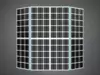
    The Solar Panel PV Powered aspect signifies that the system primarily derives its operational energy from photovoltaic solar panels. These panels convert solar radiation directly into electricity, which powers essential system components. This includes water pumps for nutrient solution circulation, environmental control systems (e.g., fans, heaters, cooling units, dehumidifiers), supplemental artificial lighting (if incorporated), and the rotary mechanism itself. The integration of renewable energy sources enhances the system's sustainability, mitigates operational costs associated with electricity consumption, and minimizes its carbon footprint. Energy storage systems, typically batteries, are often incorporated to store surplus solar energy generated during peak sunlight hours, ensuring continuous and reliable operation during periods of low light or nighttime.

    Operational Principles:

    Following germination, plant seedlings are transferred into the hydroponic cultivation units within the tower. A nutrient-rich aqueous solution is precisely circulated throughout the system, delivering essential macro- and micronutrients directly to the plant root zones. The integrated rotary mechanism ensures that all plants receive adequate and equitable light exposure throughout their growth cycle, optimizing photosynthetic efficiency across the entire vertical farm. Advanced systems may incorporate sensors and automated controls to monitor and regulate environmental parameters such as temperature, humidity, pH, electrical conductivity (EC) of the nutrient solution, and CO2 levels, thereby creating an optimal and stable growing environment.

    Advantages:

    The convergence of these technologies offers several notable benefits:
  4. Space Efficiency: Maximizes agricultural output within a minimal land footprint, ideal for urban or land-scarce areas.
  5. Resource Conservation: Achieves significant reductions in water consumption (typically 70-95% less than traditional field farming) and eliminates the need for fertile land.
  6. Controlled Environment: Minimizes risks from pests, diseases, and adverse weather conditions, potentially leading to higher yields, faster growth rates, and improved product quality.
  7. Localized Production: Facilitates hyper-local food production, substantially reducing food miles, transportation costs, and associated carbon emissions.
  8. Renewable Energy Dependence: Lowers long-term operational costs and environmental impact through reliance on solar power.
  9. Year-Round Production: Enables continuous cultivation independent of seasonal changes or climatic limitations.

    Challenges and Considerations:

    Despite its merits, the implementation and widespread adoption of such sophisticated systems present specific challenges:
  10. High Initial Capital Investment: The upfront cost for the vertical infrastructure, hydroponic equipment, solar PV array, energy storage, and sophisticated control systems can be substantial.
  11. Technical Expertise Required: Successful operation and maintenance necessitate specialized knowledge in horticulture, engineering, and renewable energy systems.
  12. Energy Demands: While solar-powered, supplementary lighting or intensive environmental controls, particularly in regions with limited sunlight, can still impose significant energy demands.
  13. Pest and Disease Management: Although reduced in enclosed systems, vigilant monitoring and proactive prevention strategies remain crucial to avoid rapid spread in a dense, interconnected environment.

    Applications and Significance:

    Tower Powered Solar Panel PV Rotary Hydroponic Garden Plant Farms hold substantial promise for advancing sustainable agriculture, particularly in densely populated urban centers, arid regions, or environments with severely restricted agricultural land. They are well-suited for cultivating a diverse range of crops, including various leafy greens, herbs, strawberries, and certain small fruiting vegetables.

REVIEWS & COMMENTS

See what other buyers think about this model - real feedback on quality,
accuracy, and usability.
There are no reviews or comments yet. Please be the first one to write it.
BEST PRICE GUARANTEED
Found this model cheaper on another marketplace? Let our support team know - we’ll match it.
NEW
Recently added to CGTrader - explore one of the latest models on the marketplace.

TOWER POWERED SOLAR PANEL PV ROTARY HYDROPONIC GARDEN PLANT FARM 3D model

Royalty Free License
Hire
Like this model to show appreciation to the designer.
See how many times this model was viewed.
Share this model to support the designer and boost their visibility.
File formats
STL
Stereolithography<br />File Size: 336 MB
OBJ
OBJ | 2 files<br />File Size: 637 MB
DAE
Collada<br />File Size: 1.12 GB
GLTF
glTF<br />File Size: 212 MB
DWG
AutoCAD<br />File Size: 124 MB
SKP
Sketchup<br />File Size: 24.5 MB
3DS
3D Studio<br />File Size: 205 MB
BLEND
Blender<br />File Size: 574 MB
FBX
Autodesk FBX<br />File Size: 201 MB
MAX
Autodesk 3ds Max<br />File Size: 1.45 GB
IGE
IGES<br />File Size: 55.5 MB
SAT
3D ACIS<br />File Size: 620 MB
3DM
Rhinoceros 3D<br />File Size: 62.9 MB
STP
STEP<br />File Size: 40.6 MB
Verified by CGTrader
Verified models are of higher quality as they have
passed CGT Standard technical and visual checks,
making them more professional-grade 3D assets.
Learn more.
FBX
This FBX file has successfully passed the CGT Standard technical and visual checks. The verification results are detailed in the section below.
File & scene
Binary FBX
Binary FBX file is more compact and faster to load and process.
Learn more
No unsupported objects
Unsupported objects:
- Lights
- Cameras
Learn more
Geometry
No N-gons
N-gons are polygons with five or more sides which might cause issues in certain processes like rendering or animation. Learn more
No faceted geometry
Faceted geometry uses flat surfaces without smoothing, which can look unrealistic on curves.
Learn more
Manifold geometry
Manifold geometry ensures all surfaces are properly connected, avoiding issues like edges shared by more than two faces.
Learn more
Textures & material
PBR textures
PBR textures simulate how light interacts with materials, making the model look realistic under different lighting.
Required PBR textures:
- Base Color
- Roughness
- Metalness
- Normal
Learn more
No embed textures
Embedded textures are stored inside the model file, increasing its size and sometimes causing compatibility issues.
Learn more
Square textures
Texture aspect ratio is the width-to-height ratio of a texture. Expected texture aspect ratio: 1:1
Learn more
Power of 2 texture sizes
Textures with dimensions in power of two (e.g. 512x512px, 1024x1024px) are used to optimize performance and memory usage.
Learn more
Assigned materials
Materials are applied to the 3D model to allow visualize a model's surface properties and appearance.
Learn more
UVs & naming
No UV overlaps
UVs overlap when multiple points on the 3D model's surface are mapped to the same point on the UV island causing texture stretching.
Learn more
UV unwrapped model
A UV unwrapped model means its 3D surface is flattened into 2D space, allowing textures to be applied accurately.
Learn more
Allowed characters
Allowed ASCII characters: a-zA-Z0-9-_
Learn more
Provided by designer
Information and details shared directly by the model's designer.
3D Features
The model includes animations (movement or actions) that can be played in supported software or engines.
The model has a skeleton or bone structure, making it ready for posing or animation.
PBR
Uses Physically Based Rendering materials, which give the model realistic lighting and surface properties.
Textures
The model includes image files (textures) that add color, patterns, or detail to its surfaces.
Materials
The model has material settings that define how surfaces look (color, shine, transparency, etc.).
UV Mapping
The model's surfaces are mapped to a 2D image, allowing textures to display correctly.
Plugins Used
Some external plugins were used to create the model. These may be required for full functionality.
3D printing
Indicates whether the designer marked this model as suitable for 3D printing.
Model is not 3D printable
The designer indicates this model is intended for digital use only (rendering, animation, or AR/VR) and not for 3D printing.
Geometry
7049825 polygons
The total number of polygons (flat shapes) that make up the 3D model.
/ 5765238 vertices
The number of points (corners) that define the shape of the model's polygons.
Unwrapped UVs
Publish date
Model ID
Chat