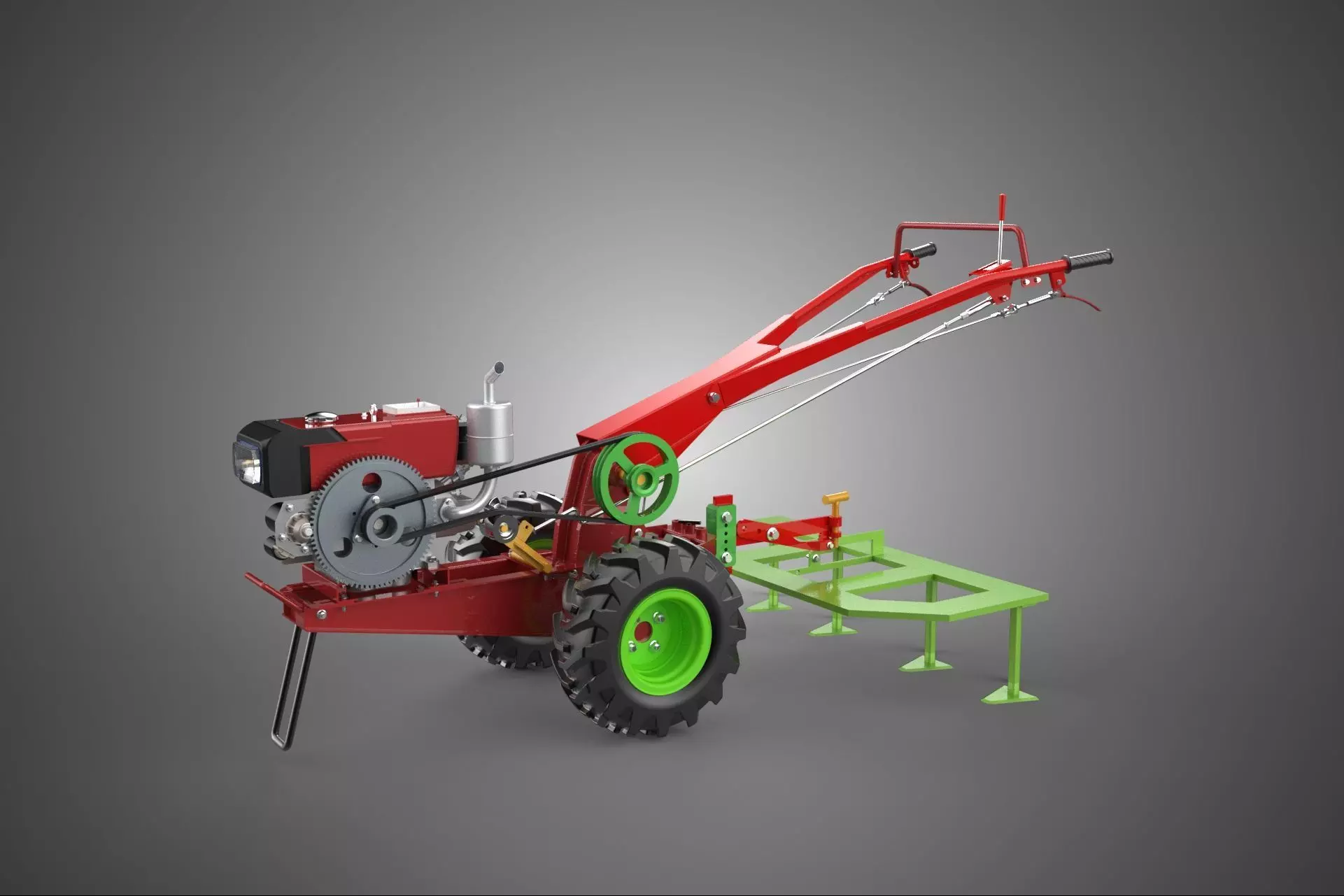
High-quality 3D assets at affordable prices — trusted by designers, engineers, and creators worldwide. Made with care to be versatile, accessible, and ready for your pipeline.
Included File Formats
This model is provided in 14 widely supported formats, ensuring maximum compatibility:
• - FBX (.fbx) – Standard format for most 3D software and pipelines
• - OBJ + MTL (.obj, .mtl) – Wavefront format, widely used and compatible
• - STL (.stl) – Exported mesh geometry; may be suitable for 3D printing with adjustments
• - STEP (.step, .stp) – CAD format using NURBS surfaces
• - IGES (.iges, .igs) – Common format for CAD/CAM and engineering workflows (NURBS)
• - SAT (.sat) – ACIS solid model format (NURBS)
• - DAE (.dae) – Collada format for 3D applications and animations
• - glTF (.glb) – Modern, lightweight format for web, AR, and real-time engines
• - 3DS (.3ds) – Legacy format with broad software support
• - 3ds Max (.max) – Provided for 3ds Max users
• - Blender (.blend) – Provided for Blender users
• - SketchUp (.skp) – Compatible with all SketchUp versions
• - AutoCAD (.dwg) – Suitable for technical and architectural workflows
• - Rhino (.3dm) – Provided for Rhino users
Model Info
• - All files are checked and tested for integrity and correct content
• - Geometry uses real-world scale; model resolution varies depending on the product (high or low poly)
• • - Scene setup and mesh structure may vary depending on model complexity
• - Rendered using Luxion KeyShot
• - Affordable price with professional detailing
Buy with confidence. Quality and compatibility guaranteed.
If you have any questions about the file formats, feel free to send us a message — we're happy to assist you!
Sincerely,
SURF3D
Trusted source for professional and affordable 3D models.
More Information About 3D Model :
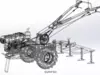
The Tine and Tooth Components in Agricultural Tillage Implements
The terms teeth, tines, and shanks refer collectively to the fundamental soil-engaging components utilized in a diverse range of agricultural implements, including plows, harrows, rakes, and cultivators. These elements are designed to penetrate the soil profile, fracture compaction layers, incorporate crop residue, control weeds, and prepare an optimal seedbed for planting. Their design, material composition, and configuration are critical determinants of the implement’s efficiency, energy consumption, and the resultant soil structure.
Terminology and Classification
While often used interchangeably, subtle distinctions exist between the terms:
- Tooth/Point: Generally refers to the hardened, wear-resistant tip attached to the structural element. These are the parts that directly initiate soil penetration and are replaced frequently due to abrasion. They can be narrow (chisel points) for deep disturbance or wide (sweeps/shovels) for shallow, broad cultivation.
- Tine: Typically describes the entire elongated structural component, often characterized by flexibility or spring action, particularly in harrows and rakes. Spring tines, common in secondary tillage, vibrate upon movement, aiding in the separation of soil clods and releasing accumulated residue.
- Shank: The robust, structural arm that connects the working point (tooth or shovel) to the main frame of the implement. Shanks must withstand significant compressive, tensile, and shear forces. They may be rigid (common in chisel plows and heavy cultivators) or trip-reset mechanisms (e.g., hydraulic or spring-loaded shanks) designed to pivot upward when encountering immovable subsurface obstructions, thus preventing damage.
### Application in Tillage Systems
#### Plows and Heavy Primary Tillage
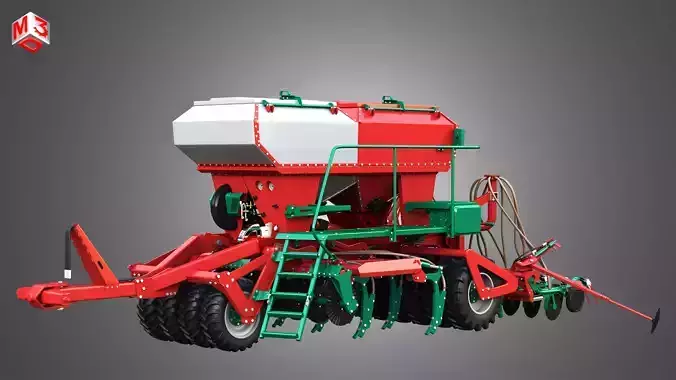
In deep or primary tillage, robust tines and teeth—often referred to as shanks and chisel points—are employed in implements like the chisel plow or subsoiler. Unlike the traditional moldboard plow, which inverts the soil, the chisel plow utilizes strong, narrow shanks to shatter subsurface hardpans and compaction zones (subsoiling) without significant soil inversion or residue burial. These heavy-duty points are often replaceable, utilizing wear-resistant alloys optimized for maximal penetration depth and minimal lateral disturbance.
#### Harrows and Secondary Tillage
Harrows and cultivators rely on various types of tines for secondary tillage operations, aimed at refining the soil structure established by primary tillage:
- Spring-Tine Harrows (Tine-Tooth Harrows): Use long, flexible tines to provide shallow disturbance, level the field, break up surface crusts, and pull out shallow-rooted weeds. Their flexibility allows them to contour to uneven terrain.
- Field Cultivators: Employ shanks fitted with specialized points (sweeps, shovels, or duckfoot points) to cut weed roots beneath the surface and lift the soil, providing aeration and incorporation of fertilizer or chemicals. The sweep points are particularly effective in conservation tillage where maximum residue retention is desired.
#### Rakes and Residue Management
Agricultural rakes utilize tines configured for gathering rather than penetrating. Tines in rakes (e.g., wheel rakes or rotary rakes) are designed primarily to engage and move cut forage or crop residue into windrows for baling or harvesting. These tines are generally lighter, more numerous, and often curved to facilitate effective sweeping action with minimal soil disturbance.
#### Integration with Hand Tractors and Power Tillers
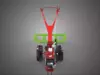
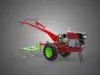
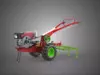
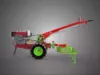
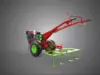
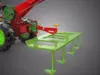
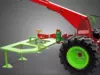
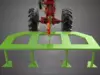
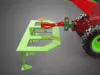
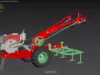
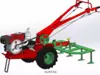
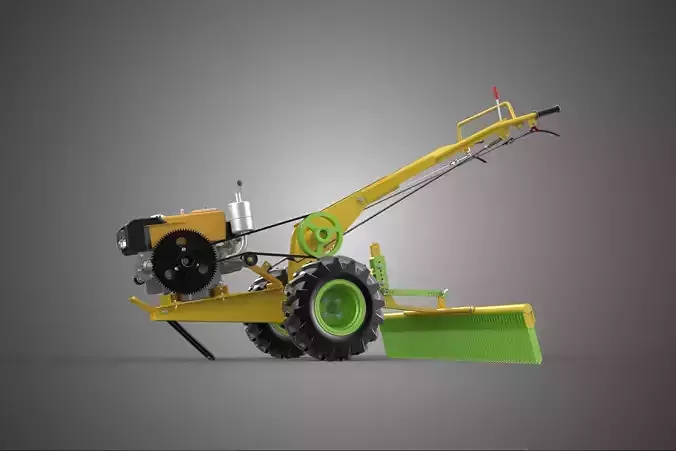
The hand tractor (or power tiller) is a compact, pedestrian-operated machine utilizing low-horsepower engines suitable for small-scale farming. In these machines, the most common form of soil engagement is the rotary tiller, which functions through a drum mounted with numerous specialized, curved blades or tines. These tines rapidly chop and mix the soil, providing simultaneous primary and secondary tillage suitable for intensive cultivation in restricted plots. The geometry of these rotary teeth must be carefully calibrated to balance efficient soil breakup against machine stability and operator effort.
### Engineering and Materials Science
The teeth and tines of tillage equipment operate under severe abrasive conditions, encountering friction, impact from rocks, and cyclical stress loading. Consequently, the material science is crucial for longevity and operational efficiency. High-wear components are manufactured from high-carbon steels, often alloyed with elements such as boron (boron steel) or manganese to enhance hardness and toughness. Surfaces are frequently treated or hardfaced (e.g., carbide deposition) to provide superior resistance against abrasive wear, thereby maintaining the critical penetrating profile of the point for extended periods. Maintenance involves frequent replacement of points and ensuring proper tensioning or trip-mechanism functionality of the shanks.
KEYWORDS: Tillage, Tine, Tooth, Shank, Cultivator, Harrow, Plow, Plough, Rake, Subsoiler, Chisel Point, Sweep, Shovel, Primary Tillage, Secondary Tillage, Hand Tractor, Power Tiller, Boron Steel, Hardfacing, Abrasion Resistance, Compaction, Soil Aeration, Seedbed Preparation, Crop Residue, Weed Control, Soil Fracture, Tillage Depth, Conservation Tillage, Implement Design, Agricultural Engineering.