High-quality 3D assets at affordable prices — trusted by designers, engineers, and creators worldwide. Made with care to be versatile, accessible, and ready for your pipeline.
Included File Formats
This model is provided in 14 widely supported formats, ensuring maximum compatibility:
• - FBX (.fbx) – Standard format for most 3D software and pipelines
• - OBJ + MTL (.obj, .mtl) – Wavefront format, widely used and compatible
• - STL (.stl) – Exported mesh geometry; may be suitable for 3D printing with adjustments
• - STEP (.step, .stp) – CAD format using NURBS surfaces
• - IGES (.iges, .igs) – Common format for CAD/CAM and engineering workflows (NURBS)
• - SAT (.sat) – ACIS solid model format (NURBS)
• - DAE (.dae) – Collada format for 3D applications and animations
• - glTF (.glb) – Modern, lightweight format for web, AR, and real-time engines
• - 3DS (.3ds) – Legacy format with broad software support
• - 3ds Max (.max) – Provided for 3ds Max users
• - Blender (.blend) – Provided for Blender users
• - SketchUp (.skp) – Compatible with all SketchUp versions
• - AutoCAD (.dwg) – Suitable for technical and architectural workflows
• - Rhino (.3dm) – Provided for Rhino users
Model Info
• - All files are checked and tested for integrity and correct content
• - Geometry uses real-world scale; model resolution varies depending on the product (high or low poly)
• • - Scene setup and mesh structure may vary depending on model complexity
• - Rendered using Luxion KeyShot
• - Affordable price with professional detailing
Buy with confidence. Quality and compatibility guaranteed.
If you have any questions about the file formats, feel free to send us a message — we're happy to assist you!
Sincerely,
SURF3D
Trusted source for professional and affordable 3D models.
More Information About 3D Model :
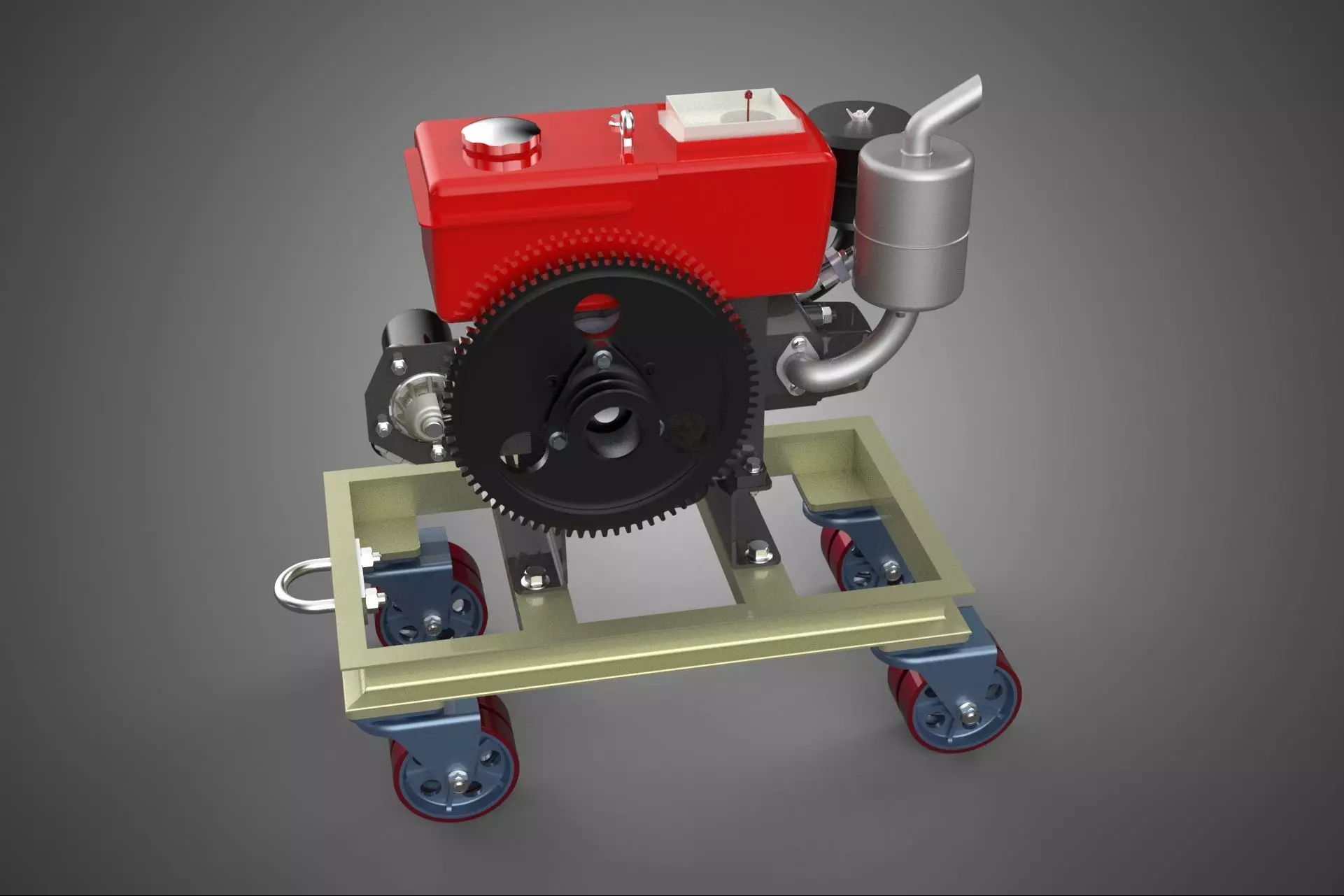
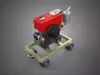
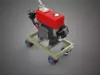
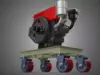
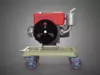
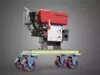
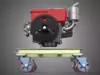
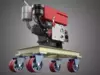
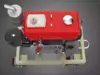
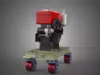
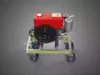
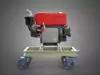
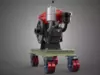
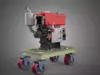
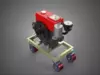
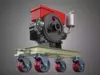
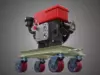
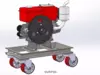
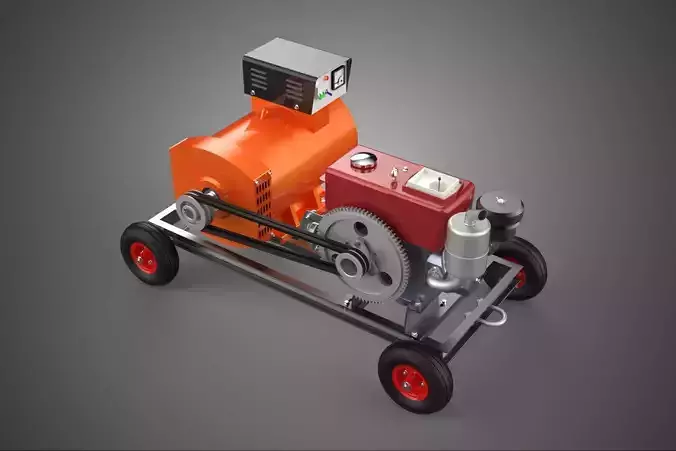
A mobile diesel engine machine mounted wheeled cart caster trolley is a specialized, non-self-propelled mechanical conveyance system designed for the temporary or permanent mobilization of internal combustion compression-ignition engines (diesel engines) and their integral auxiliary equipment. This apparatus serves as a robust chassis or transport frame, facilitating the rapid deployment, repositioning, or storage of engine units across various operational environments, including industrial facilities, maintenance workshops, construction sites, or agricultural settings.
Nomenclature and Classification
While the nomenclature employs a combination of synonymous terms—cart, trolley, and caster assembly—this device is formally classified as an engine transport dolly or a dedicated mobile power skid. Its defining characteristic is the integration of heavy-duty, load-bearing wheels, often comprising both rigid and swivel (caster) assemblies, which provide superior maneuverability in confined spaces compared to standard two-axle industrial trailers.
Engineering and Design Specifications
The design of the mobile diesel engine trolley is dictated by the requirements of the mounted machinery, primarily the substantial static weight and the dynamic forces generated by a running diesel engine.
Structural Integrity
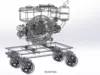
The frame is typically constructed from high-tensile structural steel (e.g., welded box section or heavy-gauge channel iron) to ensure exceptional rigidity and load-bearing capacity. Critical engineering considerations include maintaining a low center of gravity to enhance stability during movement and operation, thereby mitigating the risk of tip-over, especially when supporting tall or heavy power packs.
Machine Mounting
The machine mounted feature necessitates specialized integration points. The trolley frame incorporates standardized mounting brackets, reinforced plates, or bolt patterns designed to align precisely with the engine’s factory mounting pads, bell housings, or skid rails. This rigid connection is vital for maintaining the alignment of the engine and any coupled component (e.g., generators, pumps, compressors) while the unit is mobile.
Vibration and Noise Mitigation
Due to the inherent torque ripple and vibration generated by compression-ignition engines, the chassis often incorporates advanced vibration damping systems. These typically include elastomeric isolators, spring mounts, or proprietary dampening pads situated between the engine base and the trolley structure. Effective vibration mitigation is necessary to protect the structural integrity of the trolley, prolong the lifespan of the engine components, and reduce the transmission of noise and destructive energy to the operational floor surface.
Mobility System and Components
The mobility system utilizes heavy-duty, industrial-grade wheels and casters, selected based on the anticipated operational environment and required load capacity.
- Caster Assemblies: Swiveling casters provide the steering capability essential for navigating tight corners or moving sideways. They are rated specifically for the maximum load, incorporating features such as robust ball-bearing raceways.
- Wheels: Wheel material varies based on the application: polyurethane or cast iron wheels are common for smooth indoor environments; pneumatic or solid rubber tires are utilized for rough, outdoor, or uneven terrain (field applications).
- Braking and Locking: For safety, all mobile diesel engine trolleys incorporate locking mechanisms, typically pedal-actuated wheel brakes or directional locks (swivel locks), which ensure the unit remains completely immobile and stable during engine startup, operation, and routine maintenance procedures.
### Applications and Utility
The utility of a mobile diesel engine trolley lies in its flexibility for temporary power provision and maintenance logistics. Common applications include:
- Engine Testing: Providing a mobile platform for dynamometer testing or break-in procedures outside of a permanent test cell.
- Field Maintenance: Allowing service technicians to quickly transport power units for on-site repairs or equipment swaps.
- Temporary Power Generation: Supporting mobile generator sets or welding units where the power source must follow the work crew.
This apparatus reduces downtime, eliminates the need for fixed infrastructure installation, and enhances operational safety by providing a stable, purpose-built platform for powerful machinery.
KEYWORDS: Diesel Engine, Mobile Platform, Wheeled Cart, Caster Trolley, Engine Chassis, Industrial Dolly, Power Skid, Equipment Transport, Vibration Damping, Machine Mounted, Heavy Duty, Structural Steel, Load Bearing, Field Service, Generator Set, Compressor Unit, Engine Test Cell, Mechanical Conveyance, Swivel Caster, Rigid Frame, Pneumatic Tire, Maintenance Logistics, Compression-Ignition, Torque Ripple, Elastomeric Isolator, Maneuverability, Engine Mounting, Braking System, Workshop Equipment, Operational Stability.