High-quality 3D assets at affordable prices — trusted by designers, engineers, and creators worldwide. Made with care to be versatile, accessible, and ready for your pipeline.
Included File Formats
This model is provided in 14 widely supported formats, ensuring maximum compatibility:
• - FBX (.fbx) – Standard format for most 3D software and pipelines
• - OBJ + MTL (.obj, .mtl) – Wavefront format, widely used and compatible
• - STL (.stl) – Exported mesh geometry; may be suitable for 3D printing with adjustments
• - STEP (.step, .stp) – CAD format using NURBS surfaces
• - IGES (.iges, .igs) – Common format for CAD/CAM and engineering workflows (NURBS)
• - SAT (.sat) – ACIS solid model format (NURBS)
• - DAE (.dae) – Collada format for 3D applications and animations
• - glTF (.glb) – Modern, lightweight format for web, AR, and real-time engines
• - 3DS (.3ds) – Legacy format with broad software support
• - 3ds Max (.max) – Provided for 3ds Max users
• - Blender (.blend) – Provided for Blender users
• - SketchUp (.skp) – Compatible with all SketchUp versions
• - AutoCAD (.dwg) – Suitable for technical and architectural workflows
• - Rhino (.3dm) – Provided for Rhino users
Model Info
• - All files are checked and tested for integrity and correct content
• - Geometry uses real-world scale; model resolution varies depending on the product (high or low poly)
• • - Scene setup and mesh structure may vary depending on model complexity
• - Rendered using Luxion KeyShot
• - Affordable price with professional detailing
Buy with confidence. Quality and compatibility guaranteed.
If you have any questions about the file formats, feel free to send us a message — we're happy to assist you!
Sincerely,
SURF3D
Trusted source for professional and affordable 3D models.
More Information About 3D Model :
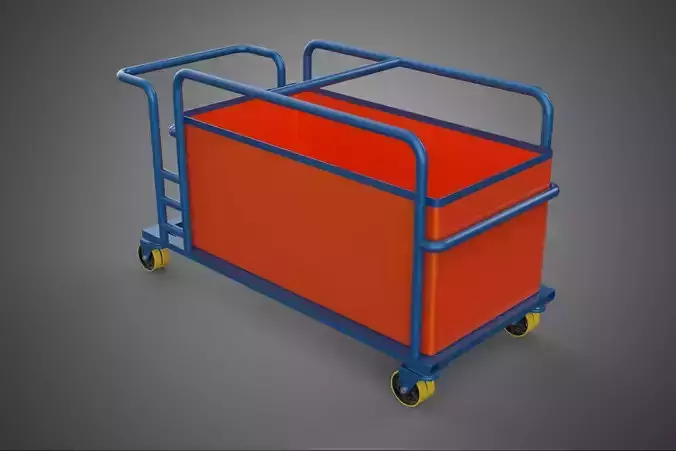
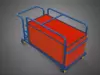
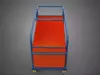
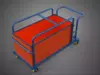
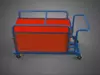
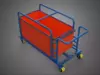
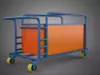
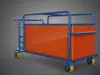
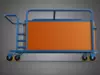
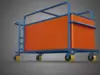
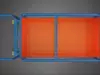
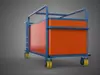
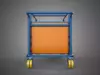
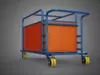
Mobile Institutional Textile Conveyance System (MICS)
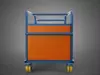
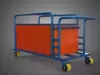
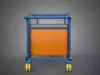
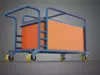
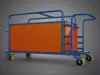
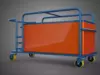
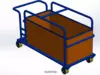
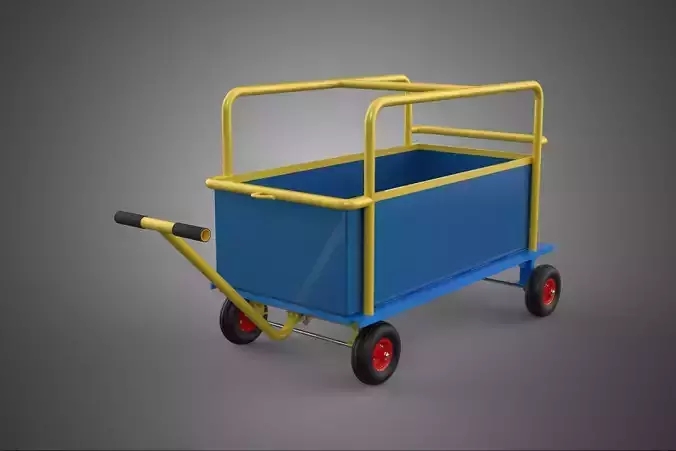
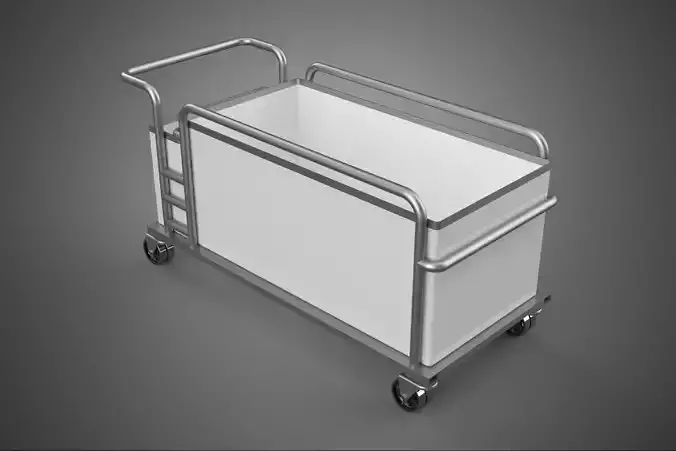
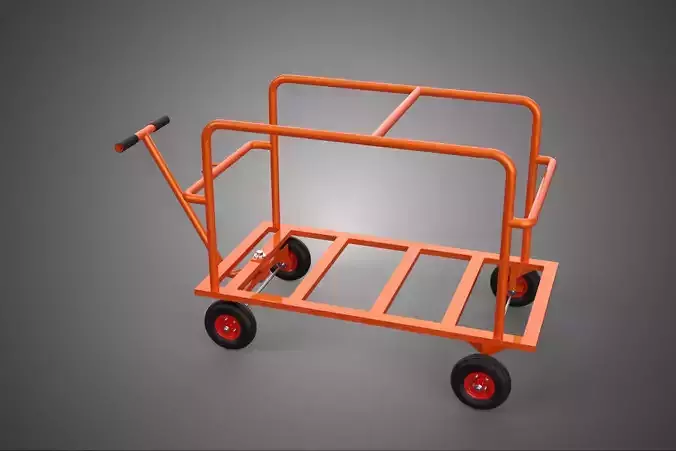
The apparatus designated by the collective terminology of Hospital Hotel Laundry Transport Cart Trolley Basket Clothesline refers to a specialized category of mobile storage and conveyance equipment integral to institutional textile logistics. These systems are designed for the efficient collection, internal transport, staging, and distribution of both soiled and clean linens, garments, and other textile items within high-volume environments, primarily healthcare (hospitals) and hospitality (hotels).
Nomenclature and Classification
The specific terminology applied to the unit varies based on capacity, mobility features, and institutional context:
- Cart: Typically denotes a larger, rigid structure, often constructed from heavy-duty wire mesh, stainless steel, or high-density polyethylene (HDPE). Carts are utilized for high-volume staging or long-distance transport between facilities or between floors, characterized by robust framing and large load capacities (often exceeding 200 kg).
- Trolley: Generally refers to a smaller, more maneuverable unit, frequently featuring a collapsible or folding frame. Trolleys are optimized for navigating confined spaces, such as hallways or service elevators, and are predominantly used for immediate collection or housekeeping distribution tasks.
- Basket/Bag: The containment vessel itself, which may be rigid (molded plastic) or flexible (vinyl, poly-canvas, or mesh). Flexible bags are often removable and feature closures (drawstrings or lids) essential for hygiene protocols.
- Clothesline (Conceptual Integration): While not a physical component of the cart, its inclusion signifies the complete cyclical role of the transport system. The MICS facilitates the movement of textiles from the point of soiling to the washing facility, and subsequently moves clean textiles back to the point of use, effectively bridging the logistical gap associated with drying and storage staging (the functional equivalent of the historical clothesline).
Operational Context and Design Parameters
The design and material specifications of these transport units are strictly dictated by the operating environment and mandated hygiene standards.
Hospital and Healthcare Settings (Infection Control):
In healthcare, the paramount design consideration is biohazard mitigation and infection control. Hospital laundry carts must comply with strict hygiene regulations:
- Segregation: Units often feature distinct color-coding or compartmentalization to separate contaminated, infectious, and non-contaminated soiled linens, preventing cross-contamination.
- Materials: Preferred materials include stainless steel or autoclavable plastics that can withstand rigorous chemical disinfection and high-temperature cleaning cycles.
- Containment: Soiled linen containers must utilize impermeable liners or self-closing lids to encapsulate pathogens during transport.
Hotel and Hospitality Settings (Volume and Aesthetics):
In hospitality, the focus shifts toward volume management, durability, and operational discretion:
- Capacity: Carts are designed to handle extremely high volumes of bedding and towels generated by high occupancy turnover.
- Discretion: To maintain guest satisfaction, hotel trolleys often feature covered designs or use noise-dampening components (e.g., non-marking, quiet casters) to ensure movement is discreet and non-disruptive.
- Ergonomics: Many units incorporate features like spring-loaded platforms (self-leveling carts) that automatically raise the contents as items are removed, minimizing bending and reducing musculoskeletal strain on housekeeping personnel.
Engineering and Mobility
All institutional transport units rely on industrial-grade casters for mobility. Key features include non-marking rubber or polyurethane wheels, swivel mechanisms for 360-degree rotation, and locking brakes to stabilize the cart during loading and unloading. Frames are engineered for tensile strength to support significant dynamic loads, ensuring longevity within demanding operational environments. These systems are essential logistical tools, ensuring the smooth, hygienic, and regulated flow of textiles critical to institutional operations.
KEYWORDS: Laundry Logistics, Transport Cart, Hospital Linens, Hotel Housekeeping, Textile Conveyance, Infection Control, Soiled Linen, Clean Linen, Material Handling, Trolley System, Storage Basket, Healthcare Equipment, Industrial Laundry, Biohazard Mitigation, Polyethylene Cart, Swivel Casters, Institutional Supply Chain, Mobile Container, Cart Design, Collapsible Trolley, Distribution System, Staging Area, Commercial Laundry, Volume Management, Ergonomics, Stainless Steel, Vinyl Bag, Segregation, Service Equipment, Hospitality Management.