High-quality 3D assets at affordable prices — trusted by designers, engineers, and creators worldwide. Made with care to be versatile, accessible, and ready for your pipeline.
Included File Formats
This model is provided in 14 widely supported formats, ensuring maximum compatibility:
• - FBX (.fbx) – Standard format for most 3D software and pipelines
• - OBJ + MTL (.obj, .mtl) – Wavefront format, widely used and compatible
• - STL (.stl) – Exported mesh geometry; may be suitable for 3D printing with adjustments
• - STEP (.step, .stp) – CAD format using NURBS surfaces
• - IGES (.iges, .igs) – Common format for CAD/CAM and engineering workflows (NURBS)
• - SAT (.sat) – ACIS solid model format (NURBS)
• - DAE (.dae) – Collada format for 3D applications and animations
• - glTF (.glb) – Modern, lightweight format for web, AR, and real-time engines
• - 3DS (.3ds) – Legacy format with broad software support
• - 3ds Max (.max) – Provided for 3ds Max users
• - Blender (.blend) – Provided for Blender users
• - SketchUp (.skp) – Compatible with all SketchUp versions
• - AutoCAD (.dwg) – Suitable for technical and architectural workflows
• - Rhino (.3dm) – Provided for Rhino users
Model Info
• - All files are checked and tested for integrity and correct content
• - Geometry uses real-world scale; model resolution varies depending on the product (high or low poly)
• • - Scene setup and mesh structure may vary depending on model complexity
• - Rendered using Luxion KeyShot
• - Affordable price with professional detailing
Buy with confidence. Quality and compatibility guaranteed.
If you have any questions about the file formats, feel free to send us a message — we're happy to assist you!
Sincerely,
SURF3D
Trusted source for professional and affordable 3D models.
More Information About 3D Model :
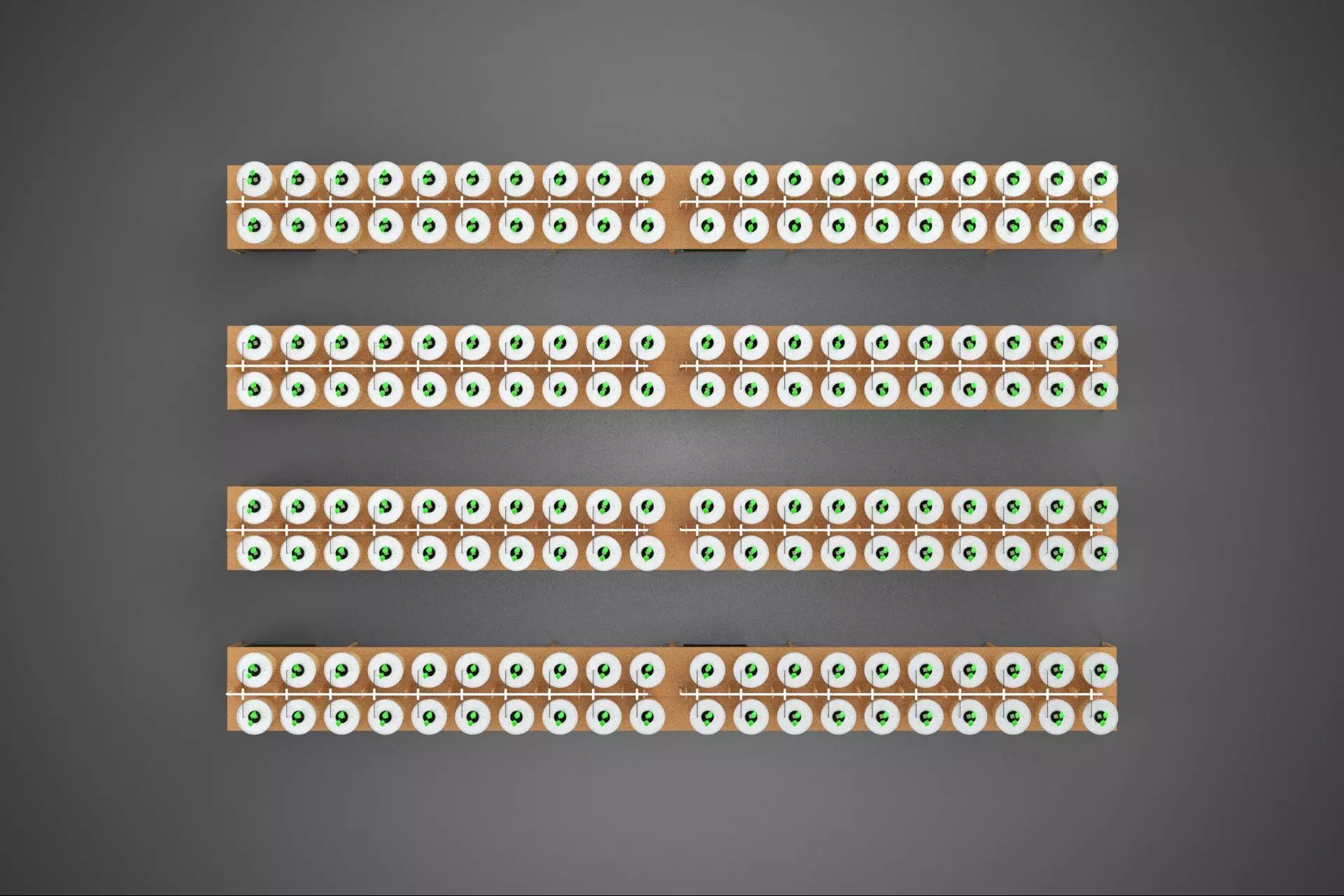
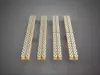
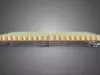
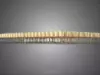
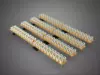
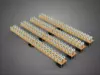
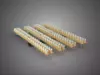
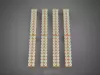
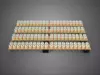
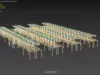
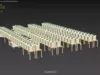
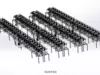
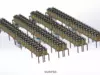
The term ILLUSTRATION VISUALIZATION DUTCH BUCKET HYDROPONIC SYSTEM TRAY refers to a detailed, often schematic or three-dimensional graphical representation designed to explain the functional mechanics and structural layout of a recirculating hydroponic methodology known as the Dutch Bucket system (also frequently termed the Bato Bucket system), specifically emphasizing the role of the drainage collection trough or tray.
This visualization serves as an objective educational tool, clarifying the complex interaction of water delivery, plant support, and nutrient recapture inherent to this controlled environment agriculture technique.
The Dutch Bucket System Mechanics
The Dutch Bucket system is a highly modular, substrate-based form of hydroponics suitable for large, fruiting crops such as tomatoes, cucumbers, peppers, and various vine vegetables. It is fundamentally a closed-loop drip irrigation system.
- Buckets (Bato Modules): Individual, opaque containers are filled with an inert, non-soil medium (typically perlite, vermiculite, rockwool, or coco coir) which provides structural support and moisture retention without contributing nutrients.
- Nutrient Delivery: A submersible pump draws the oxygenated, pH-balanced nutrient solution from a central reservoir. This solution is distributed through a primary manifold and regulated by individual drip emitters, which pulse the solution directly to the root zone of the plant within each bucket at predetermined intervals.
- Drainage and Recirculation: A critical feature of the Dutch Bucket is the internal drainage mechanism, typically an overflow fitting or siphon tube placed slightly above the bottom of the bucket (e.g., 2-3 cm). This fitting ensures that the bottom of the root medium remains saturated while allowing excess solution—crucial for flushing salts and maintaining root oxygenation—to drain rapidly.
### The Role of the Visualization Tray
The visualization highlights the Tray or trough, which is essential to the system’s recirculating nature. The buckets are typically positioned directly atop this elongated collection channel.
The tray is engineered with a slight gradient, often between 1-2%, to facilitate gravity flow. The effluent nutrient solution draining from the overflow fittings of the individual buckets is captured by this tray. The tray channels the solution along its length, directing it efficiently back toward the main reservoir for filtration, pH adjustment, nutrient replenishment, and subsequent reuse.
### Elements of the Illustration
An effective visualization of the ILLUSTRATION VISUALIZATION DUTCH BUCKET HYDROPONIC SYSTEM TRAY must clearly depict the following components, often employing cross-sections and directional flow arrows:
- Reservoir: The source of the nutrient solution.
- Pumping System and Manifold: The mechanism delivering solution under pressure.
- Bucket Cross-Section: Illustrating the inert medium, the root zone, the drip emitter entry point, and the overflow drain mechanism.
- The Tray/Trough: Displayed as the central gutter running beneath the row of buckets, clearly showing the angle or gradient that facilitates gravity return.
- Return Line: The connection from the lowest point of the tray back into the reservoir, completing the closed loop.
The visualization is paramount in conveying the efficiency of the system, particularly its optimized Water Use Efficiency (WUE) and controlled environment capabilities, making it a staple illustration in modern horticultural and hydroponic literature.
KEYWORDS: Hydroponics, Dutch Bucket, Bato Bucket, Recirculating System, Drip Irrigation, Nutrient Solution, Reservoir, Drainage Tray, Gravity Return, Effluent, Overflow Fitting, Growing Medium, Perlite, Coco Coir, Visualization, Schematic Diagram, Modular Hydroponics, Closed-Loop System, Controlled Environment Agriculture (CEA), Greenhouse Technology, Submersible Pump, Manifold, Emitter, Root Zone, Crop Steering, Water Use Efficiency (WUE), Horticulture, Diagrammatic Representation, Hydroponic Tray, Nutrient Delivery.