DESCRIPTION

*******************Anointing Spoon British Crown Jewels - 2 Versions************

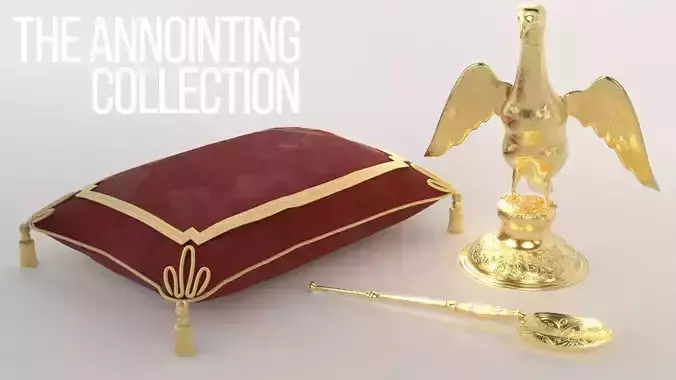
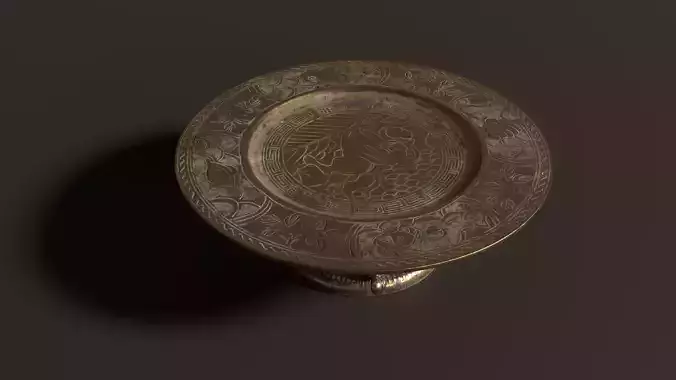
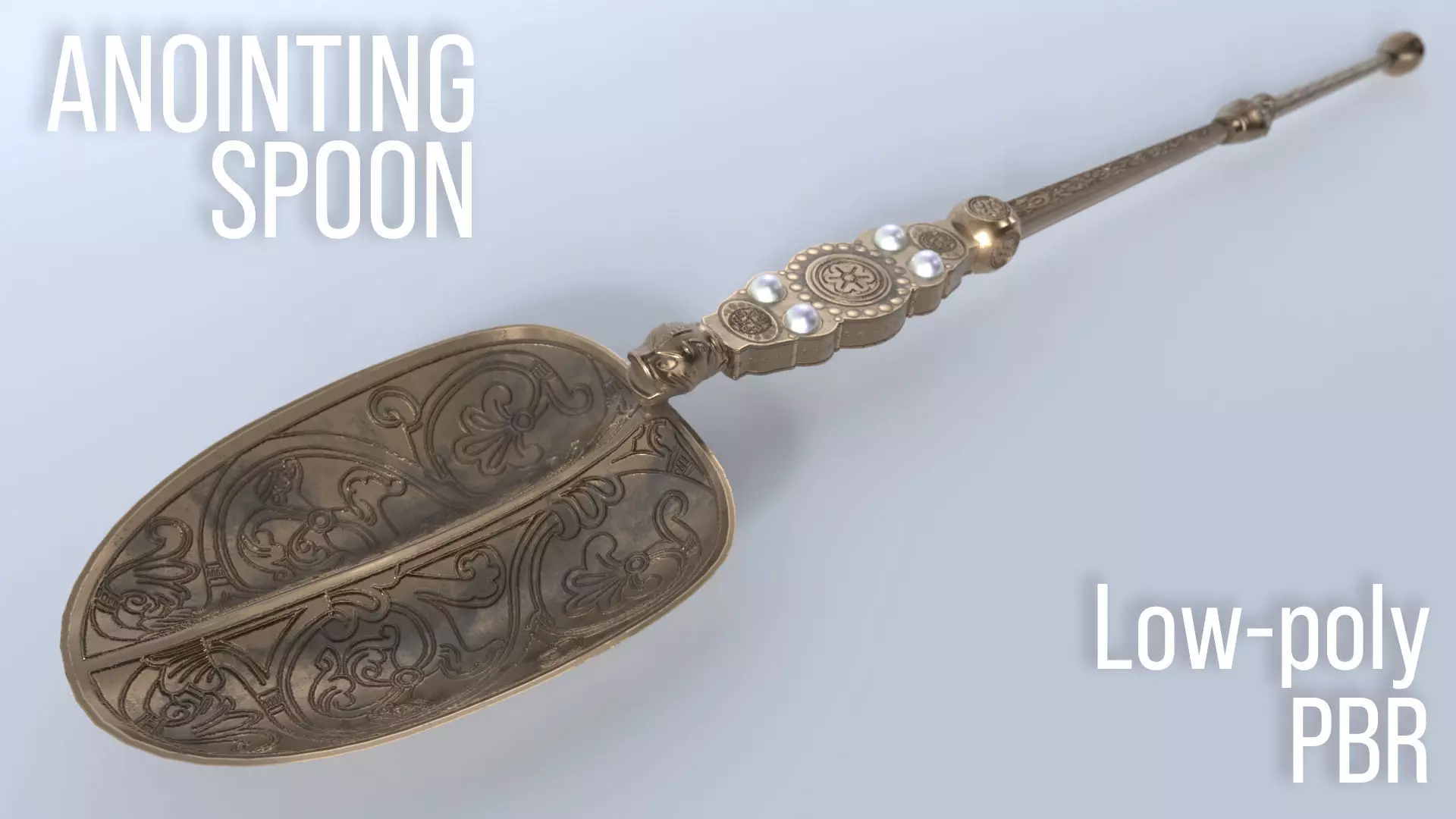
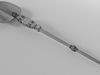
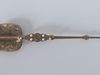
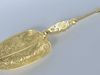
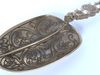
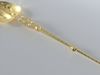
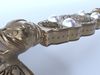
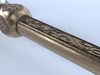
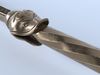
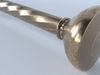
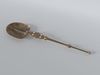
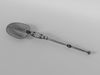
3d Model of the Anointing Spoon from the British Crown Jewels collection which is used in the coronation of the British monarchy. V-Ray displacement mod has been used in conjunction with height maps. Also INCLUDED is a polished version with texture maps export from substance painter. All maps/texture are included. Models is upload as low-poly

  • Accurate Scale and proportions
  • Modelled in Max 2021
  • Render with V-Ray Next 6
  • 7 texture sets used and included. 2 version of the spoon are include, a tainted version and also a highly polished version.
  • Fully UV mapping. 4k PNG texture maps used. Basecolour, Height, Metallic, Normal,and Roughness.
  • Low-poly Polys coming in at 4403 polys, verts at 4763 easily retriangulated
  • PBR maps at 4K baked from Substance Painter. All so glTF, Unity and Unreal maps have been exported from Substance.
  • Low-poly and compatibility with other packages and engines. Easily re-triangulated.
  • FBX, OBJ, Substance file and original 3ds Max 2021.

Any questions about this model please contact me here on CGTrader!

https://www.rct.uk/collection/31733/the-coronation-spoon

'The silver gilt spoon has an oval bowl, divided into two lobes, engraved with acanthus scrolls. The bowl is joined to the stem by a stylised monster's head, behind which the stem flattens into a roundel, flanked by four pearls, and a band of interlaced scrolling, with another monster's head; the end of the tapering stem is spirally twisted, and terminates in a flattened knop.

The spoon is first recorded in 1349 as preserved among St Edward's Regalia in Westminster Abbey. Already at this date it is described as a spoon of 'antique forme'. Stylistically it seems to relate to the twelfth century and is therefore a remarkable survival - the only piece of royal goldsmiths' work to survive from that century. It was possibly supplied to Henry II or Richard I.

It is unclear from the 1349 inventory whether the spoon at this date was part of the chapel plate or simply a secular object. However, it was clearly never intended for eating or stirring. Its divided bowl and length suggest that it always had a ceremonial purpose, and its presence among the regalia means that it has always been associated with coronations. It may originally have been used for mixing wine and water in a chalice, but it was certainly used for anointing the sovereign during the coronation of James I in 1603, and at every subsequent coronation. One suggestion is that the divided bowl was designed in this fashion so that the archbishop might dip two fingertips into the holy oil.

The spoon remained among the regalia until 1649, when it was sold off (rather than melted down like the other items). It was purchased by a Mr Kynnersley, Yeoman of Charles I's Wardrobe, for 16 shillings. Kynnersley returned the spoon to Charles II, for use at the coronation in 1661, when the small pearls were added to its decoration. It has remained in use ever since.

The anointing is the most sacred part of the coronation ceremony, and takes place before the investiture and crowning. The Archbishop pours holy oil from the Ampulla (or vessel) into the spoon, and anoints the sovereign on the hands, breast and head. The tradition goes back to the Old Testament where the anointing of Solomon by Zadok the Priest and Nathan the Prophet is described. Anointing was one of the medieval holy sacraments and it emphasised the spiritual status of the sovereign. Until the seventeenth century the sovereign was considered to be appointed directly by God and this was confirmed by the ceremony of anointing. Although the monarch is no longer considered divine in the same way, the ceremony of Coronation also confirms the monarch as the Head of the Church of England.Provenance

Possibly made for Henry II or Richard I? First recorded in the Royal Collection in 1349'

REVIEWS & COMMENTS

See what other buyers think about this model - real feedback on quality,
accuracy, and usability.
View all
0
0
2
jackyy123
jackyy123Community member
This user is part of the CGTrader community
Cool
vicoedo
vicoedoCommunity member
This user is part of the CGTrader community
Nice work
BEST PRICE GUARANTEED
Found this model cheaper on another marketplace? Let our support team know - we’ll match it.

Anointing Spoon British Crown Jewels Low-poly 3D model

Royalty Free License
Hire
Like this model to show appreciation to the designer.
See how many times this model was viewed.
Share this model to support the designer and boost their visibility.
Native file format
MAX
Size: 1.51 MB
Renderer: V-Ray | Next 6 | 2021
Exchange formats
OBJ
OBJ | 4 files<br />Version: Max 2021<br />File Size: 1.27 MB
FBX
Autodesk FBX | 2 files<br />Version: Max 2021<br />File Size: 1.32 MB
GLTF
glTF | 2 files<br />Version: Substance 2021<br />File Size: 885 MB
3DS
3D Studio<br />Version: Max 2021<br />File Size: 289 KB
TEXTURES
Textures | 3 files<br />Version: PBR<br />File Size: 1020 MB
Verified by CGTrader
Verified models are of higher quality as they have
passed CGT Standard technical and visual checks,
making them more professional-grade 3D assets.
Learn more.
FBX
This FBX file has successfully passed the CGT Standard technical and visual checks. The verification results are detailed in the section below.
File & scene
Binary FBX
Binary FBX file is more compact and faster to load and process.
Learn more
No unsupported objects
Unsupported objects:
- Lights
- Cameras
Learn more
Geometry
No N-gons
N-gons are polygons with five or more sides which might cause issues in certain processes like rendering or animation. Learn more
No faceted geometry
Faceted geometry uses flat surfaces without smoothing, which can look unrealistic on curves.
Learn more
Manifold geometry
Manifold geometry ensures all surfaces are properly connected, avoiding issues like edges shared by more than two faces.
Learn more
Textures & material
PBR textures
PBR textures simulate how light interacts with materials, making the model look realistic under different lighting.
Required PBR textures:
- Base Color
- Roughness
- Metalness
- Normal
Learn more
No embed textures
Embedded textures are stored inside the model file, increasing its size and sometimes causing compatibility issues.
Learn more
Square textures
Texture aspect ratio is the width-to-height ratio of a texture. Expected texture aspect ratio: 1:1
Learn more
Power of 2 texture sizes
Textures with dimensions in power of two (e.g. 512x512px, 1024x1024px) are used to optimize performance and memory usage.
Learn more
Assigned materials
Materials are applied to the 3D model to allow visualize a model's surface properties and appearance.
Learn more
UVs & naming
No UV overlaps
UVs overlap when multiple points on the 3D model's surface are mapped to the same point on the UV island causing texture stretching.
Learn more
UV unwrapped model
A UV unwrapped model means its 3D surface is flattened into 2D space, allowing textures to be applied accurately.
Learn more
Allowed characters
Allowed ASCII characters: a-zA-Z0-9-_
Learn more
Provided by designer
Information and details shared directly by the model's designer.
3D Features
The model includes animations (movement or actions) that can be played in supported software or engines.
The model has a skeleton or bone structure, making it ready for posing or animation.
PBR
Uses Physically Based Rendering materials, which give the model realistic lighting and surface properties.
Textures
The model includes image files (textures) that add color, patterns, or detail to its surfaces.
Materials
The model has material settings that define how surfaces look (color, shine, transparency, etc.).
UV Mapping
The model's surfaces are mapped to a 2D image, allowing textures to display correctly.
Plugins Used
Some external plugins were used to create the model. These may be required for full functionality.
3D printing
Indicates whether the designer marked this model as suitable for 3D printing.
Model is not 3D printable
The designer indicates this model is intended for digital use only (rendering, animation, or AR/VR) and not for 3D printing.
Geometry
Subdivision ready
A polygon model designed to smooth cleanly when subdivision is applied.
4403 polygons
The total number of polygons (flat shapes) that make up the 3D model.
/ 4763 vertices
The number of points (corners) that define the shape of the model's polygons.
Unwrapped UVs
Publish date
Model ID
Chat