




















1/36
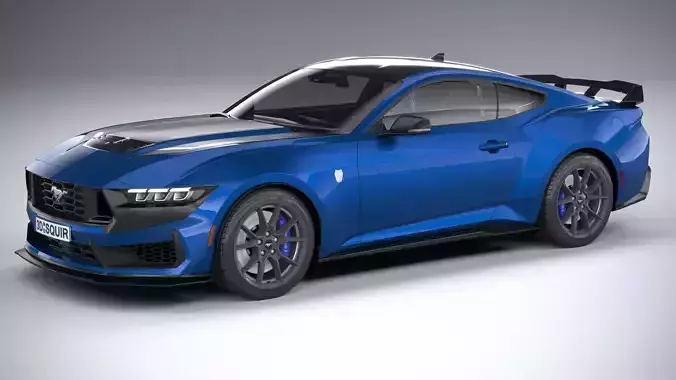
Main features:
Originally created with 3ds Max 2016
Two .MAX files with V-Raymaterials
One .FBX file with V-Ray materials
Subdivision modifier is available in the history for .MAX,
file formats (subdivision iteration 2 is set for all objects).
So you can get access to original non-smoothed
mesh by deactivating the Subdivision modifier
the Max Files divided to 12 Group and 1 object
1-Body
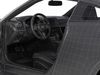
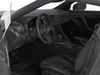
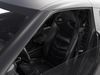
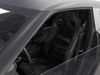
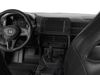
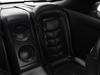
2-Interior
3- Left Door
4-Right Door
5-HeadLights
6-RearLights
7- (4) Groups for each tire and brake system
Tire_01 Tire_02 Tire_03 Tire_04
11- DaytimeRunningLight
12- Signal_Light
13- Black Object (for black materials)
Objects with same materials attached together
All objects are intelligently named
Doors can be opened
Unit system is set to metric (millimeters). Real-world
scale
All textures and materials are included and assigned
23 textures, which vary in resolution from 500x500px to
1024x1024px
- Previews rendered in 3ds Max 2016 with V-Ray 3.6
Special notes:
-The geometry for .OBJ format is set to quads, the front Seats for OBJ format have 1 Subdivision level collapsed
and the OBJ Format have no materials.
.MAX files can be loaded in 3ds Max 2013 or higher.
.FBX files Exported in 3ds Max 2016
Most of the objects is Unwrapped.
Polycounts:
- .MAX format (only one file included with TurboSmooth iteration 2 applied to needed objects):
no TurboSmooth: 3.802.967 faces and 3.477.642 Verts
- Stitches in Seats and interior increased the polycount, you can delete it if you not render interior shot with closeup on stitched objects
-The polycount without stitches 1,809,078 faces and 1,655,178 Verts ( No Turbosmooth )
- 4,518,584 Polys and 2,839,052 Verts with (Turbosmooth 1 iteration)
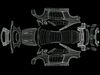
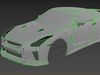
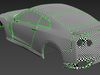
More Clay renders and wireframes available on Behance link below
REVIEWS & COMMENTS
accuracy, and usability.