High-quality 3D assets at affordable prices — trusted by designers, engineers, and creators worldwide. Made with care to be versatile, accessible, and ready for your pipeline.
Included File Formats
This model is provided in 14 widely supported formats, ensuring maximum compatibility:
• - FBX (.fbx) – Standard format for most 3D software and pipelines
• - OBJ + MTL (.obj, .mtl) – Wavefront format, widely used and compatible
• - STL (.stl) – Exported mesh geometry; may be suitable for 3D printing with adjustments
• - STEP (.step, .stp) – CAD format using NURBS surfaces
• - IGES (.iges, .igs) – Common format for CAD/CAM and engineering workflows (NURBS)
• - SAT (.sat) – ACIS solid model format (NURBS)
• - DAE (.dae) – Collada format for 3D applications and animations
• - glTF (.glb) – Modern, lightweight format for web, AR, and real-time engines
• - 3DS (.3ds) – Legacy format with broad software support
• - 3ds Max (.max) – Provided for 3ds Max users
• - Blender (.blend) – Provided for Blender users
• - SketchUp (.skp) – Compatible with all SketchUp versions
• - AutoCAD (.dwg) – Suitable for technical and architectural workflows
• - Rhino (.3dm) – Provided for Rhino users
Model Info
• - All files are checked and tested for integrity and correct content
• - Geometry uses real-world scale; model resolution varies depending on the product (high or low poly)
• • - Scene setup and mesh structure may vary depending on model complexity
• - Rendered using Luxion KeyShot
• - Affordable price with professional detailing
Buy with confidence. Quality and compatibility guaranteed.
If you have any questions about the file formats, feel free to send us a message — we're happy to assist you!
Sincerely,
SURF3D
Trusted source for professional and affordable 3D models.
More Information About 3D Model :
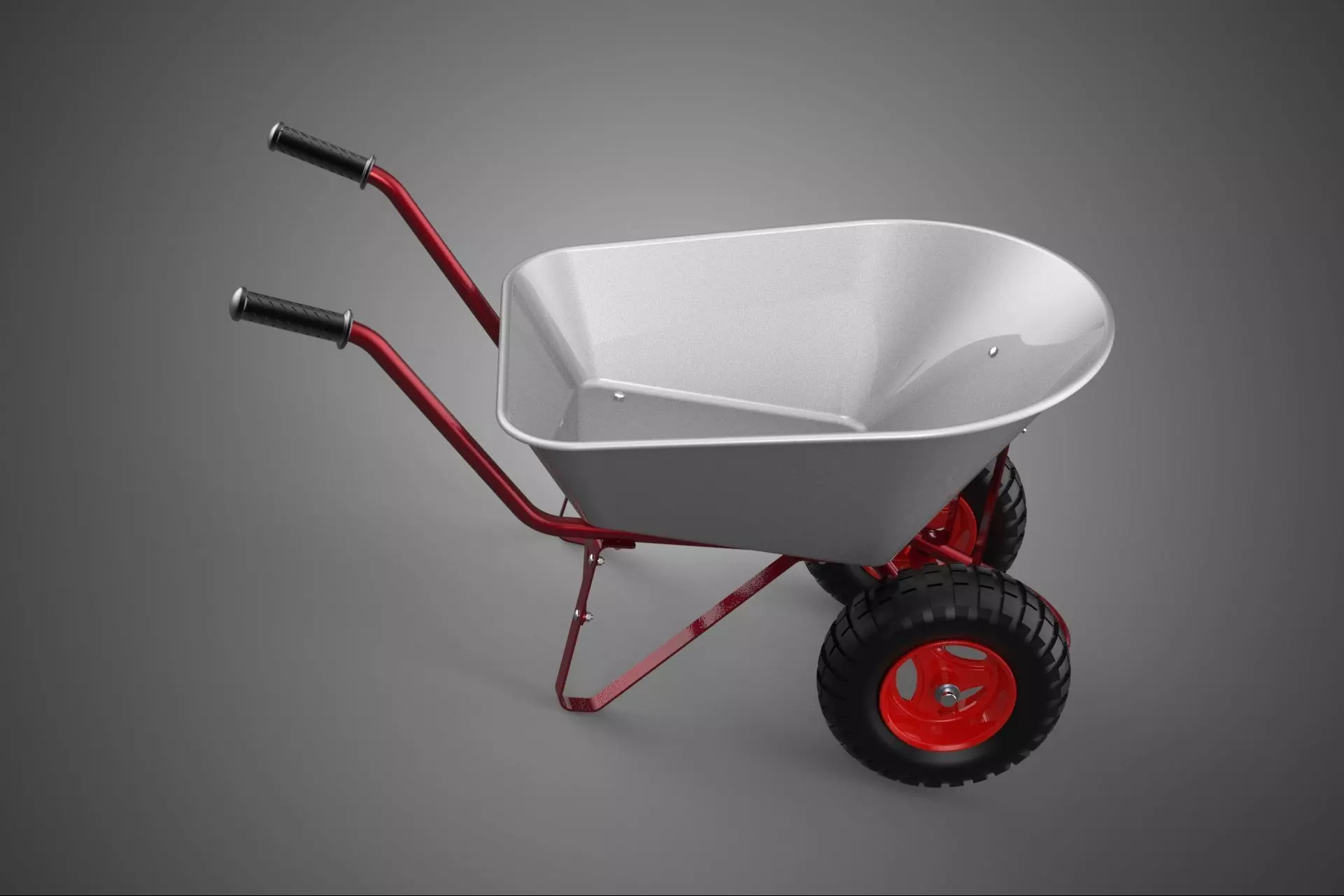
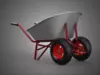
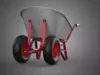
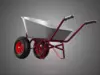
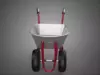
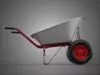
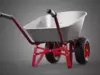
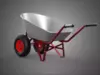
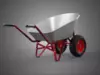
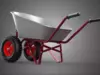
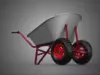
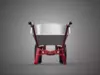
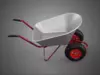
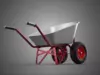
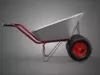
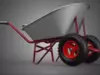
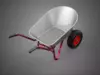
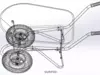
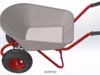
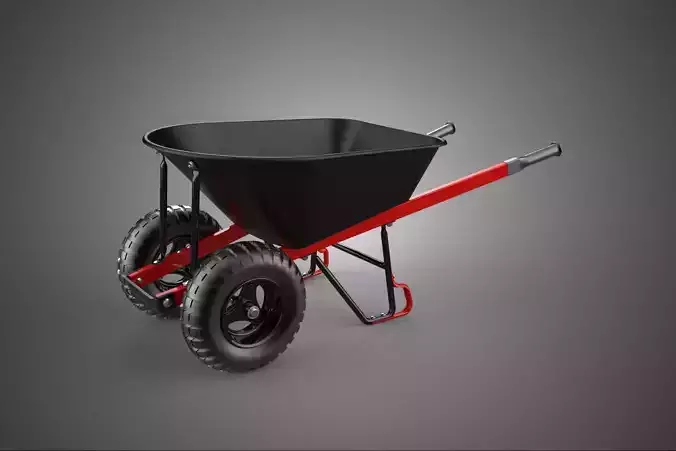
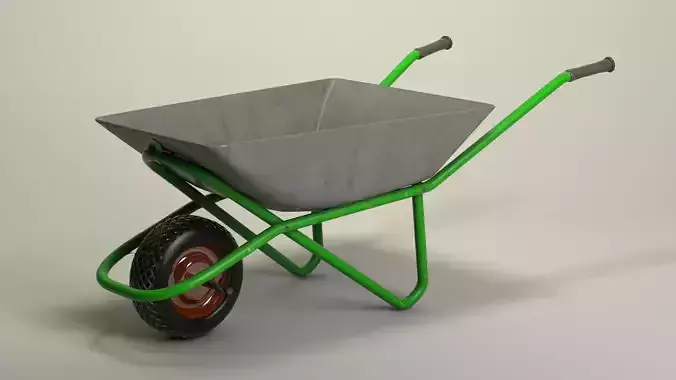
The apparatus described is a fundamental piece of manual conveyance equipment utilized across construction, agricultural, and horticultural sectors, typically operating as a material handling device. Variously categorized as a wheelbarrow (single-wheel configuration) or a garden cart (often featuring dual or quadruple wheel assemblies), this tool is engineered for the efficient translocation and controlled dumping of bulk payloads over relatively short distances.
I. Definition and Classification
The manual hand push wheelbarrow, in its most common form, functions mechanistically as a Class 2 lever, where the wheel acts as the fulcrum, the load resides between the fulcrum and the effort (the user pushing the handles). This mechanical arrangement drastically reduces the effort required to lift and transport heavy, unstable, or voluminous materials such as soil, aggregates, masonry debris, compost, and liquids.
While the term wheelbarrow technically refers to the single-wheel design—optimized for maneuverability in confined spaces and easier leverage during tipping—the designation often extends to small two-wheeled utility carts. These carts, however, typically prioritize stability and higher load capacity over tight turning radii.
II. Design and Componentry
The design structure consists of four primary integrated systems: the hopper, the chassis, the wheel assembly, and the handles.
A. The Hopper (Dump Body):
The receptacle, or hopper, holds the material. It is constructed from rigid materials selected based on the intended payload. Heavy-duty construction models typically use thick-gauge steel (e.g., 14-gauge), offering resistance to impact and abrasion from sharp objects. Horticultural and residential models often utilize high-density polyethylene (HDPE) or other polymers, which are lighter, rust-proof, and suitable for wet or corrosive materials. The shape is usually trapezoidal or rectangular with sloped sides to facilitate complete material discharge.
B. The Chassis and Frame:
The frame provides the structural integrity and supports the load. It is traditionally constructed from steel tubing or channel iron, utilizing robust bracing to manage shear forces encountered during loading and movement. The design ensures the center of gravity of the payload is optimally positioned close to the axle, maximizing load distribution and minimizing the vertical effort required by the operator.
C. The Wheel Assembly:
The wheel assembly dictates the stability and terrain capability of the unit. Common types include pneumatic tires (providing cushioning and traction on uneven ground), semi-pneumatic tires (offering puncture resistance), or solid rubber tires (requiring no maintenance but providing less shock absorption). The axle mounting is critical, designed to withstand lateral stresses and typically utilizing ball bearings or bushings for reduced rolling resistance.
D. The Handles:
Handles are the points of manual engagement. They are usually elongated extensions of the main frame, often fitted with ergonomic grips made of rubber or cushioned plastic to mitigate operator fatigue and vibration transfer. The length and height of the handles are calibrated to allow the operator to push or pull the cart while maintaining an upright posture.
III. Functionality and Operation
The fundamental function is dual-purpose: transport and controlled discharge (dumping).
Material Handling: The process involves manually loading the hopper, lifting the handles to pivot the load onto the wheel(s), and pushing the apparatus to the destination. Proper operation requires the operator to manage the dynamic equilibrium of the device, particularly in single-wheel models.
Dumping Mechanism: The dump function is achieved by utilizing the wheel as a pivot point. The forward placement of the axle relative to the hopper's mass allows the operator to lower the handles and tip the front edge of the hopper downward. This motion uses gravity to expel the contents efficiently, eliminating the need for manual scooping or overturning the entire frame. For certain models, especially large utility carts, a mechanical release or foot pedal may initiate the dumping action.
IV. Applications
This manual device remains essential due to its simplicity, low maintenance requirements, and capacity to operate in environments inaccessible to motorized equipment. Its applications include: moving mulch and topsoil in landscaping; relocating construction rubble; transporting feed, hay, or manure in agriculture; and mixing small batches of concrete or mortar.
KEYWORDS: Wheelbarrow, Cart, Material Handling, Dump Body, Manual Labor, Horticulture, Construction, Agriculture, Conveyance, Chassis, Hopper, Ergonomics, Class 2 Lever, Translocation, Payload, Aggregates, Debris, Pneumatic Tire, Single Wheel, Dual Wheel, Utility Cart, Dump Mechanism, Galvanized Steel, HDPE, Axle Assembly, Wheelbarrow Mechanics, Gardening Tool, Site Management, Transport Device.