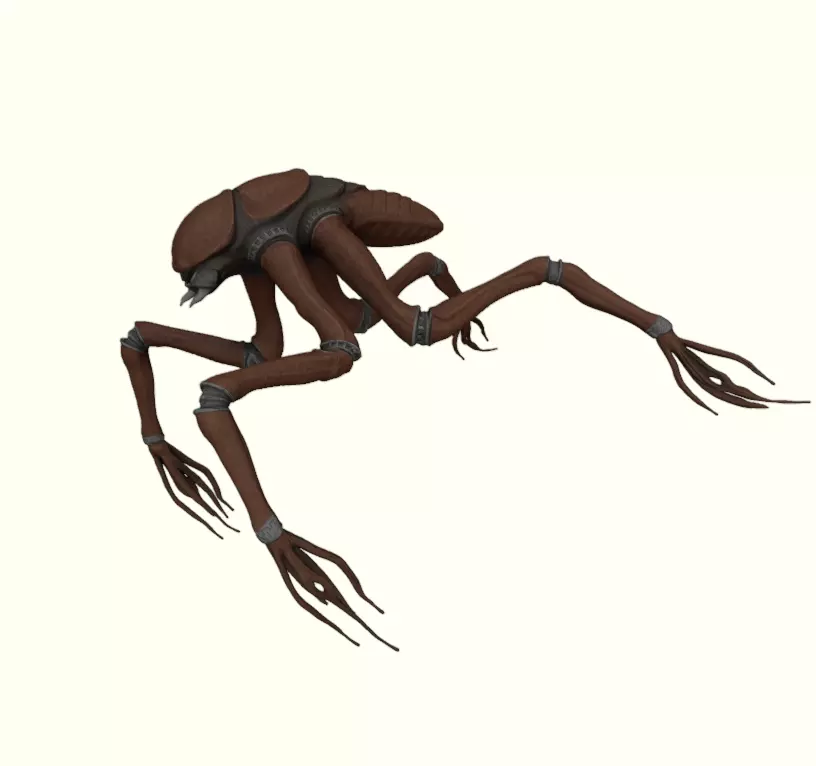
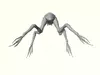
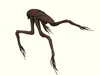
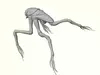
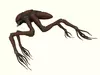
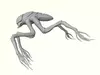
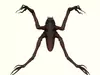
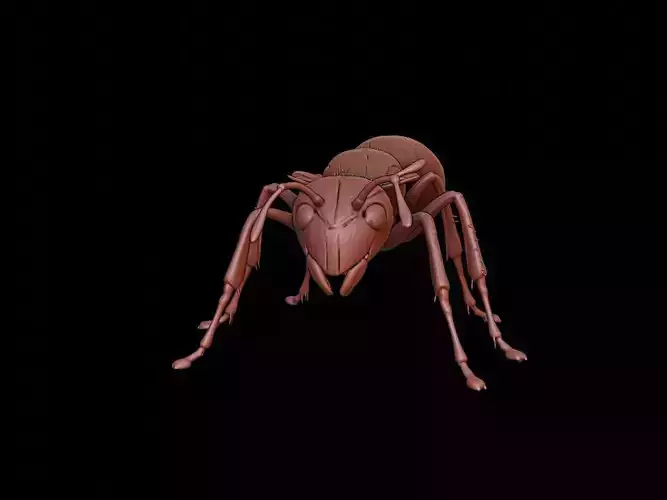
In the abandoned service tunnels beneath a silent colony, workers once reported a creature that never walked when it could spring. It waited high in corners, folded into shadow, then launched across open space with a dry clicking sound from its joints. The few who saw it up close remembered the same details: a low armored head, dark recessed eyes, and long clawed limbs built for sudden movement.
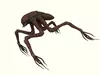
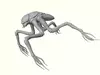
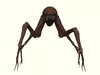
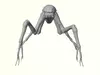
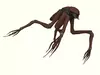
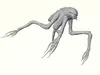
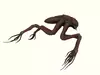
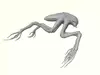
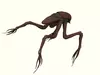
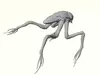
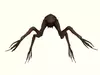
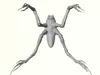
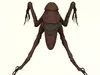
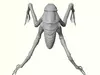
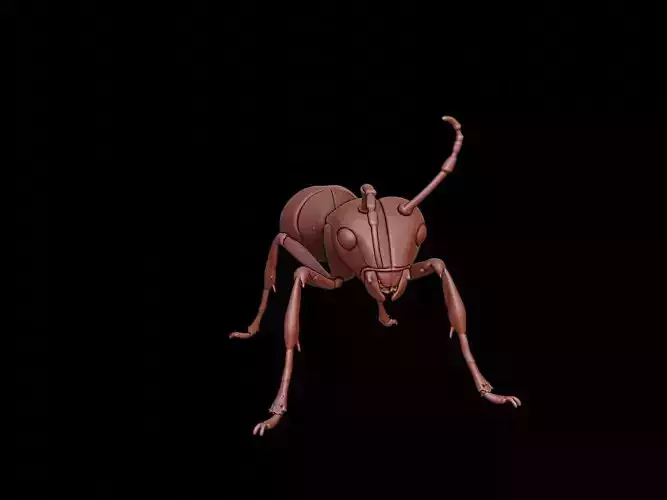
This model depicts a lean alien jumping creature with an elongated body, long jointed legs, clawed feet, and thin split fingers that give it a fast, predatory silhouette. The head is broad and low, with tusk-like protrusions, a dark facial recess, and a heavy shell-like upper plate. The body combines smooth brown organic surfaces with darker armored areas around the face and joints, giving the creature a mix of insectoid and extraterrestrial anatomy.
The pose suggests a creature ready to leap, crawl, or cling to walls. Its extended limbs create strong visual movement, while the compact central body keeps the design readable from above, side, and front views. It works well as a sci-fi horror creature, alien tunnel hunter, tabletop enemy, derelict ship encounter, or display model for collectors who enjoy unusual insect-like forms. The long fingers and clawed feet give painters opportunities for darker tips, drybrushed joints, and subtle organic texture across the shell and limbs.
This model is based on an original concept and design. The initial 3D form was generated with the assistance of AI tools, after which it was extensively refined and manually detailed in Blender and other 3D editing software. This workflow ensures the figure maintains its unique character and meets the standards of precision, structure, and print-readiness required for high-quality 3D printing.
Please note that the model is primarily designed for textured versions (OBJ + MTL in ZIP archive), allowing for a rich and visually detailed result when used with color-supported 3D printing or digital rendering. The non-textured version (STL, 3MF) may lack some surface details visible in the textured formats. The formats included are STL, OBJ, MTL, 3MF, FBX, and BLEND inside a ZIP archive.
Technical features and printing recommendationsRecommended print technologyResin printers are recommended for the thin fingers, claw tips, facial tusks, and fine limb details.FDM printers can work at larger sizes with careful supports and slower outer-wall speeds.Suggested resin settingsLayer height: 0.03–0.05 mmOrientation: slight side tilt to reduce support marks on the face and protect the long limbsSupports: light to medium supports under the belly, leg joints, fingers, claws, and head overhangsHollowing: usually unnecessary at smaller sizes; optional for larger display prints with 2–3 mm wall thickness and drain holes hidden under the bodySuggested FDM settingsLayer height: 0.12–0.16 mm with a 0.4 mm nozzleWalls: 2–3 perimeters, infill 12–18%Supports: required under the raised body, long fingers, leg overhangs, and facial tusksMaterial: PLA for easier printing, PETG for stronger thin limbs and claw tipsRecommended size and print estimatesRecommended length: 120–180 mm for tabletop or shelf displaySupports: requiredMinimum print time: 420 minutesMaterial estimate at about 150 mm length: Resin 80–140 g or Filament 100–180 g, depending on hollowing, supports, and infill
Scaling Note: This model is designed in millimeters (mm). If it appears too small when imported into your slicer, ensure your software is set to mm units. If needed, scale the model up 100x if the slicer defaults to meters instead.