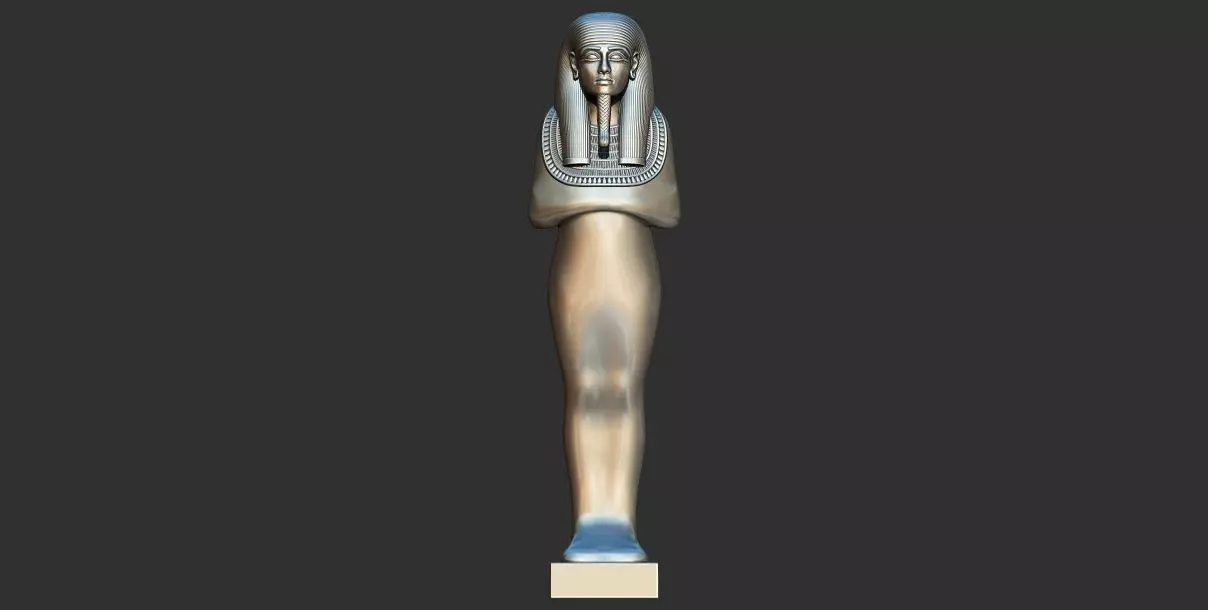
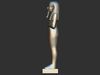
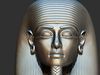
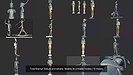
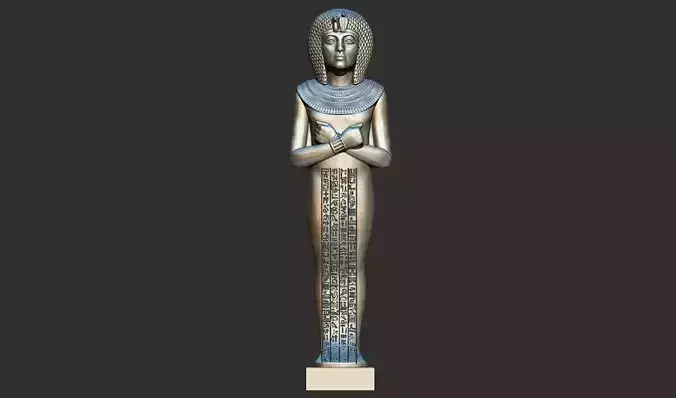
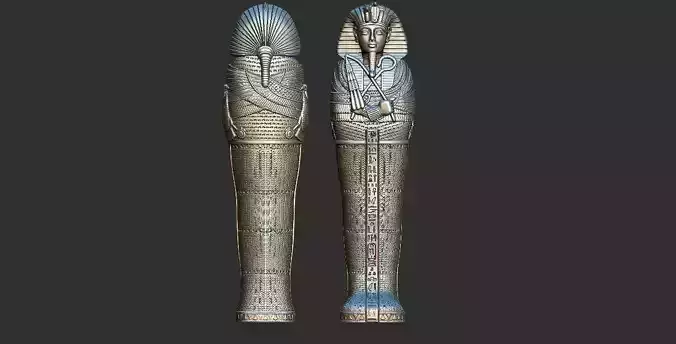
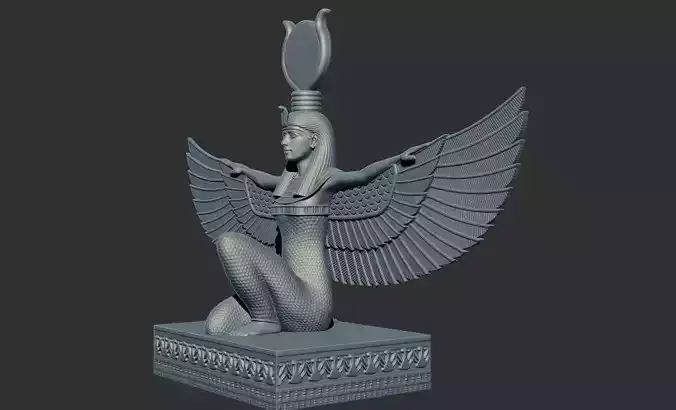
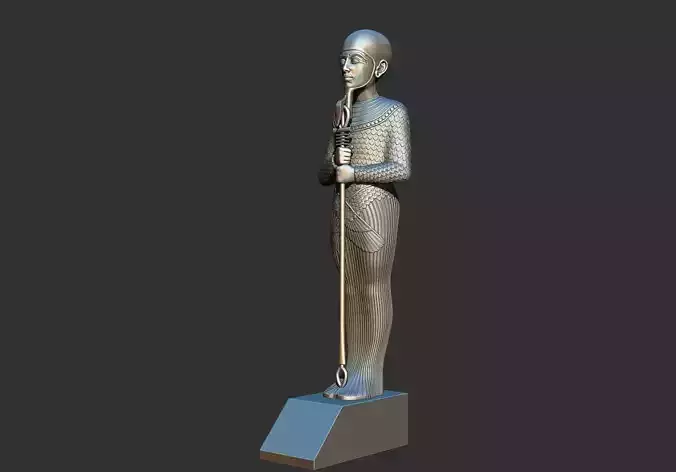
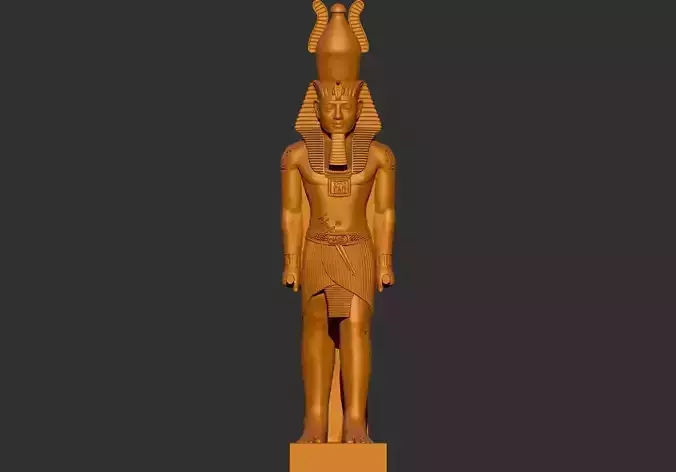
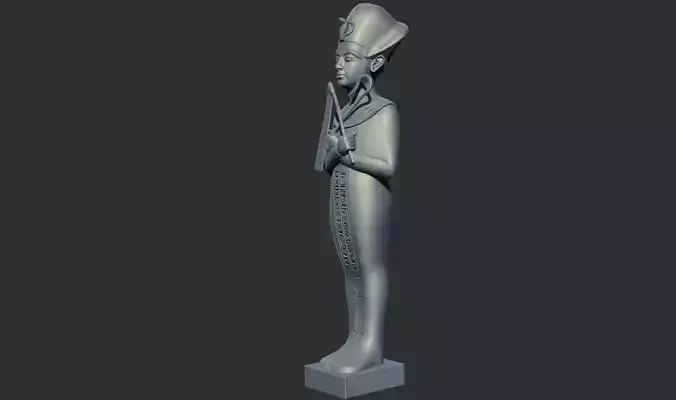
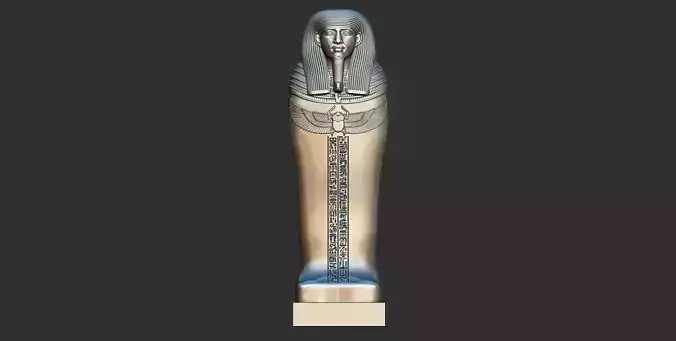
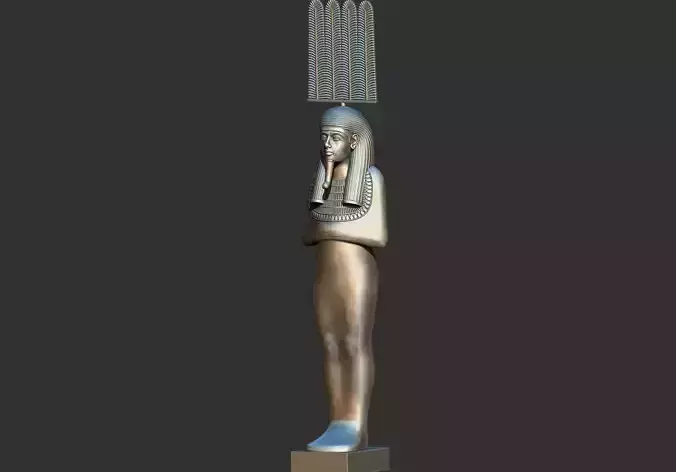
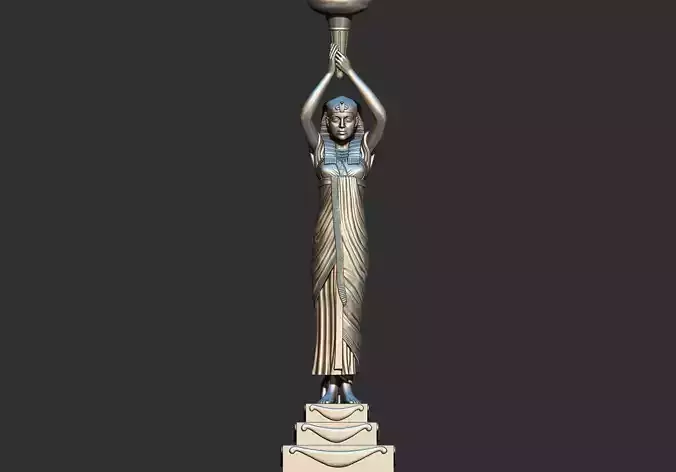
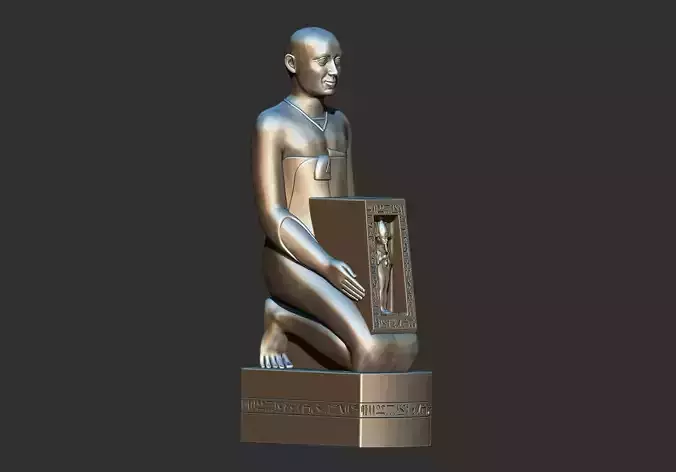
golden Ushabti statue figure from tutankhamun tutanknomaon 3d printable model
he Ushabti Statue of Tutankhamun is a fascinating artifact from ancient Egypt, crafted to serve the young pharaoh in the afterlife. Ushabtis, also called shabtis or shawabtis, were small figurines placed in tombs to work on behalf of the deceased in the afterlife.
Tutankhamun’s Ushabti statues were among the many treasures found in his tomb, discovered by Howard Carter in 1922.The statues were made from various materials, including wood, faience, and stone.Many of them were gilded or painted, showcasing exquisite craftsmanship.These figurines were inscribed with hieroglyphic texts from the Book of the Dead.The inscriptions included spells that commanded the Ushabtis to perform labor for the king.Some Ushabtis of Tutankhamun depicted him wearing the nemes headdress and royal garments.The statues were meant to ensure that the pharaoh would not have to work in the afterlife.Ancient Egyptians believed that the afterlife was a continuation of life on Earth.Ushabtis acted as magical servants, performing agricultural tasks or construction work.Over 400 Ushabti statues were found in Tutankhamun’s tomb.They varied in size, with some being small while others were over a foot tall.The finest examples were made of glazed faience, a blue-green material symbolizing rebirth.Some were carved from alabaster or ebony wood, highlighting the wealth of the young king.A few ushabtis were made of gold, indicating their importance in the burial.They were arranged carefully in the tomb’s annex and treasury chambers.The ushabtis were often placed inside wooden shrines to protect them.Many had individual names inscribed, possibly representing real workers or deities.Their presence reflected the ancient Egyptian belief in an active afterlife.Ushabtis were widely used in Egyptian burials from the Middle Kingdom onward.The number of ushabtis in a tomb often indicated the status of the deceased.Tutankhamun’s ushabtis demonstrated royal iconography and religious symbolism.The craftsmanship on these statues was incredibly detailed, with lifelike features.Some ushabtis held hoes and baskets, symbolizing their readiness for labor.The hieroglyphic inscriptions were carefully written in gold or black ink.The statues were discovered alongside other funerary objects, like canopic jars.Howard Carter meticulously documented each ushabti, preserving their history.The discovery of these statues helped scholars understand burial customs.Many of Tutankhamun’s ushabtis are now displayed in the Egyptian Museum in Cairo.They remain some of the most iconic artifacts from the tomb of the boy king.These magical servants continue to fascinate historians and visitors today.