Coastal travelers once spoke of a small octopus that followed boats at dusk. It swam just beneath the surface, curling its arms in slow spirals as if drawing patterns in the water. When storms gathered, the creature appeared again and drifted beside the hull until the ship found calmer tides. Its likeness began appearing in carved charms and statues made by those who believed the little guardian brought safe passage.
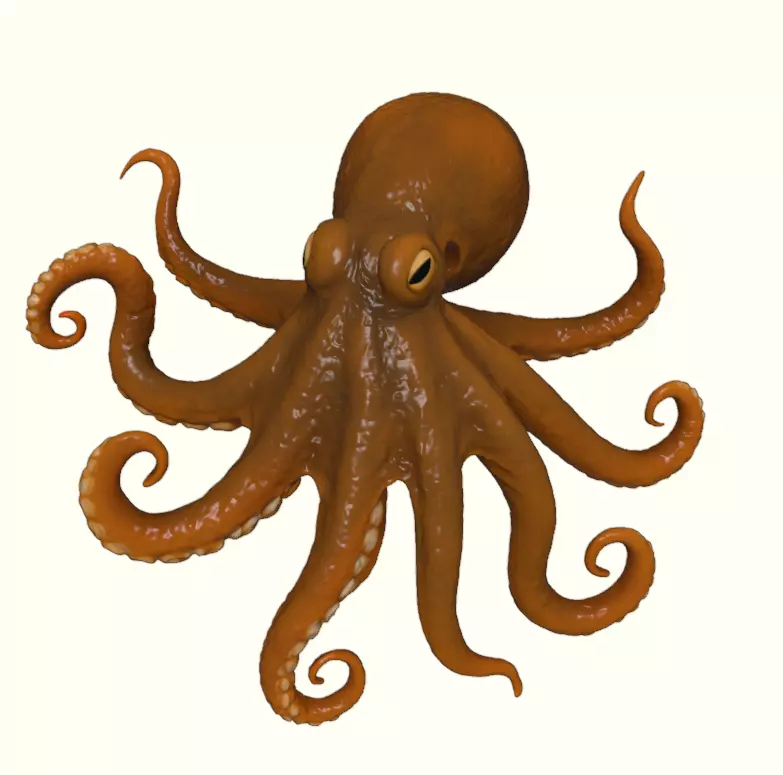
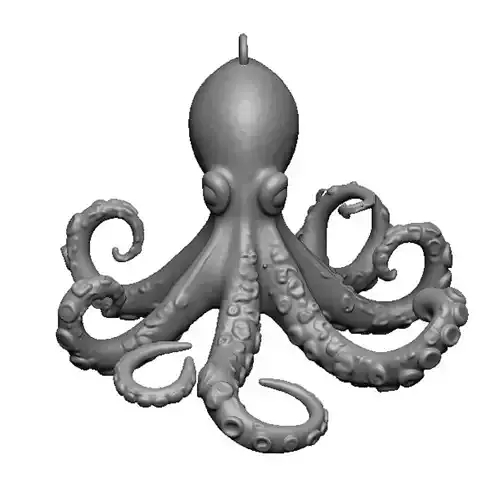
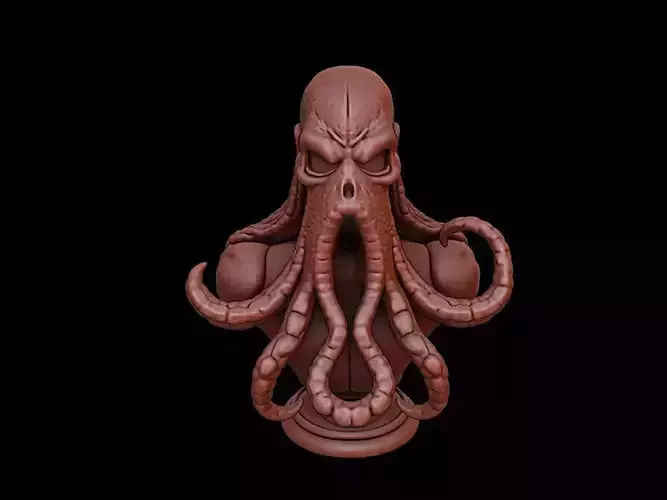
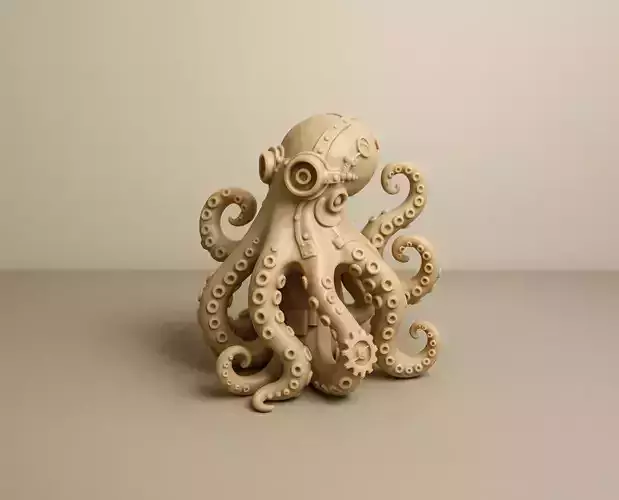
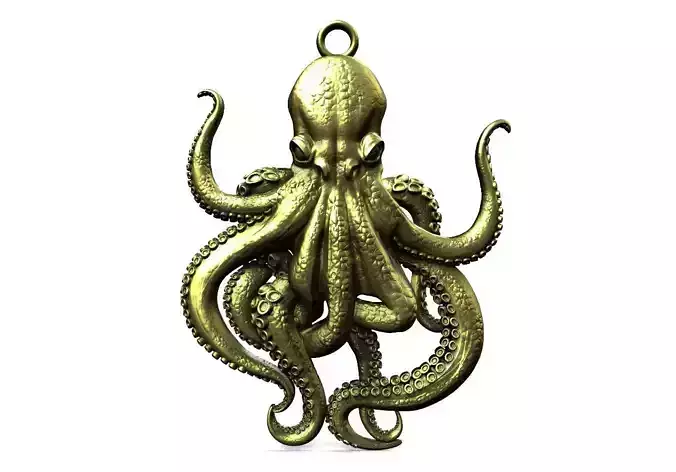
This model shows a stylized yet naturalistic octopus with a rounded mantle, expressive eyes, and eight curling arms arranged in a flowing, dynamic pose. Several arms stretch forward while others coil beneath the body, creating a sense of motion in open water. The skin carries gentle texture across the mantle and arms, and the suction cups are clearly defined without becoming too fragile for printing. The design works for tabletop gaming, dioramas, coastal-themed displays, or as a small decorative creature for shelves and desks.
The sculpt emphasizes strong silhouettes and readable forms from multiple angles. The loops and curves of the arms create appealing shadows and make painting straightforward. Thicker sections preserve durability while maintaining an organic look.
This model is based on an original concept and design. The initial 3D form was generated with the assistance of AI tools, after which it was extensively refined and manually detailed in Blender and other 3D editing software. This workflow ensures the figure maintains its unique character and meets the standards of precision, structure, and print-readiness required for high-quality 3D printing.
Please note that the model is primarily designed for textured versions (OBJ + MTL in ZIP archive), allowing for a rich and visually detailed result when used with color-supported 3D printing or digital rendering. The non-textured version (STL, 3MF) may lack some surface details visible in the textured formats. The formats provided are STL, OBJ, MTL, 3MF, FBX, and BLEND inside a ZIP archive, along with separate OBJ and STL files for the platform’s built-in 3D viewer.
Technical features and printing recommendations
Recommended print technology
Resin printers for best capture of texture and suction cups.
FDM printers at moderate or larger scale with good cooling.
Suggested resin settings
Layer height: 0.05–0.08 mm.
Hollowing with 2–3 mm wall thickness and drain holes under the mantle.
Standard, tough, or slightly flexible resin all work depending on desired durability.
Light supports under curling arm tips, lower mantle, and deep undercuts.
Suggested FDM settings
Layer height: 0.12–0.16 mm with a 0.4 mm nozzle.
Two or three perimeters and 14–20% infill.
PLA for easy printing or PETG for stronger arms.
Supports for inner loops of arms and under the mantle. A small brim improves adhesion.
Orientation and supports
Print with the main body centered and the arms spread on the plate for stable foundations.
For resin, angle the model slightly so each arm builds gradually and avoids large suction surfaces.
Clean support marks on the underside of arms with light sanding before priming.
At around 80–100 mm across the arm span, resin prints usually take 4–6 hours and use 40–70 ml of resin. FDM prints at similar size often take 5–7 hours and use 45–70 g of filament. Larger display prints increase both measures, so check slicer estimates before starting long jobs.
Scaling Note: This model is designed in millimeters (mm). If it imports unusually small, set your slicer to mm units. If your slicer defaults to meters, scale the model up 100x to restore normal dimensions. You can scale the model freely for display, with very small scales reducing suction-cup detail and very large scales increasing print time and material use.