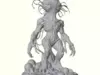
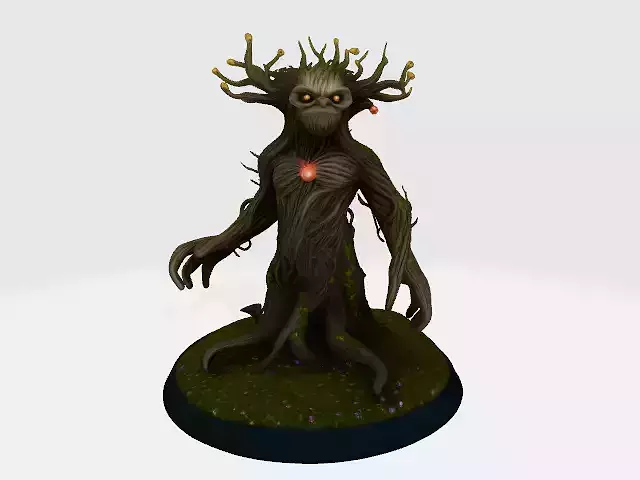
Long after the wars of Aevaris, wanderers began finding patches of ground that pulsed faintly at night, like embers under wet soil. In the center of those patches stood a single figure, silent and awake, with a light in its brow and another burning in its chest. Some called it a guardian. Others called it a warning. It never chased anyone. It only watched, and the longer you stayed, the more your thoughts felt like they were being read aloud.
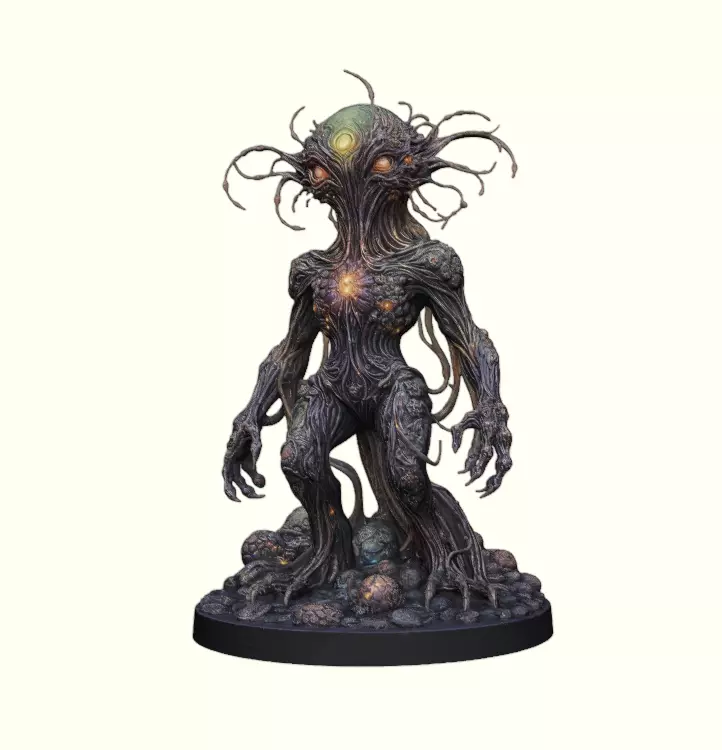
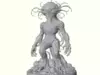
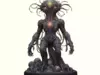
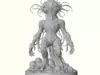
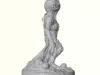
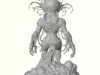
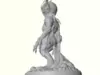
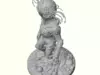
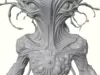
This model depicts an alien, fungal-humanoid oracle with elongated limbs, a narrow torso, and an organic surface covered in vein-like ridges and root textures. The head is crowned with tendril growths that spread outward in multiple directions, creating a striking silhouette. The figure’s face includes glowing eye cavities and a luminous node on the forehead, reinforced by a second “core” glow in the chest area. The hands are long and claw-like, with a relaxed, hovering posture that feels both curious and predatory.
The character stands on a textured ground base that resembles clustered spores, stones, and bulbous growths. That base adds stability and provides extra paint opportunities for bioluminescent effects, wet organic highlights, or corrupted earth themes. The overall design suits tabletop monsters, sci-fi horror encounters, fantasy realms with cosmic corruption, or collector display shelves where an unusual silhouette stands out.
This model is based on an original concept and design. The initial 3D form was generated with the assistance of AI tools, after which it was extensively refined and manually detailed in Blender and other 3D editing software. This workflow ensures the figure maintains its unique character and meets the standards of precision, structure, and print-readiness required for high-quality 3D printing.
Please note that the model is primarily designed for textured versions (OBJ + MTL in ZIP archive), allowing for a rich and visually detailed result when used with color-supported 3D printing or digital rendering. The non-textured version (STL, 3MF) may lack some surface details visible in the textured formats. The formats included are STL, OBJ, MTL, 3MF, FBX, and BLEND inside a ZIP archive.
Technical features and printing recommendations
Recommended print technology
Resin printers for tendrils, facial cavities, and fine surface ridges.
FDM printers at larger scale if you want a tougher tabletop piece.
Suggested resin settings
Layer height: 0.03–0.05 mm for best tendril definition
Orientation: tilt 20–35° to protect the face and reduce suction around the torso
Supports: medium supports under tendrils, hands, elbows, and undercuts around the base rim
Hollowing: 2–3 mm wall thickness with drain holes under the base to reduce resin use
Suggested FDM settings
Layer height: 0.12–0.16 mm, 0.4 mm nozzle
Walls: 3 perimeters, infill 12–18%
Supports: required for tendrils, arms, and deep negative spaces under the torso
Material: PLA for ease, PETG for stronger thin parts
Recommended size, time, material
Recommended height: 90–120 mm for tabletop use, or 150–180 mm for display
Supports: required due to tendrils and arm undercuts
Minimum print time to plan for: 420 minutes
Material estimate at ~110 mm: Resin 70–130 g or Filament 80–150 g, depending on hollowing and infill
Scaling Note: This model is designed in millimeters (mm). If it appears too small when imported into your slicer, ensure your software is set to mm units. If needed, scale the model up 100x if the slicer defaults to meters instead.