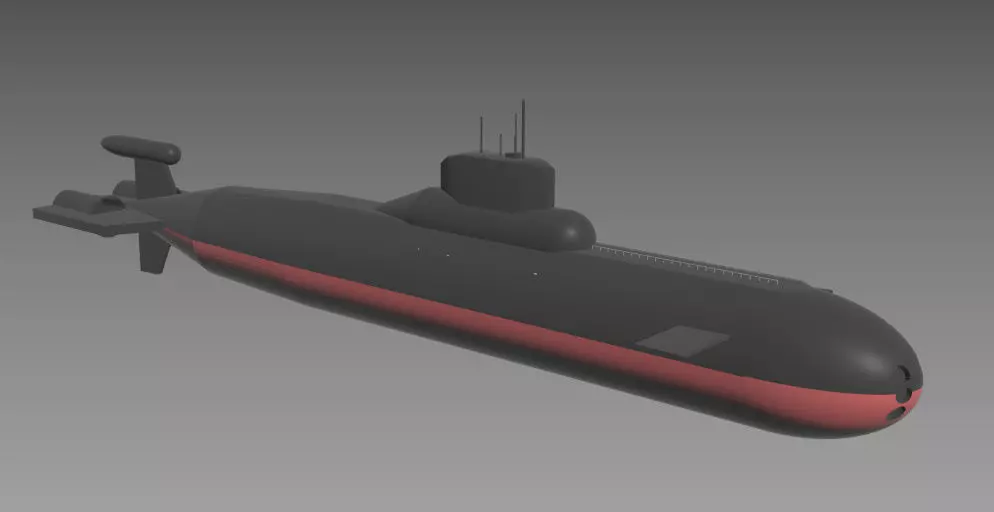
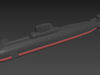
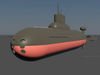
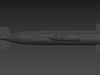
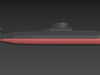
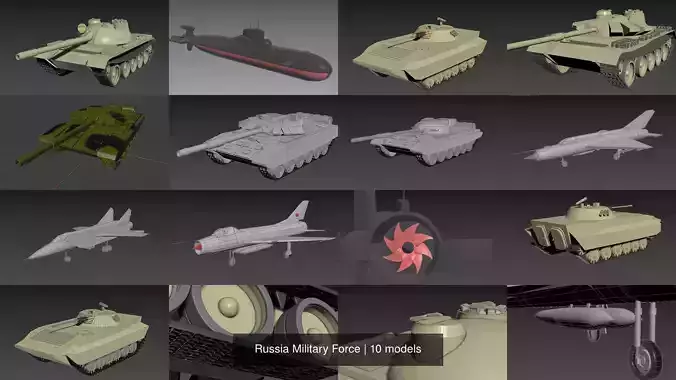
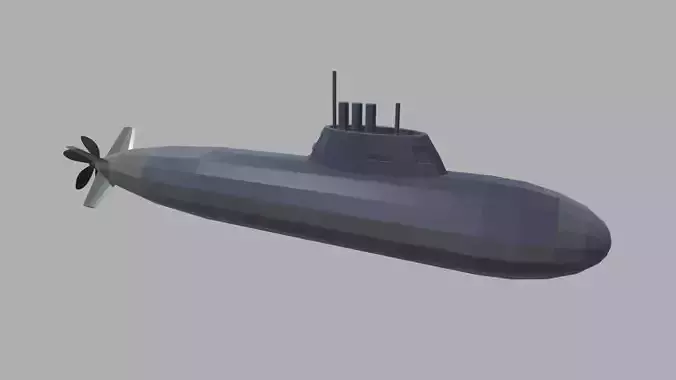
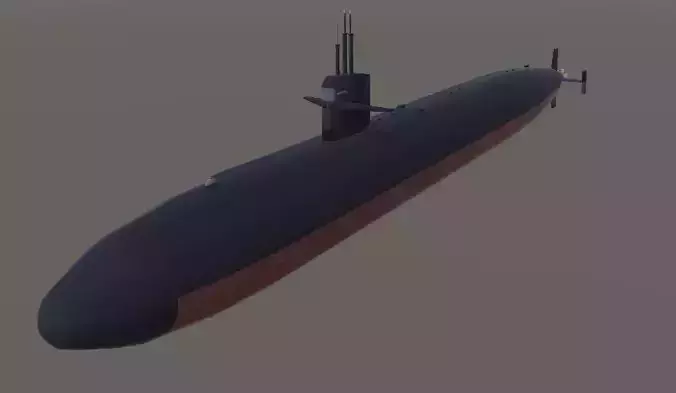
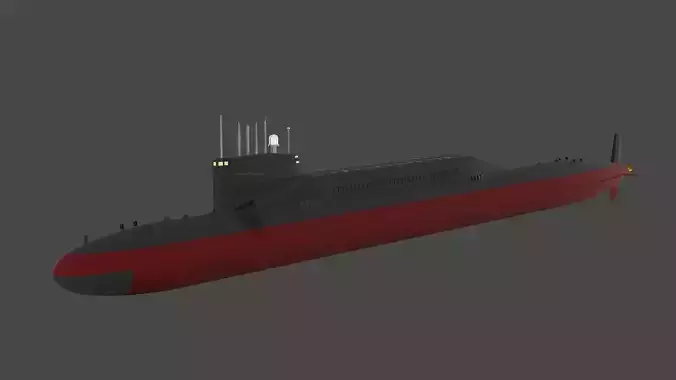
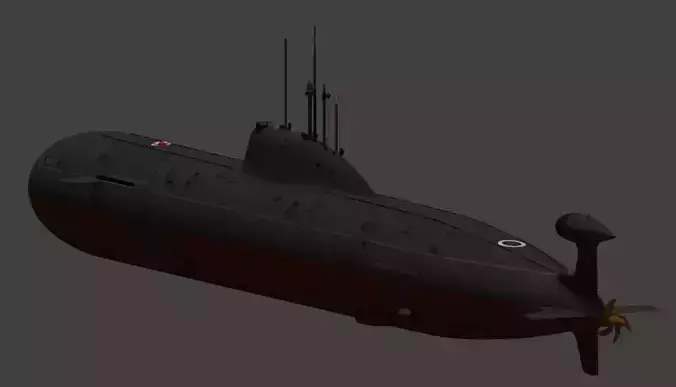
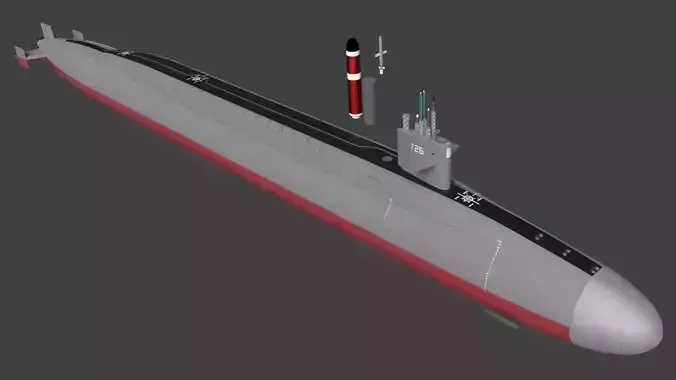
The Project 941 Akula heavy missile submarine cruisers (SSBN Typhoon according to NATO codification) are a series of Soviet and Russian nuclear-powered strategic submarines of the third generation. The main armament is 20 ballistic missiles R-39 (RSM-52). The world's largest submarines. In total, six ships were built, as of 2020, three ships have been scrapped, one (TK-208 Dmitry Donskoy) is in service as an experimental ship, two more - TK-17 and TK-20 are in reserve. for the design of the TRPKSN was issued in December 1972, the chief designer of the project was appointed SN Kovalev. The new type of submarine cruisers was positioned as a response to the US construction of the Ohio-class SSBN (the first boats of both projects were laid down almost simultaneously in 1976). The dimensions of the new ship were determined by the dimensions of the new solid-propellant three-stage intercontinental ballistic missiles R-39 (RSM-52), with which it was planned to equip the boat. Compared with the Trident-I missiles, which were equipped with the American Ohio, the R-39 missile had the best characteristics of flight range, throw weight and had 10 blocks versus 8 for Trident. However, at the same time, the R-39 turned out to be almost twice as long and three times heavier than its American counterpart. To accommodate such large missiles, the standard SSBN layout scheme did not fit. On December 19, 1973, the government decided to start work on the design and construction of a new generation of strategic missile carriers.
The first boat of this type, named the 208th heavy cruiser (TK-208), was laid down at the Sevmash enterprise in June 1976, and launched on September 29, 1980. Before descending in the bow, below the waterline, an image of a shark was applied to the side of the submarine; later, shark stripes appeared on the crew's uniform. Despite the later launch of the project, the lead cruiser entered sea trials a month earlier than the American Ohio (July 4, 1981). TK-208 entered service on December 12, 1981.
It was planned to build 12 boats of Project 941 Akula in total, then the series was reduced to 10 boats. However, only 6 such boats were laid down, launched and put into operation, from 1981 to 1989. The planned seventh, eighth, ninth and tenth ships were never laid down; for the seventh, hull structures were being prepared (see below), and the other three boats of the series generally remained at the stage of preliminary preparation for construction.
The construction of 9-storey submarines provided orders for more than 1000 enterprises of the Soviet Union; only at Sevmash 1219 people who participated in the creation of this unique ship received government awards.
For the first time, Leonid Brezhnev announced widely about the creation of the Shark series at the XXVI Congress of the CPSU, stating:The Americans have created a new submarine, Ohio, with Trident-I missiles. We have a similar system - Typhoon. "
Brezhnev specifically called the Shark Typhoon to mislead opponents in the Cold War.
To ensure the reloading of missiles and torpedoes in 1986, a diesel-electric transport-rocket carrier Alexander Brykin of project 11570 with a total displacement of 16,000 tons was built, it took on board up to 16 SLBMs.
In 1987, TK-12 Simbirsk carried out a long high-latitude cruise to the Arctic with repeated replacement of crews.
On September 27, 1991, during a training launch in the White Sea on TK-17 Arkhangelsk, a training missile exploded in the mine and burned out. The explosion tore off the cover of the mine, and the missile warhead was thrown into the sea. The crew was not injured during the incident; the boat was forced to get up for minor repairs.
In 1997, the Northern Fleet underwent tests, during which a salvo launch of 20 R-39 missiles was made from the TK-20, the crew under the command of Captain 1st Rank A.S.Bogachev.