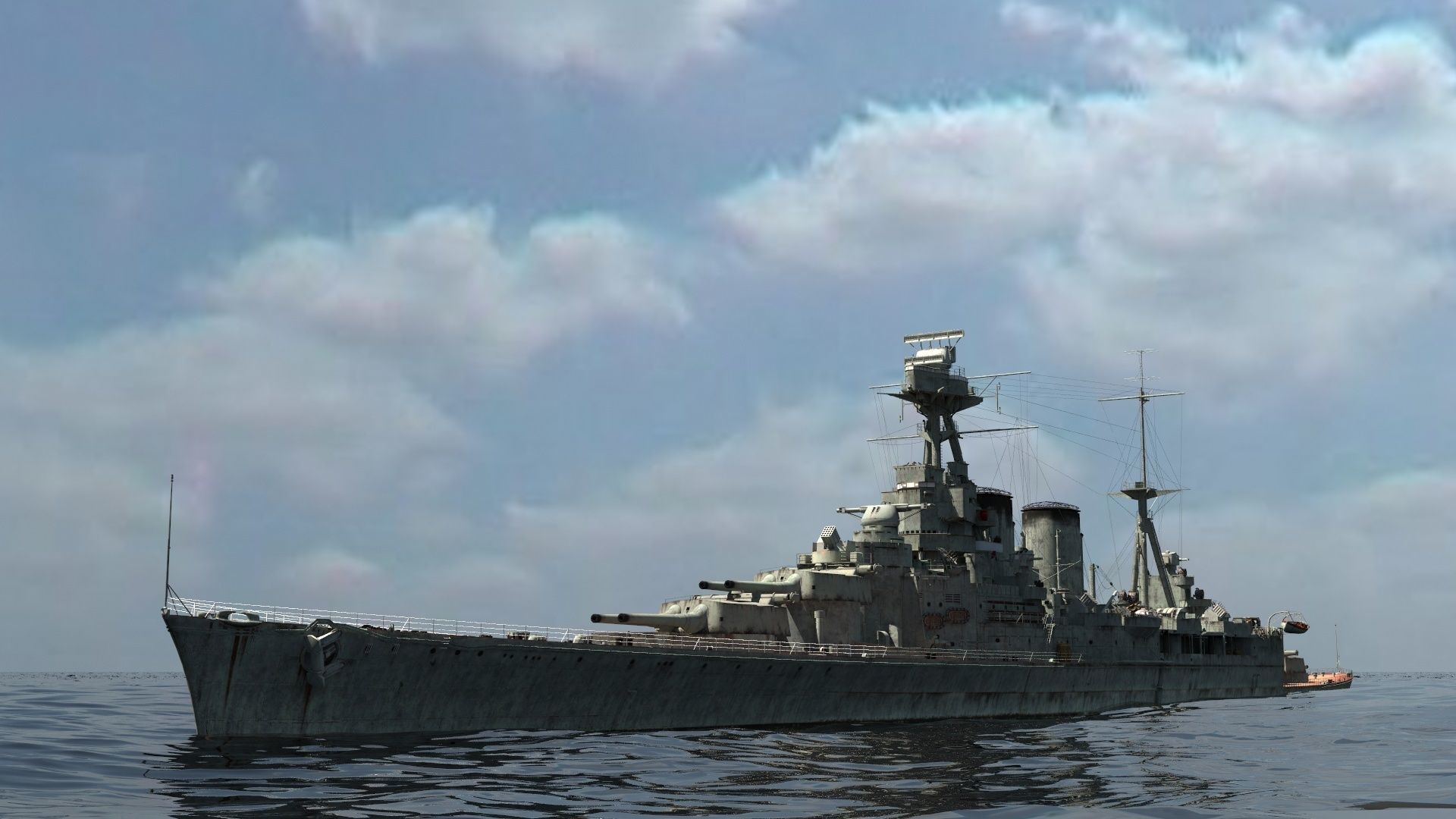
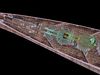
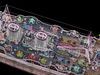
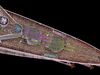
Hood (pennant number 51) was a battlecruiser of the Royal Navy (RN). Hood was the first of the planned four Admiral-class battlecruisers to be built during World War I. Already under construction when the Battle of Jutland occurred in mid-1916, that battle revealed serious flaws in her design despite drastic revisions before she was completed four years later. For this reason, she was the only ship of her class to be completed, as the Admiralty decided it would be better to start with a clean design on succeeding battlecruisers, leading to the never-built G-3 class. Despite the appearance of newer and more modern ships, Hood remained the largest warship in the world for 20 years after her commissioning, and her prestige was reflected in her nickname, The Mighty Hood.
Hood was involved in many showing-the-flag exercises between her commissioning in 1920 and the outbreak of war in 1939, including training exercises in the Mediterranean Sea and a circumnavigation of the globe with the Special Service Squadron in 1923 and 1924. She was attached to the Mediterranean Fleet following the outbreak of the Second Italo-Ethiopian War in 1935. When the Spanish Civil War broke out the following year, Hood was officially assigned to the Mediterranean Fleet until she had to return to Britain in 1939 for an overhaul. By this time, advances in naval gunnery had reduced Hood's usefulness. She was scheduled to undergo a major rebuild in 1941 to correct these issues, but the outbreak of World War II in September 1939 kept the ship in service without the upgrades.
When war with Germany was declared, Hood was operating in the area around Iceland, and she spent the next several months hunting for German commerce raiders and blockade runners between Iceland and the Norwegian Sea. After a brief overhaul of her propulsion system, she sailed as the flagship of Force H, and participated in the destruction of the French fleet at Mers-el-Kebir. Transferred to the Home Fleet shortly afterwards, Hood was dispatched to Scapa Flow, and operated in the area as a convoy escort and later as a defence against a potential German invasion fleet.
In May 1941, Hood and the battleship Prince of Wales were ordered to intercept the German battleship Bismarck and the heavy cruiser Prinz Eugen, which were en route to the Atlantic, where they were to attack convoys. On 24 May 1941, early in the Battle of the Denmark Strait, Hood was struck by several German shells, exploded, and sank within 3 minutes, with the loss of all but three of her crew of 1,418. Due to her publicly perceived invincibility, the loss affected British morale.
The RN conducted two inquiries into the reasons for the ship's quick demise. The first, held soon after the ship's loss, concluded that Hood's aft magazine had exploded after one of Bismarck's shells penetrated the ship's armour. A second inquiry was held after complaints that the first board had failed to consider alternative explanations, such as an explosion of the ship's torpedoes. It was more thorough than the first board but concurred with the first board's conclusion. Despite the official explanation, some historians continued to believe that the torpedoes caused the ship's loss, while others proposed an accidental explosion inside one of the ship's gun turrets that reached down into the magazine. Other historians have concentrated on the cause of the magazine explosion. The discovery of the ship's wreck in 2001 confirmed the conclusion of both boards, although the exact reason the magazines detonated is likely to remain unknown since that area of the ship was destroyed in the explosion.
HMS Hood (ЕВК «Худ») — линейный крейсер британского флота. Назван в честь Сэмюэля Худа, английского адмирала XVIII—XIX веков.
При строительстве «Hood» планировалось учесть опыт Ютландского сражения, в результате которого КВМФ Великобритании потерял три линейных крейсера. Несмотря на все усовершенствования, корабль погиб 24 мая 1941 года в бою с германским линкором «Bismarck» («Бисмарк»).