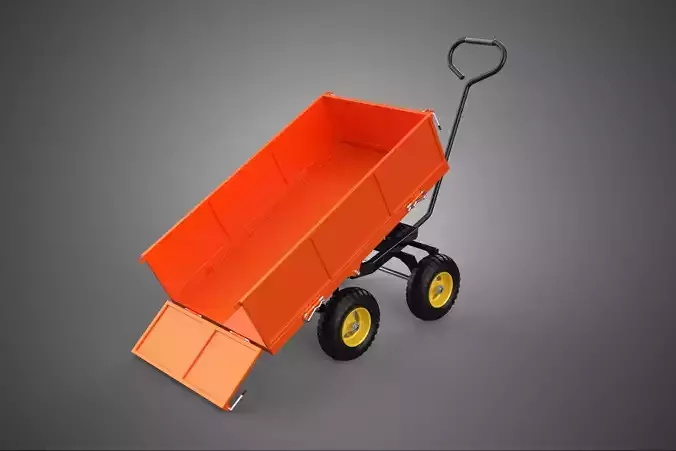
High-quality 3D assets at affordable prices — trusted by designers, engineers, and creators worldwide. Made with care to be versatile, accessible, and ready for your pipeline.
Included File Formats
This model is provided in 14 widely supported formats, ensuring maximum compatibility:
• - FBX (.fbx) – Standard format for most 3D software and pipelines
• - OBJ + MTL (.obj, .mtl) – Wavefront format, widely used and compatible
• - STL (.stl) – Exported mesh geometry; may be suitable for 3D printing with adjustments
• - STEP (.step, .stp) – CAD format using NURBS surfaces
• - IGES (.iges, .igs) – Common format for CAD/CAM and engineering workflows (NURBS)
• - SAT (.sat) – ACIS solid model format (NURBS)
• - DAE (.dae) – Collada format for 3D applications and animations
• - glTF (.glb) – Modern, lightweight format for web, AR, and real-time engines
• - 3DS (.3ds) – Legacy format with broad software support
• - 3ds Max (.max) – Provided for 3ds Max users
• - Blender (.blend) – Provided for Blender users
• - SketchUp (.skp) – Compatible with all SketchUp versions
• - AutoCAD (.dwg) – Suitable for technical and architectural workflows
• - Rhino (.3dm) – Provided for Rhino users
Model Info
• - All files are checked and tested for integrity and correct content
• - Geometry uses real-world scale; model resolution varies depending on the product (high or low poly)
• • - Scene setup and mesh structure may vary depending on model complexity
• - Rendered using Luxion KeyShot
• - Affordable price with professional detailing
Buy with confidence. Quality and compatibility guaranteed.
If you have any questions about the file formats, feel free to send us a message — we're happy to assist you!
Sincerely,
SURF3D
Trusted source for professional and affordable 3D models.
More Information About 3D Model :
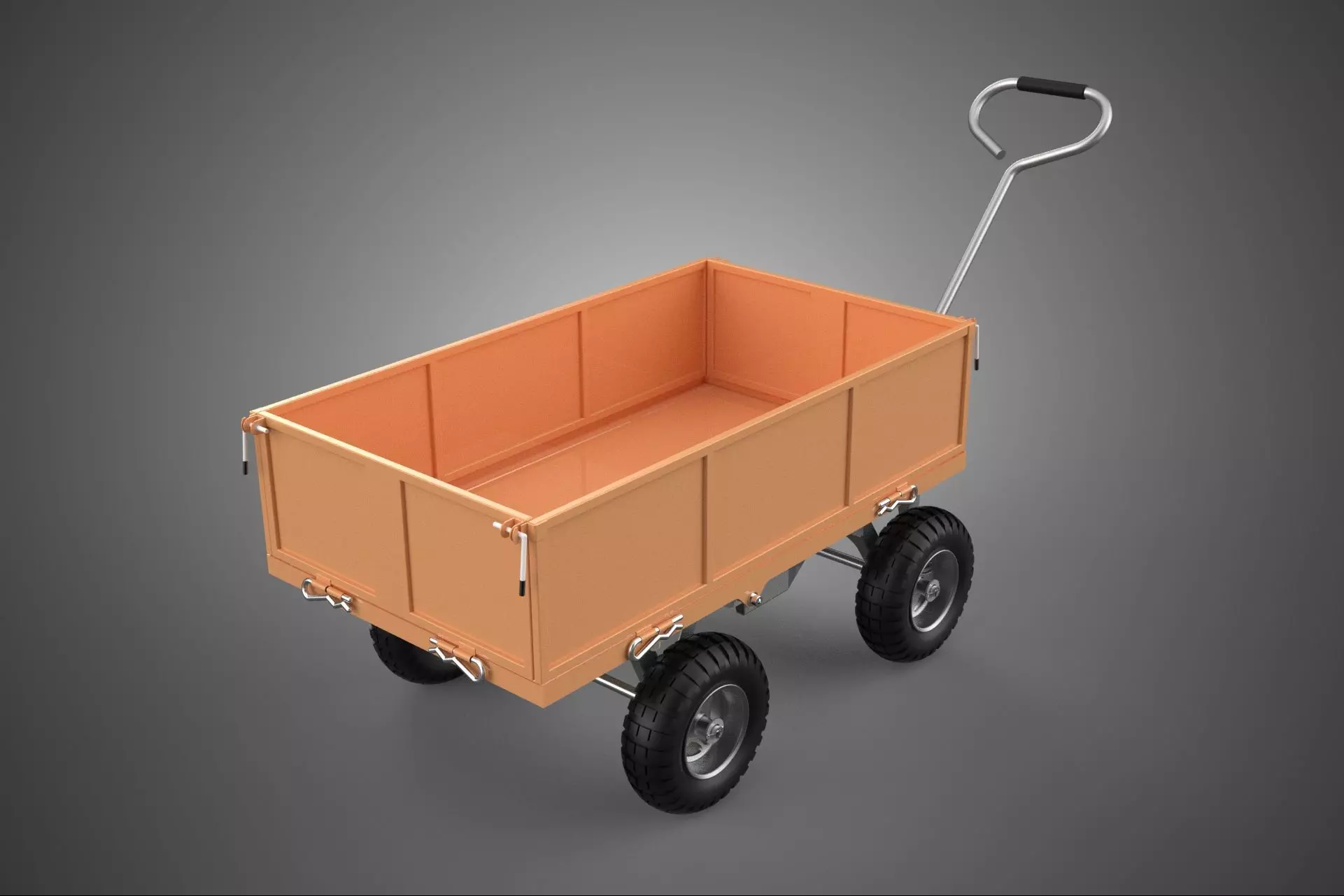
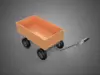
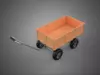
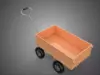
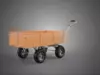
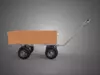
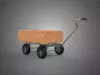
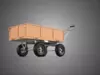
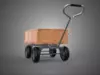
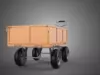
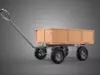
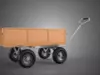
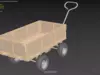
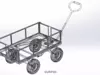
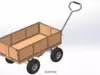
Wooden Utility Transport Mechanism (WUTM), Variant 4: A Comprehensive Description
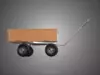
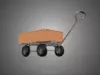
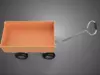
The item designated as WOOD WOODEN BED WAGON CART TRUCK TROLLEY TRANSPORT WHEELBARROW 4 refers to a category of multi-purpose, low-speed, material handling vehicles characterized primarily by their structural reliance on timber. These conveyances bridge the conceptual gap between simple carrying devices (e.g., wheelbarrows) and industrialized mechanized transport (e.g., forklifts or motor trucks), specializing in localized, manual, or draft-animal-assisted haulage. The inclusion of numerous synonyms reflects the versatility and regional nomenclature associated with this fundamental design.
Nomenclature and Classification
The multiplicity of terms—wagon, cart, truck, trolley—signifies the WUTM's flexible application across agricultural, light industrial, and domestic settings. Formally, these mechanisms are classified as wheeled, non-motorized or minimally assisted transport platforms.
- Wagon/Cart: Typically refers to a larger, robust vehicle designed for heavier loads, often featuring two fixed axles and four wheels (potentially referenced by the numeral 4). They are commonly used in field transport or market delivery and may incorporate a rudimentary towing mechanism.
- Trolley/Truck: Denotes smaller, indoor, or specialized variants optimized for confined spaces, such as warehouses or workshops. These usually feature four casters, often two fixed and two swiveling, emphasizing maneuverability over long-distance transport capacity.
- Wheelbarrow: While the WUTM 4 supersedes the traditional single-wheel design, the inclusion of the term suggests its functional ancestry—a device primarily manipulated by human leverage for close-range material movement.
Design, Materials, and Construction
The defining characteristic is the predominant use of wood (WOOD WOODEN). Construction emphasizes durability, ease of repair, and readily available resources.
- Chassis and Frame: The structural integrity relies on rigid wooden beams (typically oak, ash, or local hardwoods) forming a rectangular chassis. Joints are traditionally mortise-and-tenon, reinforced with iron or steel strapping, particularly at high-stress points like axle mounts.
- The Bed (Load Platform): The BED refers to the load-bearing surface. This platform is typically constructed of tightly joined wooden planks (lumber or plywood), designed either as a flat deck (for lumber or large containers) or as a shallow box enclosure (for loose materials like grain or produce). The dimensions are optimized for ergonomic loading and stability, maintaining a low center of gravity.
- Wheels and Running Gear: The numeral 4 is most frequently interpreted as specifying a four-wheeled configuration, differentiating it from two-wheeled handcarts. Historically, wheels were entirely wooden, often spoked and bound with an iron tire. Modern variants (post-19th century) incorporate pneumatic or solid rubber tires mounted on metal or composite hubs to enhance traction and shock absorption across uneven terrain. Axles are invariably metal to handle torque and weight distribution.
Function and Operational Parameters
The WUTM 4 serves as a pragmatic solution where fuel efficiency is irrelevant or access for large machinery is restricted.
- Transport Capacity: Load capacity varies widely, generally ranging from 100 kg (as a heavy trolley) to over 500 kg (as a substantial wagon). The limitation is typically the motive power (manual labor or draft animal) rather than the structural integrity of the wooden frame.
- Applications:
- Agricultural: Moving harvests, feed, tools, and water containers on farmsteads.
- Commercial/Industrial: Transferring goods between loading docks, inventory sections, or processing stations in non-automated environments.
- Domestic/Small Scale: Used in large gardens, estates, or craft workshops for moving heavy raw materials.
Historical Context
Wooden wheeled transport mechanisms represent one of the oldest forms of material logistics following the invention of the wheel. The specific category represented by the WUTM 4 evolved from rudimentary sledges and two-wheeled carts, gaining stability and load capacity through the adoption of the four-wheeled chassis. These mechanisms remained ubiquitous worldwide until the mid-20th century, when steel and lightweight alloys began to supplant wood in high-volume manufacturing, though wooden versions persist in specialized, traditional, or resource-limited contexts due to their cost-effectiveness and reparability.
KEYWORDS: Wooden Transport, Utility Cart, Haulage Mechanism, Four-Wheeled Conveyance, Timber Structure, Load Platform, Hand Truck, Farm Wagon, Industrial Trolley, Material Handling, Agricultural Equipment, Manual Transport, Non-Motorized Vehicle, Cart Variant 4, Wood Chassis, Axle Configuration, Bed Design, Mobile Platform, Traditional Logistics, Draft Power, Workshop Equipment, Low-Speed Transport, Spoked Wheel, Durable Construction, Load Capacity, Transport Efficiency, Regional Vehicle, Lumber Fabrication, Wheeled Transport, Cargo Dolly.