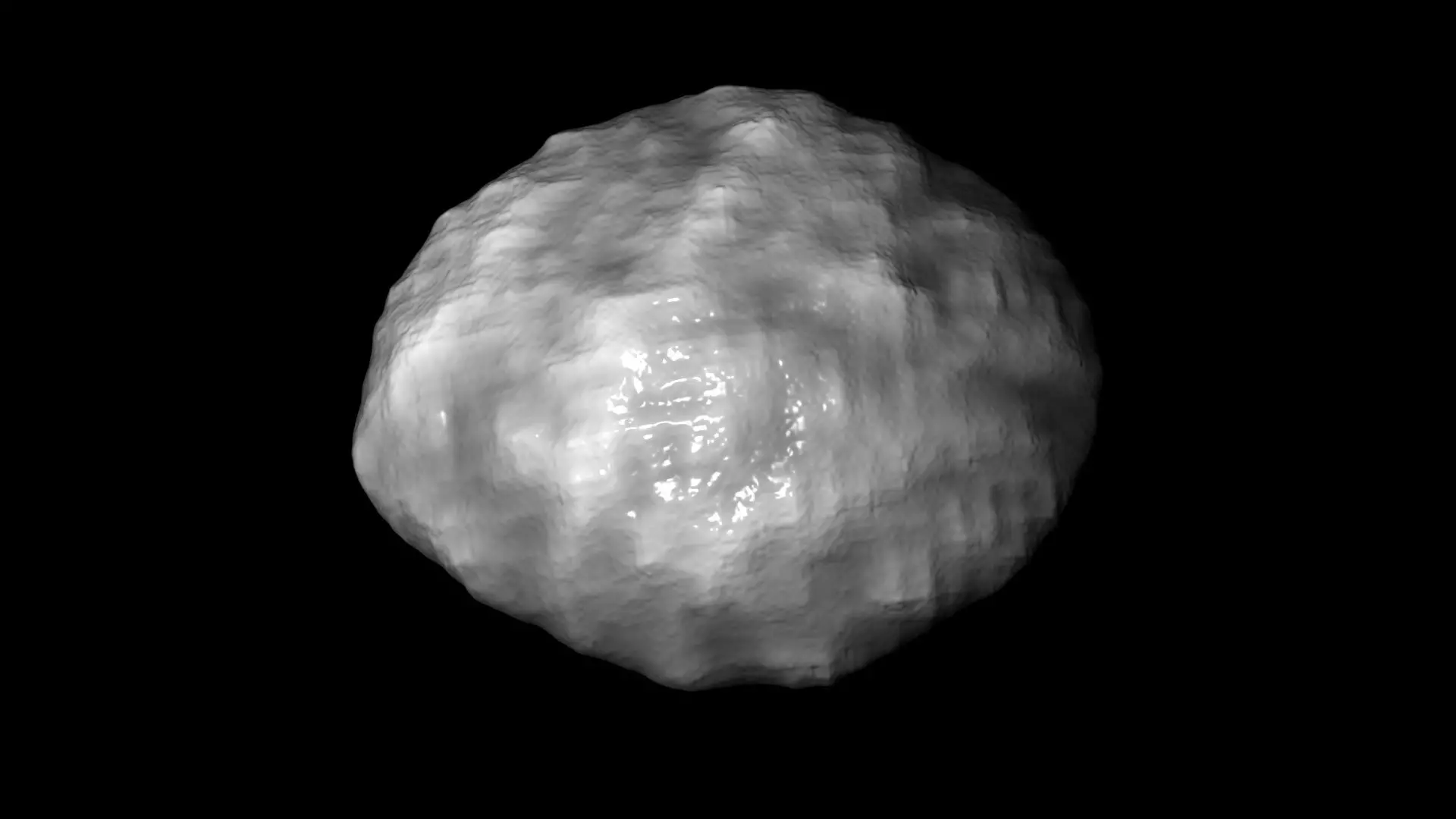
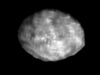
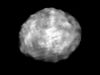
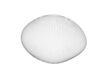
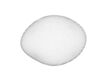
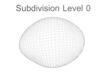
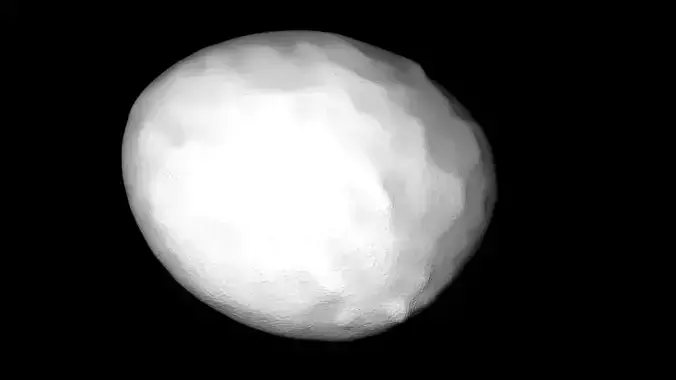
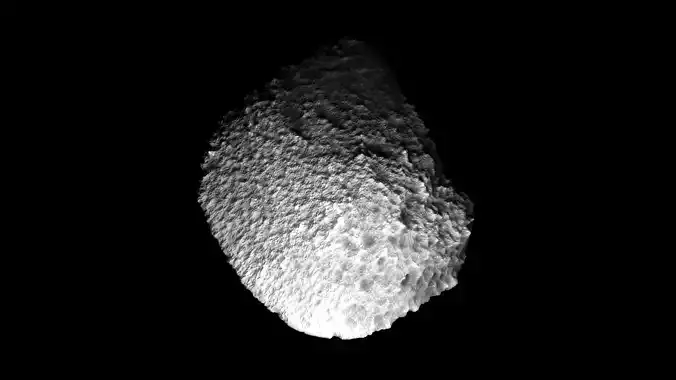
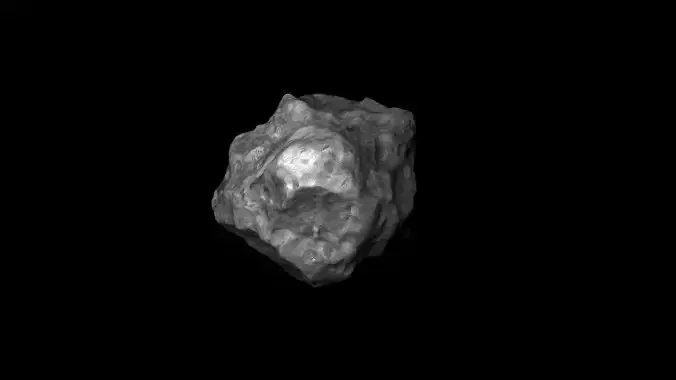
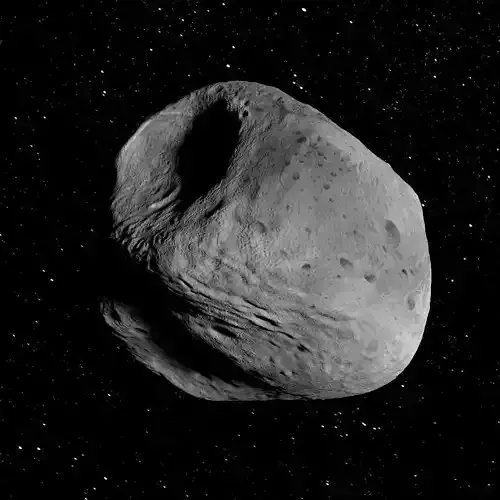
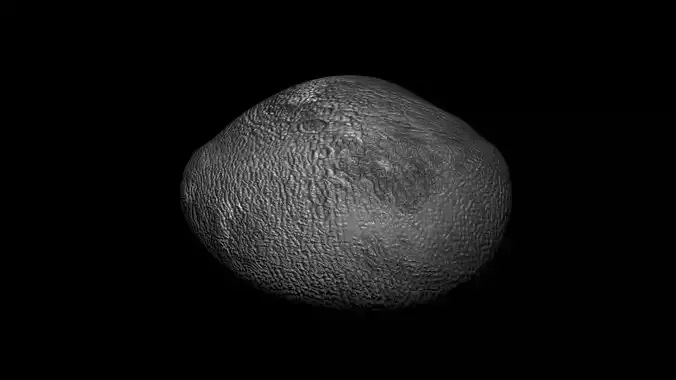
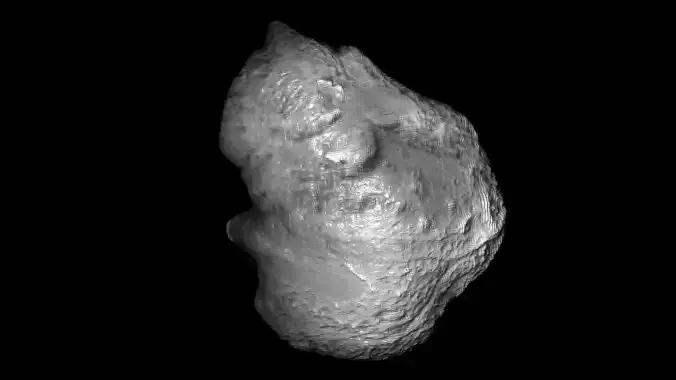
DescriptionLarissa Moon (also known as Neptune VII) is the fifth-closest inner satellite of Neptune. It is named after Larissa, a lover of Poseidon (the Greek equivalent of the Roman god Neptune). Larissa is also the eponymous nymph of the city in Thessaly, Greece. Larissa was first discovered by Harold J. Reitsema, William B. Hubbard, Larry A. Lebofsky and David J. Tholen, based on fortuitous ground-based stellar occultation observations on May 24, 1981. It was given the temporary provisional designation S/1981 N 1 and its supposed existence was announced on May 29, 1981. The moon was later recovered and confirmed to be the only object in its orbit during the Voyager 2 flyby in 1989 after which it received the additional designation S/1989 N 2 on August 2, 1989. The announcement by Stephen P. Synnott spoke of 10 frames taken over 5 days, which gives a recovery date sometime before July 28. The name was given and then confirmed by the International Astronomical Union on September 16, 1991. Larissa is the fourth-largest satellite of Neptune. It is irregular (non-spherical) in shape and appears to be heavily cratered, with no sign of any geological modification. It is likely that Larissa, like the other satellites inward of Triton, is a rubble pile re-accreted from fragments of Neptune's original satellites, which were disrupted by perturbations from Triton soon after that moon's capture into a very eccentric initial orbit. Larissa's orbit is nearly circular and lies below Neptune's synchronous orbit radius, which means it is slowly spiralling inward due to tidal deceleration and may eventually impact Neptune's atmosphere, or break up into a planetary ring upon passing its Roche limit due to tidal stretching, similarly to how Triton will eventually collide with Neptune or break into a planetary ring. Compositionally, Larissa appears to be similar to other small inner Neptunian satellites, with a deep 3.0 micron feature attributed to water ice or hydrated silicate minerals. It has a 0.08 albedo at 1.4 and 2.0 microns, dropping to 0.03 at 3.0 microns, and increasing to 0.09 at 4.6 microns. Larissa has only been visited once by Voyager 2. The probe was able to get some photographs with details of Larissa, showing its cratered surface; unlike the other inner moons of Neptune that only appeared as dots or smudges.
Texture Resolution: 227 x 201