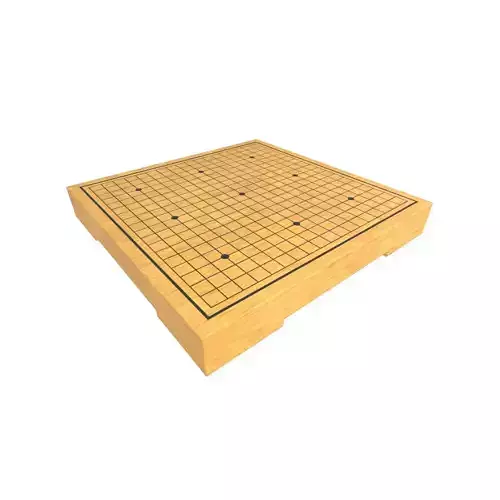
High-quality 3D assets at affordable prices — trusted by designers, engineers, and creators worldwide. Made with care to be versatile, accessible, and ready for your pipeline.
Included File Formats
This model is provided in 14 widely supported formats, ensuring maximum compatibility:
• - FBX (.fbx) – Standard format for most 3D software and pipelines
• - OBJ + MTL (.obj, .mtl) – Wavefront format, widely used and compatible
• - STL (.stl) – Exported mesh geometry; may be suitable for 3D printing with adjustments
• - STEP (.step, .stp) – CAD format using NURBS surfaces
• - IGES (.iges, .igs) – Common format for CAD/CAM and engineering workflows (NURBS)
• - SAT (.sat) – ACIS solid model format (NURBS)
• - DAE (.dae) – Collada format for 3D applications and animations
• - glTF (.glb) – Modern, lightweight format for web, AR, and real-time engines
• - 3DS (.3ds) – Legacy format with broad software support
• - 3ds Max (.max) – Provided for 3ds Max users
• - Blender (.blend) – Provided for Blender users
• - SketchUp (.skp) – Compatible with all SketchUp versions
• - AutoCAD (.dwg) – Suitable for technical and architectural workflows
• - Rhino (.3dm) – Provided for Rhino users
Model Info
• - All files are checked and tested for integrity and correct content
• - Geometry uses real-world scale; model resolution varies depending on the product (high or low poly)
• • - Scene setup and mesh structure may vary depending on model complexity
• - Rendered using Luxion KeyShot
• - Affordable price with professional detailing
Buy with confidence. Quality and compatibility guaranteed.
If you have any questions about the file formats, feel free to send us a message — we're happy to assist you!
Sincerely,
SURF3D
Trusted source for professional and affordable 3D models.
More Information About 3D Model :
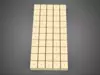
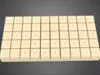
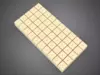
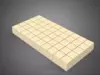
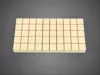
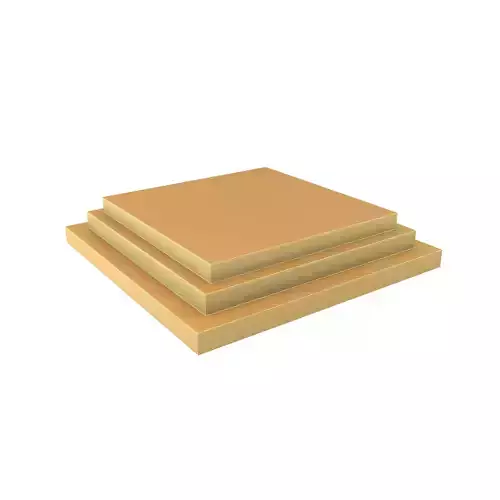
The STANDARD ROCKWOOL ROCKSTONE FOAM SPONGE BLOCK TRAY PLANT MEDIUM refers to a standardized substrate composed primarily of stone wool (mineral wool), designed for use in soilless cultivation systems, including hydroponics and aeroponics. Though commercially marketed using descriptive textural terms like foam or sponge, the material is structurally fibrous, manufactured from igneous rock, and molded into specific shapes—blocks, cubes, or integrated trays—to facilitate seed starting, clonal propagation, and mature plant development.
Composition and Manufacturing
Stone wool, often identified by the trade name Rockwool, is an inorganic, non-biodegradable substance classified as a mineral fiber. The manufacturing process involves melting basalt, diabase, or dolomite rock at extremely high temperatures (approximately 1500°C). This molten material is then subjected to centrifugal force, spinning it into fine, thread-like fibers, analogous to the production of cotton candy. A small amount of organic binder (typically phenolic resin) and mineral oil are added to stabilize the structure, reduce dust, and confer hydrophilicity. The resulting mat is compressed into rigid slabs or molded into standardized blocks and cubes, which are then packaged, often pre-formed within trays for immediate commercial use.
Physical and Chemical Properties
As a horticultural medium, stone wool possesses several advantageous properties that make it highly effective in controlled environments:
- Porosity and Aeration: Stone wool exhibits exceptionally high total porosity, frequently exceeding 90–95%. This high void space is crucial for maintaining an ideal balance between water retention and oxygen availability in the root zone. The high air-filled porosity prevents asphyxiation and promotes rapid root development.
- Water Holding Capacity (WHC): While highly porous, the fine fiber structure provides outstanding capillary action, allowing the medium to retain significant volumes of water (often 80% or more by volume). The drainage capabilities are determined by the density and structural integrity of the block.
- Inert Nature: Stone wool is chemically inert and offers no nutritional value to the plant. This characteristic allows cultivators precise control over nutrient delivery through the irrigation solution (hydroponic nutrient solution), simplifying the management of pH and Electrical Conductivity (EC).
- Initial Alkalinity: Freshly manufactured stone wool typically has a high initial pH (ranging from 7.0 to 8.5) due to residual basic oxides. For optimal plant growth (which usually requires a pH range of 5.5 to 6.5), the medium requires pre-treatment or buffering, typically achieved by saturating the blocks in a dilute acidic solution (e.g., phosphoric acid) to stabilize the pH before planting.
### Horticultural Application
The standard forms of stone wool medium are adapted for different stages of plant life:
- Blocks and Cubes: These are used primarily for initial seed germination and rooting of vegetative cuttings. The size of the block dictates the duration it can sustain the seedling before transplanting.
- Starter Plugs (Trays): Small cubes or cylindrical plugs arranged in standardized trays, optimized for high-density propagation.
- Slabs: Larger rectangular pieces, often encased in plastic, used for the mature growth stage of crops like tomatoes, cucumbers, and peppers, where the small starter block is simply placed on top of the larger slab medium.
The use of stone wool blocks minimizes transplant shock, as the entire block is moved from the propagation area to the final growing system (such as Nutrient Film Technique, Deep Water Culture, or drip-irrigated substrate culture), protecting the root structure. Its standardized dimensions ensure compatibility with automated cultivation equipment.
KEYWORDS: Hydroponics, Soilless Culture, Stone Wool, Rockwool, Mineral Wool, Substrate, Plant Medium, Propagation Block, Seed Starting, Root Medium, Inert Substrate, Basalt Fiber, Controlled Environment Agriculture, Porosity, Water Retention, Aeration, pH Buffering, Cloning, Cuttings, Drip Irrigation, Grow Block, Grow Slab, Mineral Fiber, Horticultural Substrate, Non-Biodegradable, Synthetic Medium, High Porosity, EC Control, Trays, Phenolic Resin.