High-quality 3D assets at affordable prices — trusted by designers, engineers, and creators worldwide. Made with care to be versatile, accessible, and ready for your pipeline.
Included File Formats
This model is provided in 14 widely supported formats, ensuring maximum compatibility:
• - FBX (.fbx) – Standard format for most 3D software and pipelines
• - OBJ + MTL (.obj, .mtl) – Wavefront format, widely used and compatible
• - STL (.stl) – Exported mesh geometry; may be suitable for 3D printing with adjustments
• - STEP (.step, .stp) – CAD format using NURBS surfaces
• - IGES (.iges, .igs) – Common format for CAD/CAM and engineering workflows (NURBS)
• - SAT (.sat) – ACIS solid model format (NURBS)
• - DAE (.dae) – Collada format for 3D applications and animations
• - glTF (.glb) – Modern, lightweight format for web, AR, and real-time engines
• - 3DS (.3ds) – Legacy format with broad software support
• - 3ds Max (.max) – Provided for 3ds Max users
• - Blender (.blend) – Provided for Blender users
• - SketchUp (.skp) – Compatible with all SketchUp versions
• - AutoCAD (.dwg) – Suitable for technical and architectural workflows
• - Rhino (.3dm) – Provided for Rhino users
Model Info
• - All files are checked and tested for integrity and correct content
• - Geometry uses real-world scale; model resolution varies depending on the product (high or low poly)
• • - Scene setup and mesh structure may vary depending on model complexity
• - Rendered using Luxion KeyShot
• - Affordable price with professional detailing
Buy with confidence. Quality and compatibility guaranteed.
If you have any questions about the file formats, feel free to send us a message — we're happy to assist you!
Sincerely,
SURF3D
Trusted source for professional and affordable 3D models.
More Information About 3D Model :
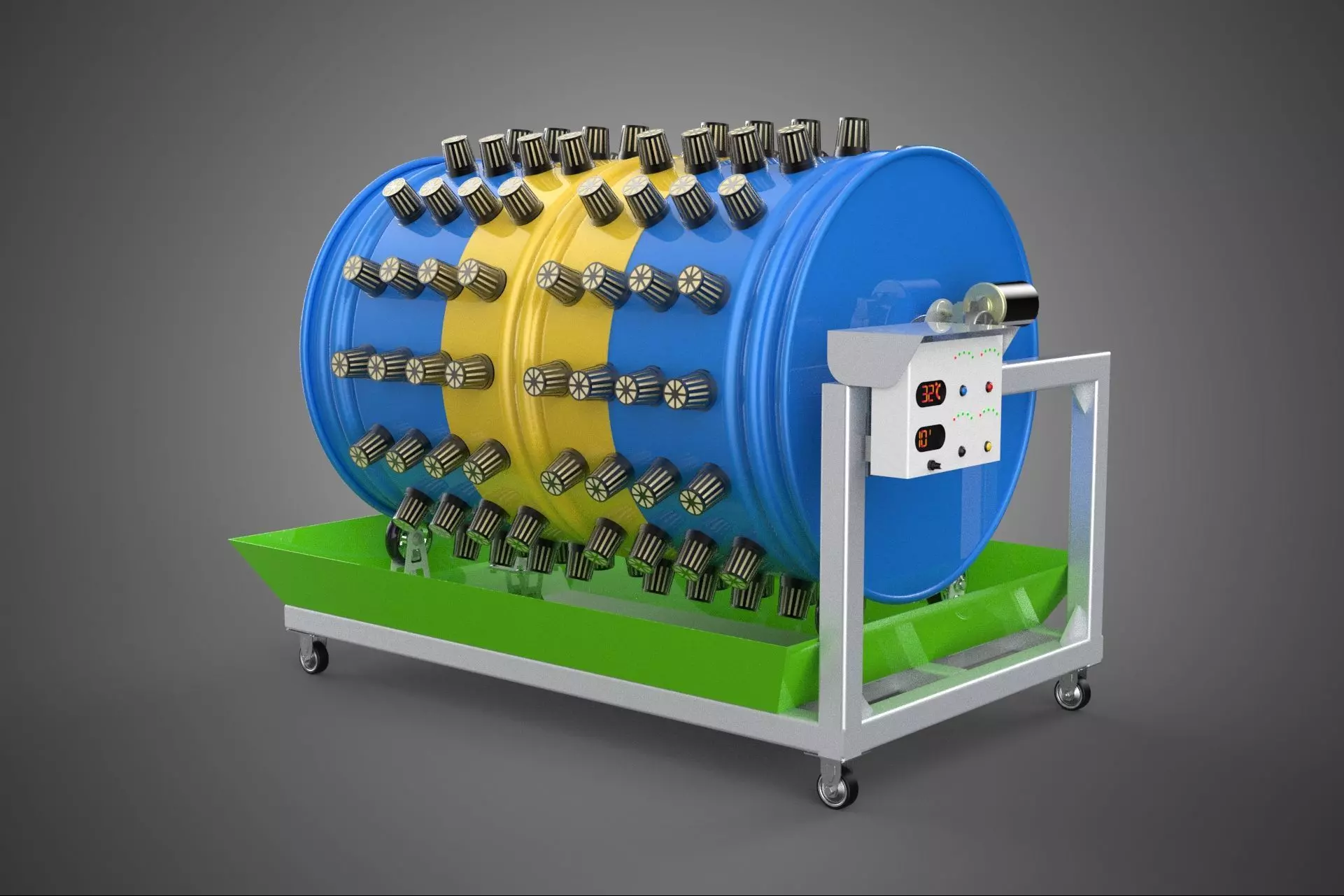
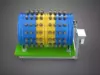
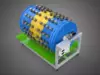
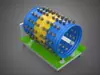
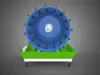
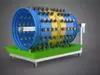
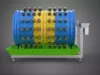
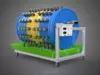
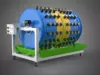
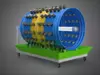
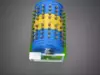
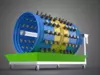
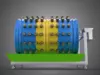
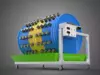
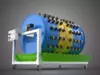
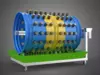
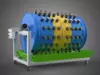
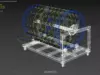
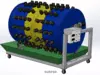
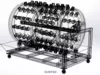
A STEEL DRUM 55 GALLON POT GARDEN ROTARY HYDROPONIC PLANT FARM IOT refers to an integrated, automated, and compact horticultural system designed for efficient plant cultivation. This innovative setup typically leverages a standard 55-gallon steel drum as its primary structural and reservoir component, incorporating a rotary mechanism for plant positioning, employing hydroponic techniques for soilless cultivation, and integrating Internet of Things (IoT) technology for remote monitoring and control.
Structural Framework and Reservoir:
The foundation of this system is a standard 55-gallon (approximately 208-liter) steel drum. Often repurposed, these drums provide a robust, light-impermeable, and relatively inexpensive enclosure. Its primary functions are to house the nutrient solution reservoir and to serve as the structural shell for the internal plant-growing components. The drum's enclosed nature helps in maintaining a stable microclimate and preventing light exposure to the nutrient solution, which can inhibit algal growth.
Rotary Pot Garden:
Central to the system's efficiency is its rotary design. Within the drum, a mechanism supports multiple individual plant pots (often net pots filled with inert growing media like rockwool or hydroton) arranged circumferentially around a central axis. This entire assembly slowly rotates, ensuring that all plants receive uniform exposure to a central light source. The rotary nature offers several advantages:
- Optimized Light Distribution: Every plant receives an equitable amount of light, promoting even growth.
- Increased Plant Density: By arranging plants vertically and circularly, a significantly higher number of plants can be cultivated within a small footprint compared to traditional horizontal setups. This maximizes space utilization.
- Aeroponic/Hydroponic Integration: The rotation can facilitate intermittent or continuous contact of plant roots with nutrient solution, characteristic of methods like Aeroponics, Nutrient Film Technique (NFT), or Deep Water Culture (DWC), depending on the specific internal design.
Hydroponic Plant Farm:
The system operates on hydroponic principles, meaning plants are grown without soil, directly deriving essential mineral nutrients from a water-based solution. A pump circulates the nutrient-rich water from the drum's reservoir to the plant roots, typically via a drip system, a thin film, or mist, depending on the specific hydroponic method employed within the rotary design. This soilless cultivation method offers benefits such as:
- Water Efficiency: Recirculating systems use significantly less water than traditional soil-based agriculture.
- Accelerated Growth: Plants often grow faster due to direct access to nutrients and optimized growing conditions.
- Reduced Pests and Diseases: The absence of soil inherently reduces the prevalence of many soil-borne pathogens and pests.
- Controlled Environment: The enclosed nature allows for precise control over nutrient delivery, pH, and environmental factors.
Internet of Things (IoT) Integration:
The IoT component signifies the incorporation of interconnected digital technologies for advanced automation and remote management. This typically involves:
- Sensors: A network of sensors monitors critical environmental and nutritional parameters, including but not limited to:
- Nutrient Solution: pH, Electrical Conductivity (EC) or Total Dissolved Solids (TDS) for nutrient concentration, water temperature.
- Ambient Environment: Air temperature, humidity, and light intensity within the drum.
- Actuators: Based on sensor data and programmed logic, actuators perform automated tasks:
- Nutrient Dosing: Automated pumps add pH adjusters or concentrated nutrient solutions to maintain optimal levels.
- Water Circulation: Pumps manage the flow of nutrient solution to the plants.
- Environmental Control: Fans for air circulation, light controls for on/off cycles and spectrum adjustment.
- Connectivity and Control: A central microcontroller (e.g., Arduino, Raspberry Pi) connected to the internet enables:
- Remote Monitoring: Users can access real-time data and system status via a smartphone application or web interface.
- Remote Control: Adjustments to parameters, scheduling of operations, and activation/deactivation of components can be performed from any internet-connected device.
- Data Logging and Analytics: Historical data can be collected, analyzed, and used to optimize growing conditions and identify trends or issues.
- Alerts: Notifications can be sent to the user in case of critical deviations from set parameters or system malfunctions.
Applications and Benefits:
This type of system is particularly suited for urban farming, home gardening where space is limited, educational projects, or research. It provides a compact, high-yield solution with minimal manual intervention once set up. Benefits include high yield per square foot, significant water savings, reduced need for pesticides, and the ability to grow produce year-round in controlled environments.
KEYWORDS: Hydroponics, Rotary System, 55 Gallon Drum, Plant Farm, IoT, Urban Farming, Automated Cultivation, Vertical Farming, Soilless Agriculture, Remote Monitoring, Smart Garden, Nutrient Film Technique, Deep Water Culture, Aeroponics, Grow Lights, pH Sensor, EC Sensor, Water Temperature, Air Temperature, Humidity Sensor, Dosing Pumps, Recirculating System, Sustainable Agriculture, Controlled Environment, Compact Farming, Home Garden, DIY Hydroponics, Repurposed Drum, Data Logging, Precision Agriculture