High-quality 3D assets at affordable prices — trusted by designers, engineers, and creators worldwide. Made with care to be versatile, accessible, and ready for your pipeline.
Included File Formats
This model is provided in 14 widely supported formats, ensuring maximum compatibility:
• - FBX (.fbx) – Standard format for most 3D software and pipelines
• - OBJ + MTL (.obj, .mtl) – Wavefront format, widely used and compatible
• - STL (.stl) – Exported mesh geometry; may be suitable for 3D printing with adjustments
• - STEP (.step, .stp) – CAD format using NURBS surfaces
• - IGES (.iges, .igs) – Common format for CAD/CAM and engineering workflows (NURBS)
• - SAT (.sat) – ACIS solid model format (NURBS)
• - DAE (.dae) – Collada format for 3D applications and animations
• - glTF (.glb) – Modern, lightweight format for web, AR, and real-time engines
• - 3DS (.3ds) – Legacy format with broad software support
• - 3ds Max (.max) – Provided for 3ds Max users
• - Blender (.blend) – Provided for Blender users
• - SketchUp (.skp) – Compatible with all SketchUp versions
• - AutoCAD (.dwg) – Suitable for technical and architectural workflows
• - Rhino (.3dm) – Provided for Rhino users
Model Info
• - All files are checked and tested for integrity and correct content
• - Geometry uses real-world scale; model resolution varies depending on the product (high or low poly)
• • - Scene setup and mesh structure may vary depending on model complexity
• - Rendered using Luxion KeyShot
• - Affordable price with professional detailing
Buy with confidence. Quality and compatibility guaranteed.
If you have any questions about the file formats, feel free to send us a message — we're happy to assist you!
Sincerely,
SURF3D
Trusted source for professional and affordable 3D models.
More Information About 3D Model :
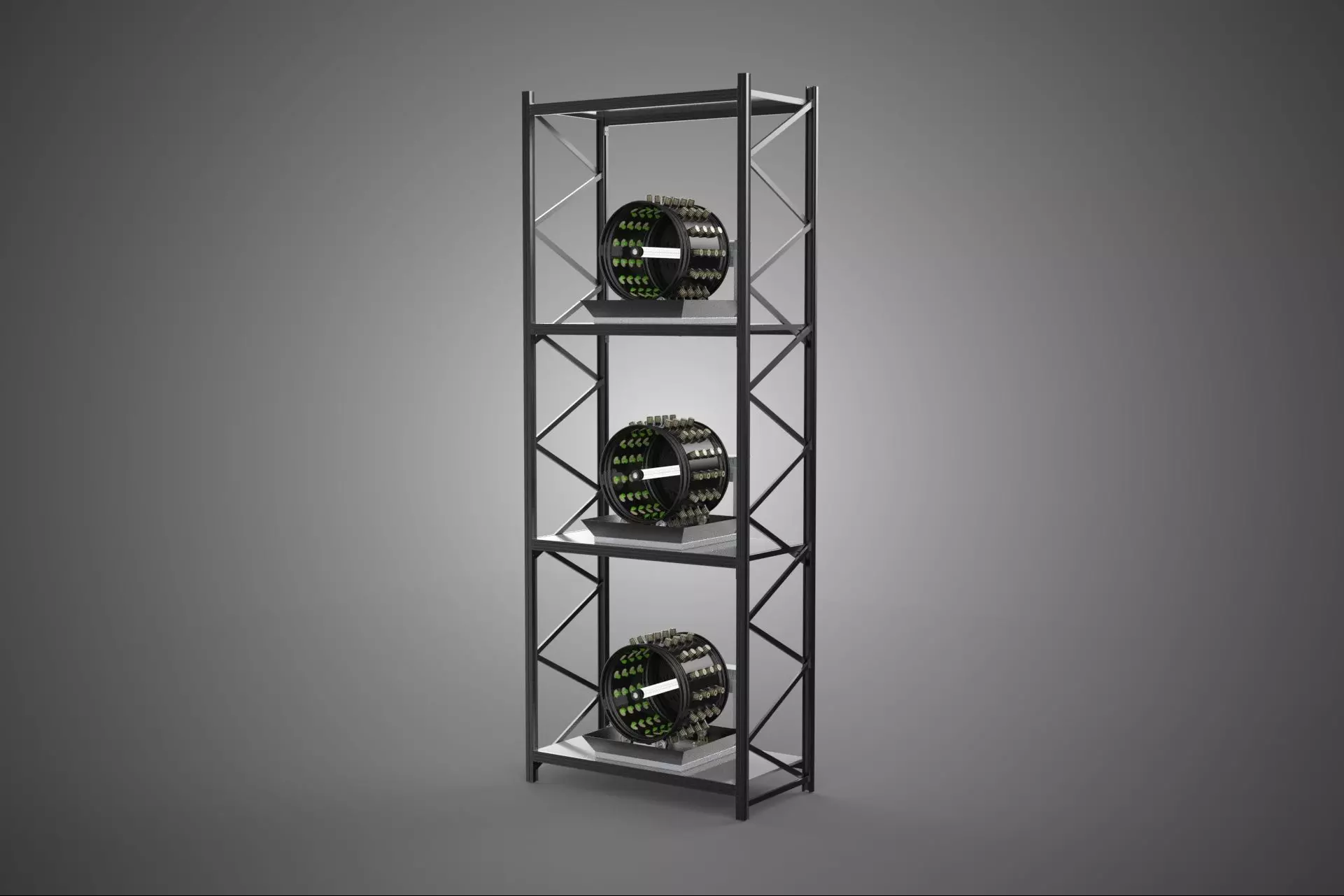
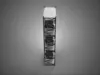
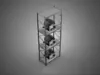
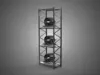
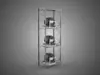
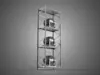
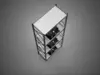
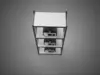
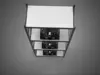
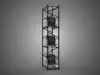
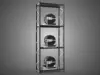
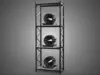
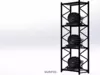
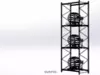
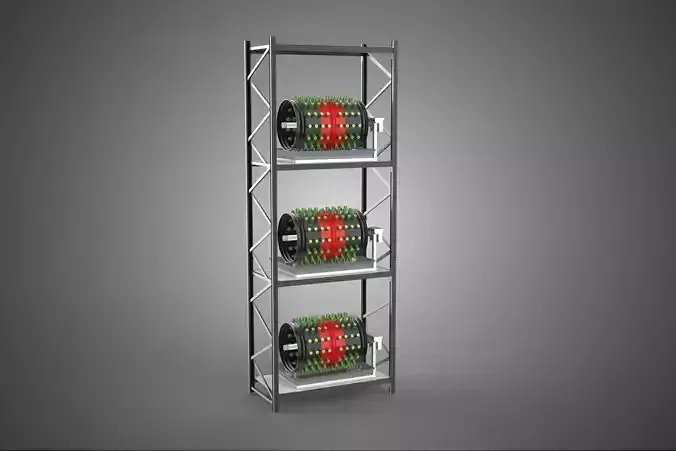
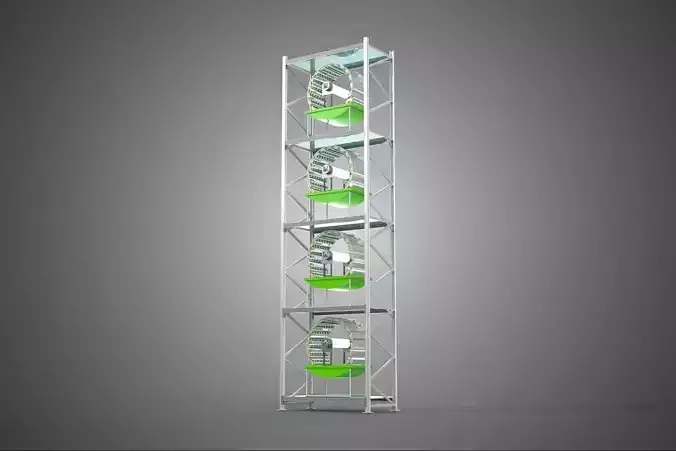
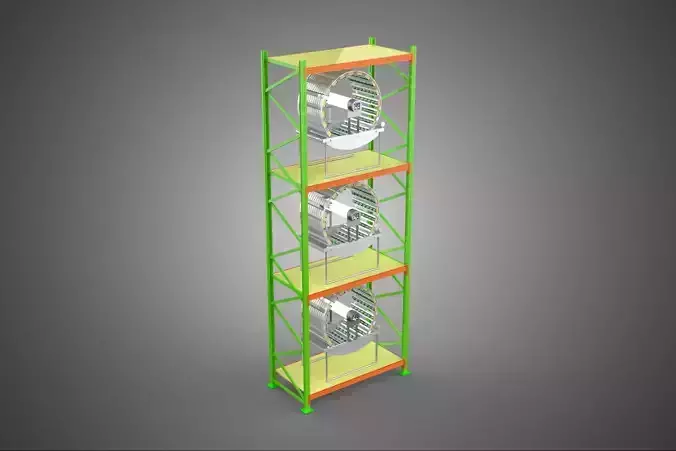
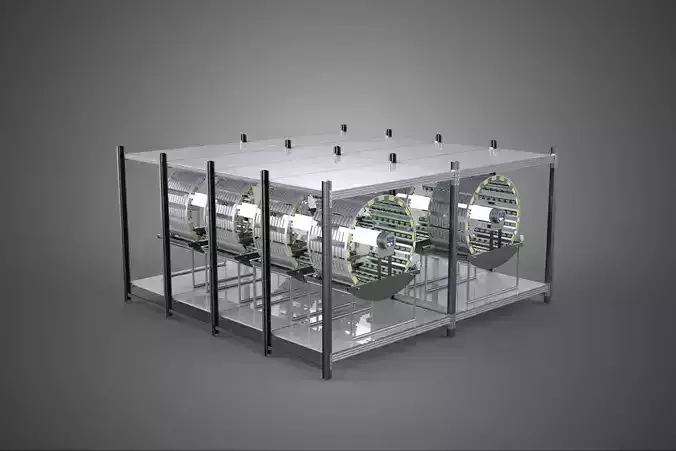
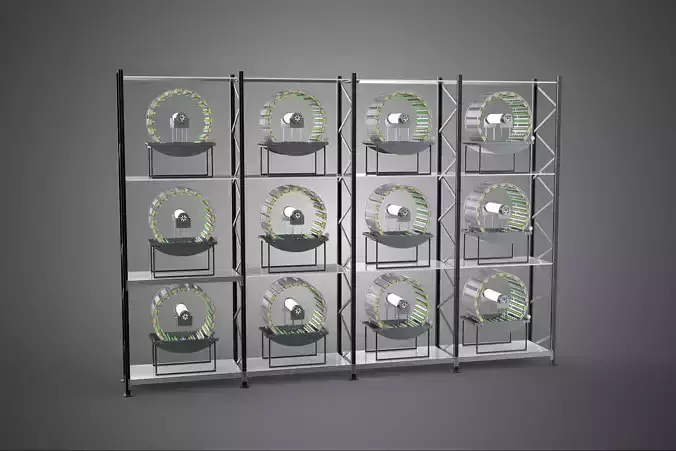
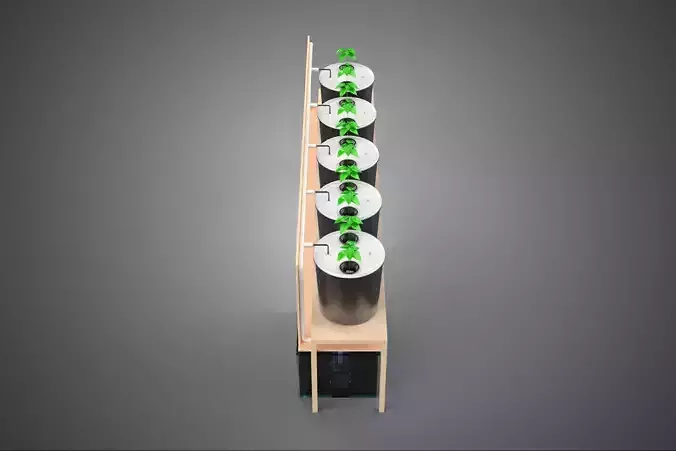
A Vertical Stack Garden Tower Frame Rotary Hydroponic Plant Farm represents an advanced, integrated system for high-density plant cultivation, combining principles of vertical farming with soilless hydroponic techniques within a specialized, often automated, rotating structural framework. This configuration is meticulously designed to optimize space utilization, resource efficiency, and environmental control for accelerated plant growth and maximized yields in controlled environments.
At its core, the system's Vertical Stack architecture involves arranging multiple tiers or modules of plant cultivation units one above another, significantly increasing the effective growing area within a reduced physical footprint. This is fundamental to urban agriculture and indoor farming, where horizontal space is typically limited. The Garden Tower Frame serves as the primary structural support, typically constructed from durable, corrosion-resistant materials such as PVC, food-grade plastics, or aluminum. This frame houses and stabilizes the individual growing modules, nutrient delivery systems, and often integrated lighting and environmental sensors.
The distinguishing feature of this system is its Rotary mechanism. This component facilitates the slow, continuous, or intermittent rotation of the entire tower structure, or individual plant-holding modules, around a central axis. The primary functions of this rotation are multifaceted:
- Uniform Light Exposure: By rotating the plants, all sides and individual plants receive equitable exposure to primary light sources, typically high-efficiency LED grow lights, which might be centrally positioned or mounted externally. This ensures consistent photosynthetic activity and symmetrical growth.
- Even Nutrient Distribution: While hydroponic systems inherently circulate nutrient solutions, rotation can contribute to more uniform aeration and distribution within certain module designs, optimizing nutrient uptake across all plants.
- Improved Air Circulation: The movement aids in passive air circulation around the plants, reducing localized humidity and the incidence of fungal diseases.
- Operational Access and Ergonomics: Rotation allows operators to access all plants from a single vantage point for tasks such as planting, pruning, inspection for pests or diseases, and harvesting, thereby enhancing labor efficiency and safety.
The Hydroponic Plant Farm aspect denotes the soilless cultivation methodology. Plants are grown without traditional soil, instead receiving a precisely formulated, oxygenated nutrient solution delivered directly to their root zones. Common hydroponic techniques employed in these rotary tower systems include Nutrient Film Technique (NFT), where a thin film of nutrient solution flows over the roots, or drip irrigation systems, where solution is delivered directly to each plant. This method drastically reduces water consumption (often by 70-90% compared to traditional agriculture), eliminates soil-borne pests and diseases, and allows for precise control over plant nutrition, leading to faster growth rates and often higher yields.
Operational control in these systems often involves sophisticated environmental monitoring and automation. Sensors continuously track parameters such as nutrient solution pH, electrical conductivity (EC), temperature, humidity, carbon dioxide (CO2) levels, and light intensity. This data is used by integrated control systems to automatically adjust pumps, nutrient dosers, lighting cycles, and ventilation, creating an optimal microclimate for specific crop varieties.
The advantages of a Vertical Stack Garden Tower Frame Rotary Hydroponic Plant Farm include exceptional space efficiency, substantial water savings through recirculation, faster crop cycles, higher yields per unit area, reduced incidence of pests and diseases, and the ability to produce fresh produce year-round regardless of external climate conditions. These systems are particularly valuable for urban agriculture, indoor commercial farms, research facilities, and Controlled Environment Agriculture (CEA) initiatives, contributing significantly to food security and sustainable agricultural practices. While initial capital investment and energy consumption for lighting and environmental controls can be considerable, the long-term benefits in productivity and resource conservation often justify these expenditures.
KEYWORDS: Vertical farming, hydroponics, controlled environment agriculture, rotary system, plant tower, indoor farming, sustainable agriculture, urban agriculture, soilless cultivation, nutrient film technique, drip irrigation, LED grow lights, resource efficiency, space optimization, automated agriculture, plant factory, agricultural innovation, crop yield, water efficiency, energy efficiency, pest control, disease prevention, smart farming, precision agriculture, nutrient solution, plant growth, environmental control, horticultural technology, multi-tier cultivation, vertical garden