High-quality 3D assets at affordable prices — trusted by designers, engineers, and creators worldwide. Made with care to be versatile, accessible, and ready for your pipeline.
Included File Formats
This model is provided in 14 widely supported formats, ensuring maximum compatibility:
• - FBX (.fbx) – Standard format for most 3D software and pipelines
• - OBJ + MTL (.obj, .mtl) – Wavefront format, widely used and compatible
• - STL (.stl) – Exported mesh geometry; may be suitable for 3D printing with adjustments
• - STEP (.step, .stp) – CAD format using NURBS surfaces
• - IGES (.iges, .igs) – Common format for CAD/CAM and engineering workflows (NURBS)
• - SAT (.sat) – ACIS solid model format (NURBS)
• - DAE (.dae) – Collada format for 3D applications and animations
• - glTF (.glb) – Modern, lightweight format for web, AR, and real-time engines
• - 3DS (.3ds) – Legacy format with broad software support
• - 3ds Max (.max) – Provided for 3ds Max users
• - Blender (.blend) – Provided for Blender users
• - SketchUp (.skp) – Compatible with all SketchUp versions
• - AutoCAD (.dwg) – Suitable for technical and architectural workflows
• - Rhino (.3dm) – Provided for Rhino users
Model Info
• - All files are checked and tested for integrity and correct content
• - Geometry uses real-world scale; model resolution varies depending on the product (high or low poly)
• • - Scene setup and mesh structure may vary depending on model complexity
• - Rendered using Luxion KeyShot
• - Affordable price with professional detailing
Buy with confidence. Quality and compatibility guaranteed.
If you have any questions about the file formats, feel free to send us a message — we're happy to assist you!
Sincerely,
SURF3D
Trusted source for professional and affordable 3D models.
More Information About 3D Model :
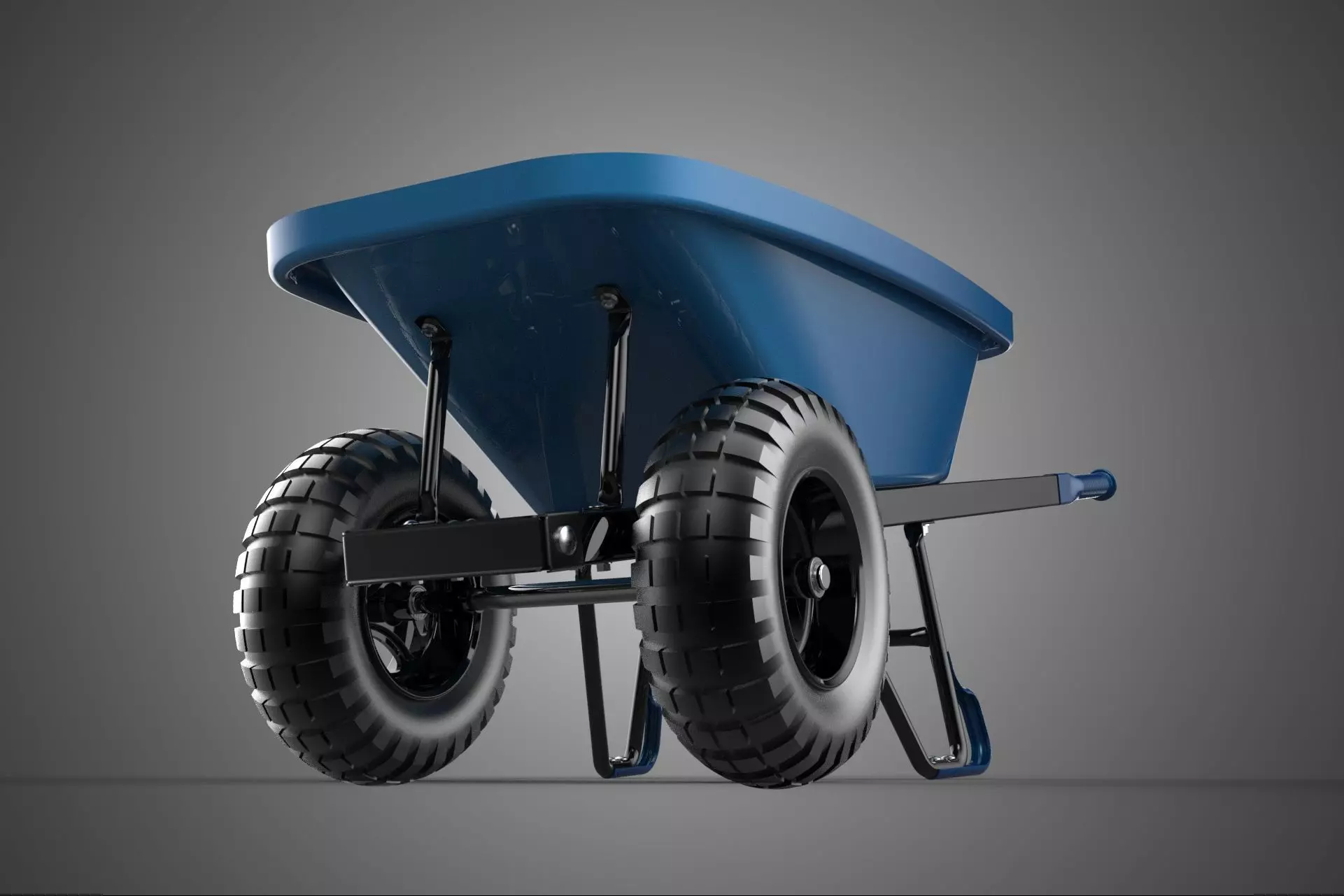
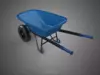
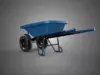
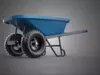
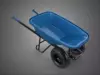
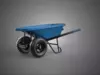
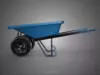
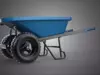
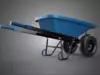
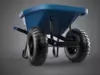
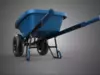
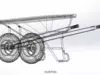
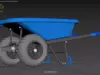
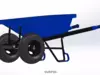
The apparatus described by the composite nomenclature Heavy Duty Twin Wheel Hand Cart Wheelbarrow Trolley Wagon Tray refers to a specialized, manually propelled conveyance device engineered for the rigorous transport of bulk materials and high-density payloads across varied terrain. This equipment bridges the design gap between the traditional single-wheel wheelbarrow (utilizing a Class II lever system) and a full four-wheeled utility wagon, offering enhanced stability and structural integrity suitable for industrial, construction, agricultural, and professional landscaping applications.
Design and Nomenclature
The design centers on a robust chassis supporting a load receptacle (the tray or tub) and propelled by an operator utilizing two handles located aft of the tray. The classification as a 'Hand Cart,' 'Trolley,' or 'Wagon' stems from its improved balance compared to the single-wheel wheelbarrow, which requires continuous muscular effort from the operator to maintain lateral equilibrium. The twin-wheel configuration dramatically reduces the required balancing force, transferring a greater proportion of the load directly to the axle assembly, thereby minimizing operator fatigue and reducing the risk of material spillage during transit.
Structural Engineering: Heavy Duty Classification
The designation Heavy Duty (HD) signifies that the components are engineered to withstand higher stress loads, greater volumes, and increased operational longevity compared to standard consumer-grade utility carts.
Chassis and Frame: The frame is typically constructed from high-gauge tubular or angle steel, often treated with powder-coating or galvanization to resist corrosion, abrasion, and exposure to chemical agents common in construction environments (e.g., concrete mixes, fertilizers, solvents). Key structural features include reinforced leg supports, robust cross-bracing, and strengthened axle mounting points designed to prevent deformation under maximum static load.
Axle Assembly and Wheels: The twin-wheel system requires a continuous, heavy-duty axle or independent articulated axles, securely bolted or welded to the main frame members. The wheels are generally larger in diameter than those on standard barrows to improve maneuverability over rough surfaces. Common wheel types include:
-
Pneumatic Tires: Offer superior shock absorption and traction, suitable for soft soil or highly uneven ground.
-
Solid Rubber or Semi-Pneumatic Tires: Used in environments where puncture resistance is paramount, such as construction sites laden with debris.
The dual-wheel configuration increases the footprint, distributing the ground pressure over a wider area, which is crucial when navigating soft substrates.
### The Load Receptacle (Tray)
The Tray, Tub, or Pan is the primary load-bearing component. For heavy-duty use, the tray capacity often ranges from 6 to 12 cubic feet (approximately 170 to 340 liters). Materials selection is critical for durability:
- Steel (Galvanized or Powder-Coated): Preferred for dense, abrasive materials such as masonry debris, gravel, wet concrete, and rocks, due to its superior resistance to impact damage.
- High-Density Polyethylene (HDPE) or Polypropylene: Used when handling chemicals, manure, or sensitive aggregates. These materials offer chemical inertness, lighter weight, and flexibility, preventing denting and easing cleanup of sticky materials.
The tray typically features a tapered front lip to facilitate controlled pouring and dumping operations. Edges are often rolled or double-folded for enhanced structural rigidity and safety.
### Operational Characteristics and Applications
The Heavy Duty Twin Wheel Hand Cart is prized for its high volume capacity combined with exceptional lateral stability. While a traditional single-wheel wheelbarrow can pivot sharply in confined spaces, the twin-wheel design prioritizes stable linear transport.
Primary use environments include:
- Construction: Hauling aggregates, wet cement batches, masonry supplies, and demolition waste.
- Landscaping and Horticulture: Transporting heavy soil, mulch, root balls, and stone features.
- Agriculture and Livestock: Moving feed, hay, tools, and waste materials across uneven field conditions.
The ergonomic advantage of this design is the near-elimination of the lateral balancing requirement, allowing operators to dedicate their effort primarily to propulsion and lifting the handle weight during tipping, leading to demonstrably reduced risk of strain injury over extended use cycles.
KEYWORDS: Material handling, Utility conveyance, Twin-wheel design, Heavy duty equipment, Load rating, Lateral stability, Pneumatic tire, Chassis engineering, Ergonomics, Galvanized steel, High-density polyethylene, Construction grade, Aggregate transport, Volume capacity, Axle assembly, Manual propulsion, Industrial cart, Wheelbarrow variant, Tipping mechanism, Structural integrity, Payload distribution, Corrosion resistance, Tubular steel, Worksite apparatus, Landscaping equipment, Bulk materials, Operator fatigue, Class II lever system, Polypropylene tub, Professional use.