High-quality 3D assets at affordable prices — trusted by designers, engineers, and creators worldwide. Made with care to be versatile, accessible, and ready for your pipeline.
Included File Formats
This model is provided in 14 widely supported formats, ensuring maximum compatibility:
• - FBX (.fbx) – Standard format for most 3D software and pipelines
• - OBJ + MTL (.obj, .mtl) – Wavefront format, widely used and compatible
• - STL (.stl) – Exported mesh geometry; may be suitable for 3D printing with adjustments
• - STEP (.step, .stp) – CAD format using NURBS surfaces
• - IGES (.iges, .igs) – Common format for CAD/CAM and engineering workflows (NURBS)
• - SAT (.sat) – ACIS solid model format (NURBS)
• - DAE (.dae) – Collada format for 3D applications and animations
• - glTF (.glb) – Modern, lightweight format for web, AR, and real-time engines
• - 3DS (.3ds) – Legacy format with broad software support
• - 3ds Max (.max) – Provided for 3ds Max users
• - Blender (.blend) – Provided for Blender users
• - SketchUp (.skp) – Compatible with all SketchUp versions
• - AutoCAD (.dwg) – Suitable for technical and architectural workflows
• - Rhino (.3dm) – Provided for Rhino users
Model Info
• - All files are checked and tested for integrity and correct content
• - Geometry uses real-world scale; model resolution varies depending on the product (high or low poly)
• • - Scene setup and mesh structure may vary depending on model complexity
• - Rendered using Luxion KeyShot
• - Affordable price with professional detailing
Buy with confidence. Quality and compatibility guaranteed.
If you have any questions about the file formats, feel free to send us a message — we're happy to assist you!
Sincerely,
SURF3D
Trusted source for professional and affordable 3D models.
More Information About 3D Model :
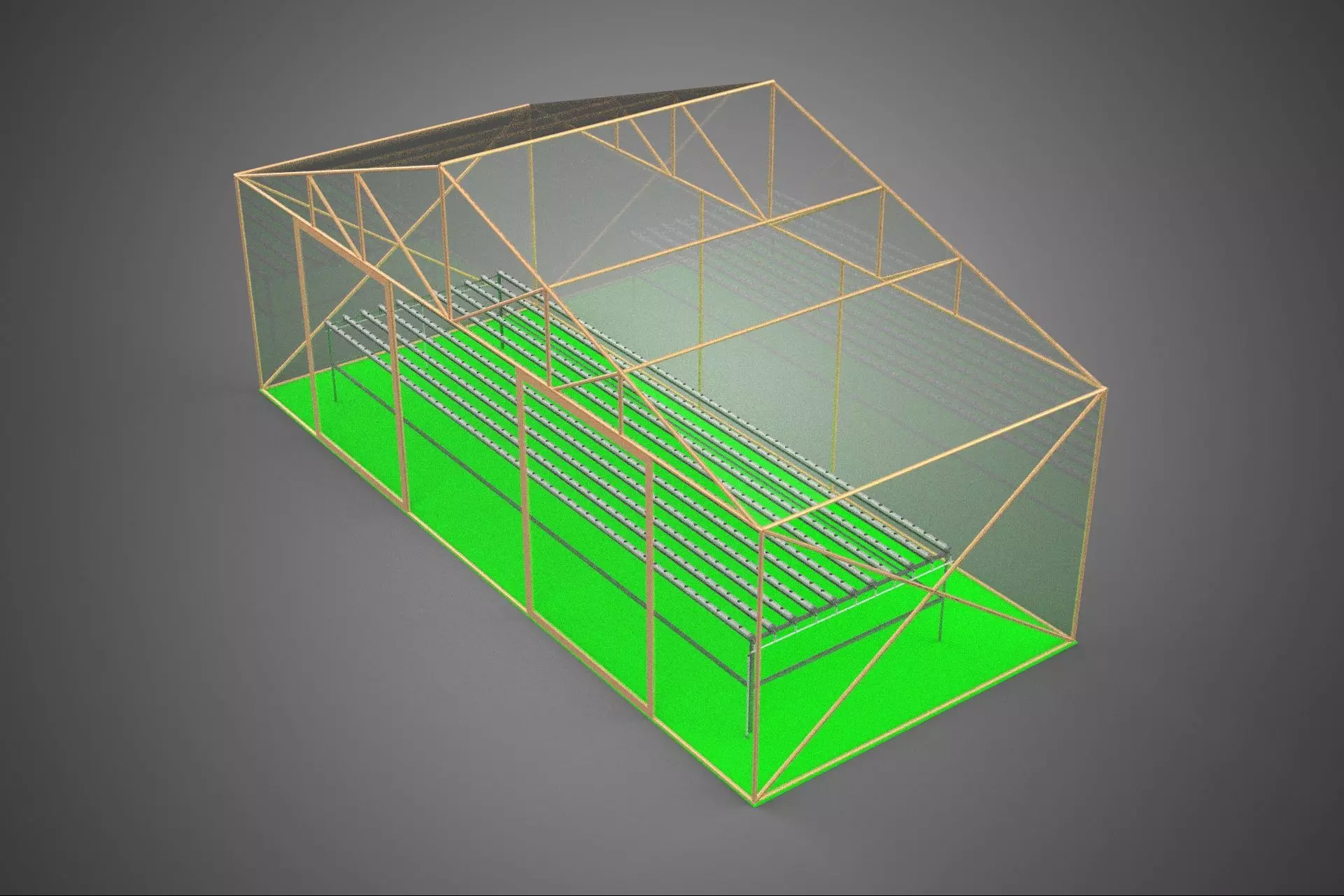
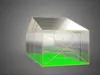
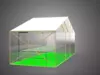
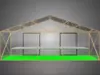
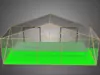
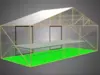
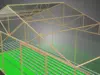
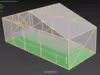
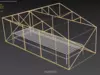
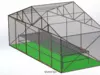
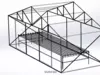
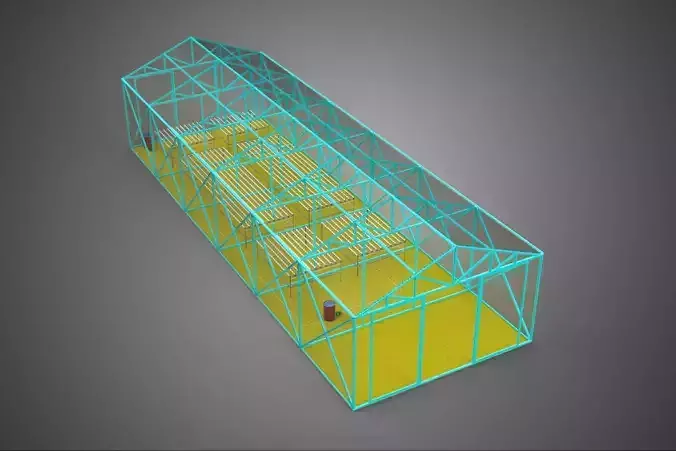
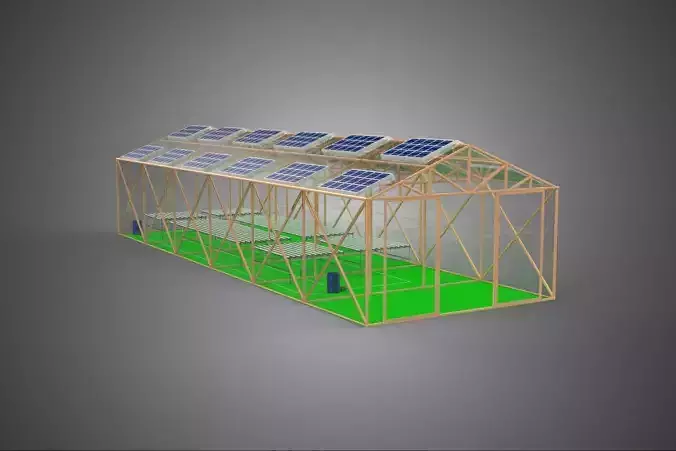
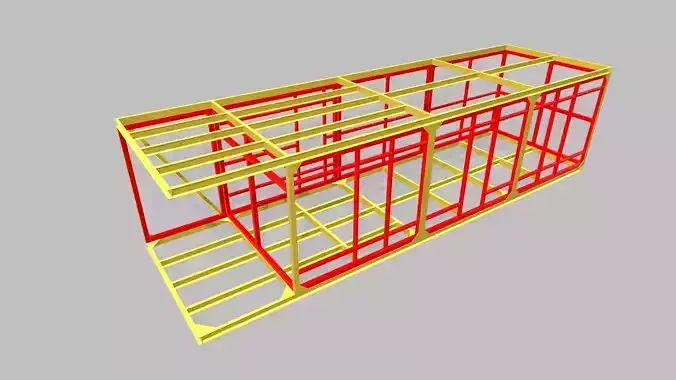
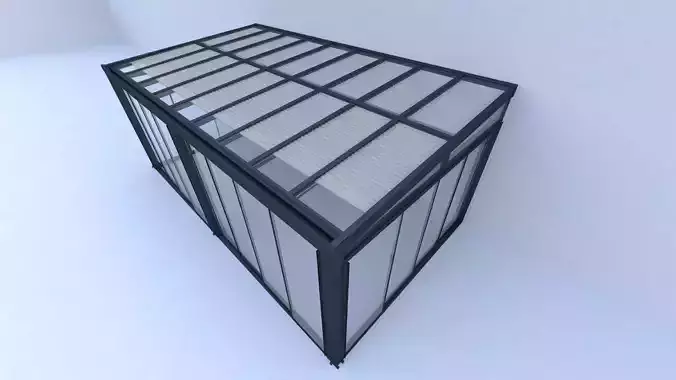
The title GARDEN HYDROPONIC AEROPONIC GREENHOUSE HOTHOUSE GLASSHOUSE FARM represents a conceptual synthesis of diverse agricultural methodologies and controlled-environment infrastructure, signifying modern, intensive, and technology-driven crop production. This composite term encompasses traditional horticultural principles applied within advanced, climate-regulated structures utilizing soilless cultivation techniques.
Definitions and Scope
Garden/Farm: In this context, Garden and Farm denote the operational scale and purpose—the systematic cultivation of plants for yield. While Garden often implies smaller, more intensive cultivation (horticulture), Farm suggests a commercial, large-scale agricultural enterprise. The juxtaposition emphasizes the transition from small-scale cultivation to industrialized food production within controlled environments.
Greenhouse/Hothouse/Glasshouse: These terms refer to the physical structure designed to protect crops from adverse weather and maintain optimal growing conditions.
-
Greenhouse (or Glasshouse): A framed structure covered with a transparent or translucent material (typically glass, polyethylene, or polycarbonate) that allows solar radiation to penetrate and warm the interior. This trapping of thermal energy is known as the greenhouse effect.
-
Hothouse: A specialized type of greenhouse maintained at a significantly higher temperature and humidity than standard greenhouses, often used for cultivating tropical or high-heat-demand plants. While technically a subset, the term emphasizes high-temperature control.
Hydroponic: A soilless cultivation method where plants are grown with their roots immersed directly in, or intermittently exposed to, a nutrient-rich aqueous solution. Essential macro- and micronutrients are dissolved in the water, providing the required mineral elements directly to the root zone. Common systems include Deep Water Culture (DWC), Nutrient Film Technique (NFT), and Drip Systems. Hydroponics allows for precise control over nutrient delivery, pH, and electrical conductivity (EC).
Aeroponic: An advanced soilless technique where plant roots are suspended in the air within a sealed environment (often within the greenhouse structure). Nutrient solutions are delivered as a fine mist or aerosol spray, typically in timed bursts. This method maximizes root oxygenation, leading to rapid growth rates and high efficiency, as it minimizes water and nutrient waste compared to traditional hydroponic systems.
### Integration and Technological Synergy
The integration of these components—the controlled environment (Greenhouse/Glasshouse/Hothouse) with soilless techniques (Hydroponic/Aeroponic)—defines a Controlled Environment Agriculture (CEA) system. This integrated approach offers substantial advantages over conventional open-field farming:
-
Environmental Control: The structure mitigates risks associated with climate variability, pests, and diseases, allowing year-round production regardless of external conditions. Environmental parameters (temperature, humidity, CO2 enrichment, light intensity, and photoperiod) are precisely modulated using sophisticated HVAC systems, shading screens, supplemental lighting (LEDs or HPS lamps), and computerized control systems.
-
Resource Efficiency: Hydroponic and aeroponic systems are characterized by extreme water efficiency, often recycling up to 95% of the water and nutrients used. Aeroponics, specifically, requires minimal substrate material, focusing resources directly on plant uptake.
-
Yield Optimization: By optimizing every growth variable, CEA farms achieve significantly higher yields per unit area and faster crop cycles compared to traditional farming. Vertical farming implementations within these structures further enhance spatial efficiency.
-
Pest and Disease Management: The contained environment facilitates integrated pest management (IPM) strategies, often reducing or eliminating the need for broad-spectrum chemical pesticides.
### Operational Characteristics
A GARDEN HYDROPONIC AEROPONIC GREENHOUSE... FARM operates as a highly specialized engineering system. It requires dedicated expertise in plant physiology, nutrient chemistry, and automation. Key operational elements include:
-
Closed-Loop Nutrient Management: Continuous monitoring and adjustment of nutrient solution parameters (pH, EC, dissolved oxygen).
-
Climate Automation: Sensors and actuators managed by a central computer system regulate internal climate based on real-time data and predetermined set points for specific crops.
-
Lighting Strategies: Implementation of tailored light spectra (e.g., specific combinations of red and blue wavelengths in LEDs) to maximize photosynthesis and morphogenesis.
-
Sustainability Focus: Reduced land usage, minimized chemical runoff, and localized food production often characterize these systems.
This model represents the forefront of agricultural technology, addressing global challenges related to food security, sustainability, and urbanization by moving food production closer to consumption centers under optimal growth conditions.
KEYWORDS: Controlled Environment Agriculture, CEA, Hydroponics, Aeroponics, Greenhouse, Glasshouse, Hothouse, Soilless Cultivation, Vertical Farming, Nutrient Film Technique, Deep Water Culture, Resource Efficiency, Crop Optimization, Precision Agriculture, Climate Control, Horticulture, Automation, Agricultural Technology, Sustainable Farming, Food Security, Nutrient Solution, EC, pH, LED Lighting, Water Efficiency, High-Density Farming, Commercial Agriculture, Intensive Cultivation, Plant Physiology, Environmental Engineering.