High-quality 3D assets at affordable prices — trusted by designers, engineers, and creators worldwide. Made with care to be versatile, accessible, and ready for your pipeline.
Included File Formats
This model is provided in 14 widely supported formats, ensuring maximum compatibility:
• - FBX (.fbx) – Standard format for most 3D software and pipelines
• - OBJ + MTL (.obj, .mtl) – Wavefront format, widely used and compatible
• - STL (.stl) – Exported mesh geometry; may be suitable for 3D printing with adjustments
• - STEP (.step, .stp) – CAD format using NURBS surfaces
• - IGES (.iges, .igs) – Common format for CAD/CAM and engineering workflows (NURBS)
• - SAT (.sat) – ACIS solid model format (NURBS)
• - DAE (.dae) – Collada format for 3D applications and animations
• - glTF (.glb) – Modern, lightweight format for web, AR, and real-time engines
• - 3DS (.3ds) – Legacy format with broad software support
• - 3ds Max (.max) – Provided for 3ds Max users
• - Blender (.blend) – Provided for Blender users
• - SketchUp (.skp) – Compatible with all SketchUp versions
• - AutoCAD (.dwg) – Suitable for technical and architectural workflows
• - Rhino (.3dm) – Provided for Rhino users
Model Info
• - All files are checked and tested for integrity and correct content
• - Geometry uses real-world scale; model resolution varies depending on the product (high or low poly)
• • - Scene setup and mesh structure may vary depending on model complexity
• - Rendered using Luxion KeyShot
• - Affordable price with professional detailing
Buy with confidence. Quality and compatibility guaranteed.
If you have any questions about the file formats, feel free to send us a message — we're happy to assist you!
Sincerely,
SURF3D
Trusted source for professional and affordable 3D models.
More Information About 3D Model :
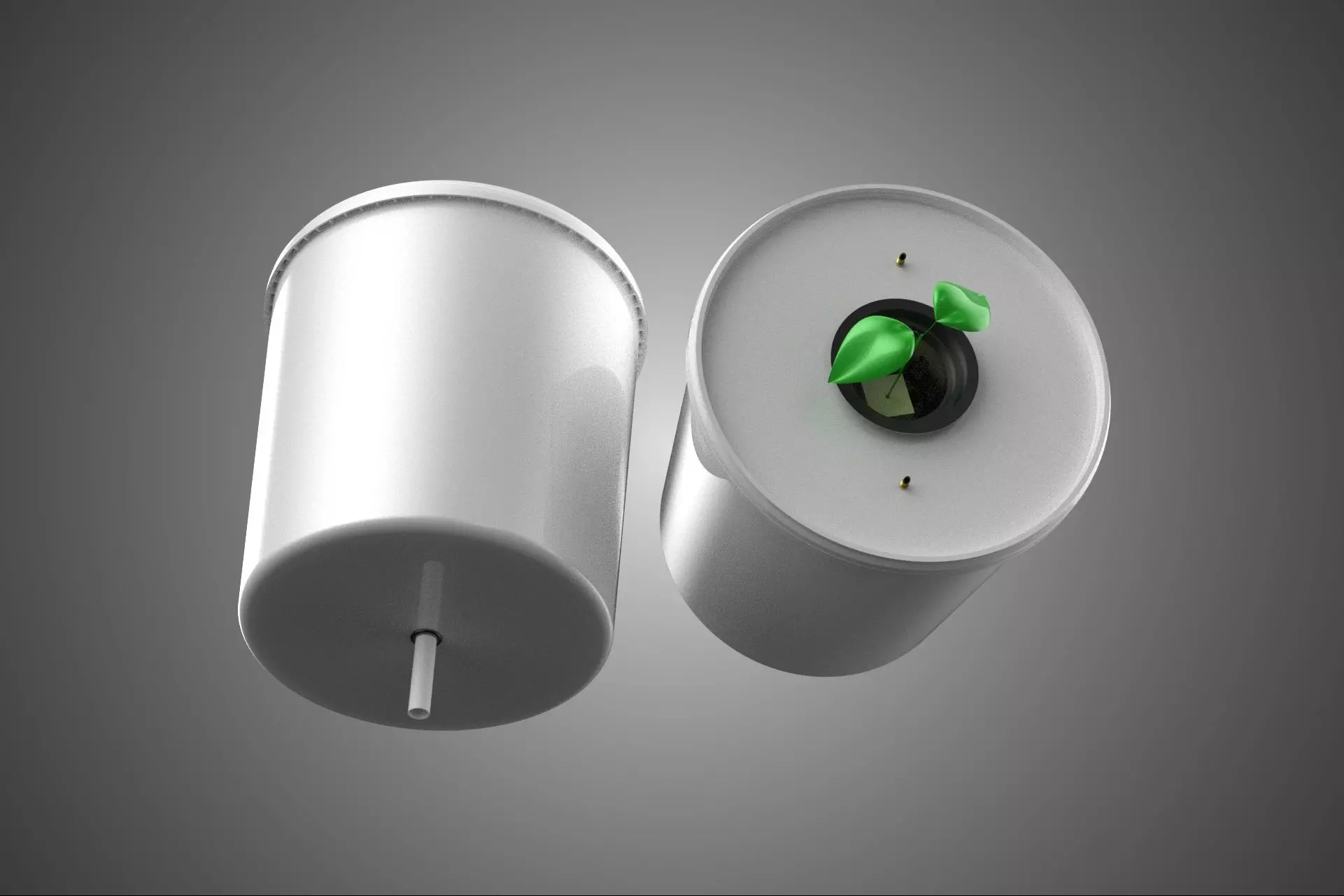
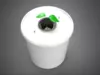
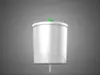
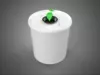
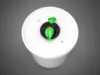
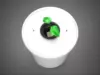
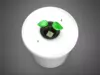
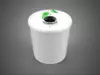
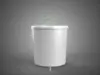
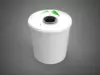
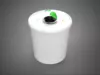
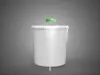
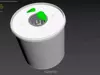
The Dutch Bucket System (DBS), commonly referred to as the Bato Bucket system, is an advanced, modular, and highly efficient recirculating hydroponic technique utilized predominantly for the commercial production of large, vine-based, or perennial fruiting crops. This method operates entirely within the framework of soilless culture, granting growers precise control over nutrient delivery and root zone environment.
System Architecture and Components
The DBS is structurally defined by individual growing containers (buckets) that function independently but share a common nutrient reservoir and drainage line.
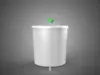
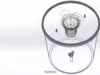
- The Bucket (Bato Bucket): Typically cylindrical or rectangular containers, often made of food-grade plastic, ranging from 10 to 20 liters in capacity. Each bucket is fitted with a specialized elbow or siphon break fitting near the base. This mechanism ensures that a minimal amount of nutrient solution (typically 2–3 cm deep) remains at the bottom of the bucket, providing a stable water source and preventing the growing medium from drying completely, while the majority of the root mass remains suspended in an air-rich environment.
- Net Pot: A small, mesh container inserted into a hole in the lid of the bucket. The net pot holds the plant seedling and often contains the primary bulk of the inert growing medium (e.g., perlite, coco coir, rockwool, or clay pellets). The function of the net pot is primarily to provide stability and isolate the root crown.
- Irrigation System: Nutrient delivery is managed through a central pump that distributes the prepared nutrient solution via small-diameter dripper lines to the base of each plant. The delivery is intermittent, regulated by a timer to achieve multiple feeding cycles per day, optimizing nutrient uptake and root zone aeration.
- Drainage and Recirculation: Excess nutrient solution—that which is not absorbed by the plant or medium—drains passively through the siphon fitting at the base of the bucket. This effluent flows into a shared collection trough or pipe, which directs the solution back to the main reservoir for continuous monitoring, filtration, replenishment, and re-injection into the system (recirculation). This closed-loop design maximizes water and nutrient efficiency.
### Operational Methodology (Hydroponic vs. Aeroponic)
The DBS is fundamentally classified as a drip hydroponic system, distinguishing it from non-recirculating methods (like DWC or NFT). The use of the term aeroponic in conjunction with DBS is generally inaccurate unless the system has been heavily modified to utilize high-pressure spray nozzles to mist the roots suspended in air, completely removing the inert growing medium. However, the system’s design inherently promotes a high degree of root zone aeration due to the passive drainage and the large airspace within the bucket, which is a key principle shared with true aeroponic methodologies.
### Cultivation Suitability
The Dutch Bucket System is highly scalable and particularly effective for crops that require extensive root structure, significant nutrient uptake, and sturdy physical support. Ideal applications include the production of high-value crops such as tomatoes (Solanum lycopersicum), bell peppers and chili peppers (Capsicum species), cucumbers (Cucumis sativus), eggplants (Solanum melongena), and various cultivars of pole beans and melons.
### Advantages
The primary advantages of the DBS include high water and nutrient use efficiency due to recirculation, excellent root zone oxygenation compared to fully saturated systems, superior disease control through the isolation of individual root zones, and adaptability for large-scale, commercial operations demanding robust yields.
KEYWORDS: Hydroponics, Bato Bucket, Dutch Bucket, Soilless, Net Pot, Recirculating System, Drip Irrigation, Aeration, Fertigation, Commercial Hydroponics, Closed-Loop System, Tomato Cultivation, Cucumber Cultivation, Pepper Production, Siphon Break, Elbow Fitting, Growing Medium, Perlite, Coco Coir, Nutrient Solution, Reservior, Substrate, Passive Drainage, Modular System, Root Zone, High-Density Farming, Controlled Environment Agriculture, CEA, NFT, DWC.