High-quality 3D assets at affordable prices — trusted by designers, engineers, and creators worldwide. Made with care to be versatile, accessible, and ready for your pipeline.
Included File Formats
This model is provided in 14 widely supported formats, ensuring maximum compatibility:
• - FBX (.fbx) – Standard format for most 3D software and pipelines
• - OBJ + MTL (.obj, .mtl) – Wavefront format, widely used and compatible
• - STL (.stl) – Exported mesh geometry; may be suitable for 3D printing with adjustments
• - STEP (.step, .stp) – CAD format using NURBS surfaces
• - IGES (.iges, .igs) – Common format for CAD/CAM and engineering workflows (NURBS)
• - SAT (.sat) – ACIS solid model format (NURBS)
• - DAE (.dae) – Collada format for 3D applications and animations
• - glTF (.glb) – Modern, lightweight format for web, AR, and real-time engines
• - 3DS (.3ds) – Legacy format with broad software support
• - 3ds Max (.max) – Provided for 3ds Max users
• - Blender (.blend) – Provided for Blender users
• - SketchUp (.skp) – Compatible with all SketchUp versions
• - AutoCAD (.dwg) – Suitable for technical and architectural workflows
• - Rhino (.3dm) – Provided for Rhino users
Model Info
• - All files are checked and tested for integrity and correct content
• - Geometry uses real-world scale; model resolution varies depending on the product (high or low poly)
• • - Scene setup and mesh structure may vary depending on model complexity
• - Rendered using Luxion KeyShot
• - Affordable price with professional detailing
Buy with confidence. Quality and compatibility guaranteed.
If you have any questions about the file formats, feel free to send us a message — we're happy to assist you!
Sincerely,
SURF3D
Trusted source for professional and affordable 3D models.
More Information About 3D Model :
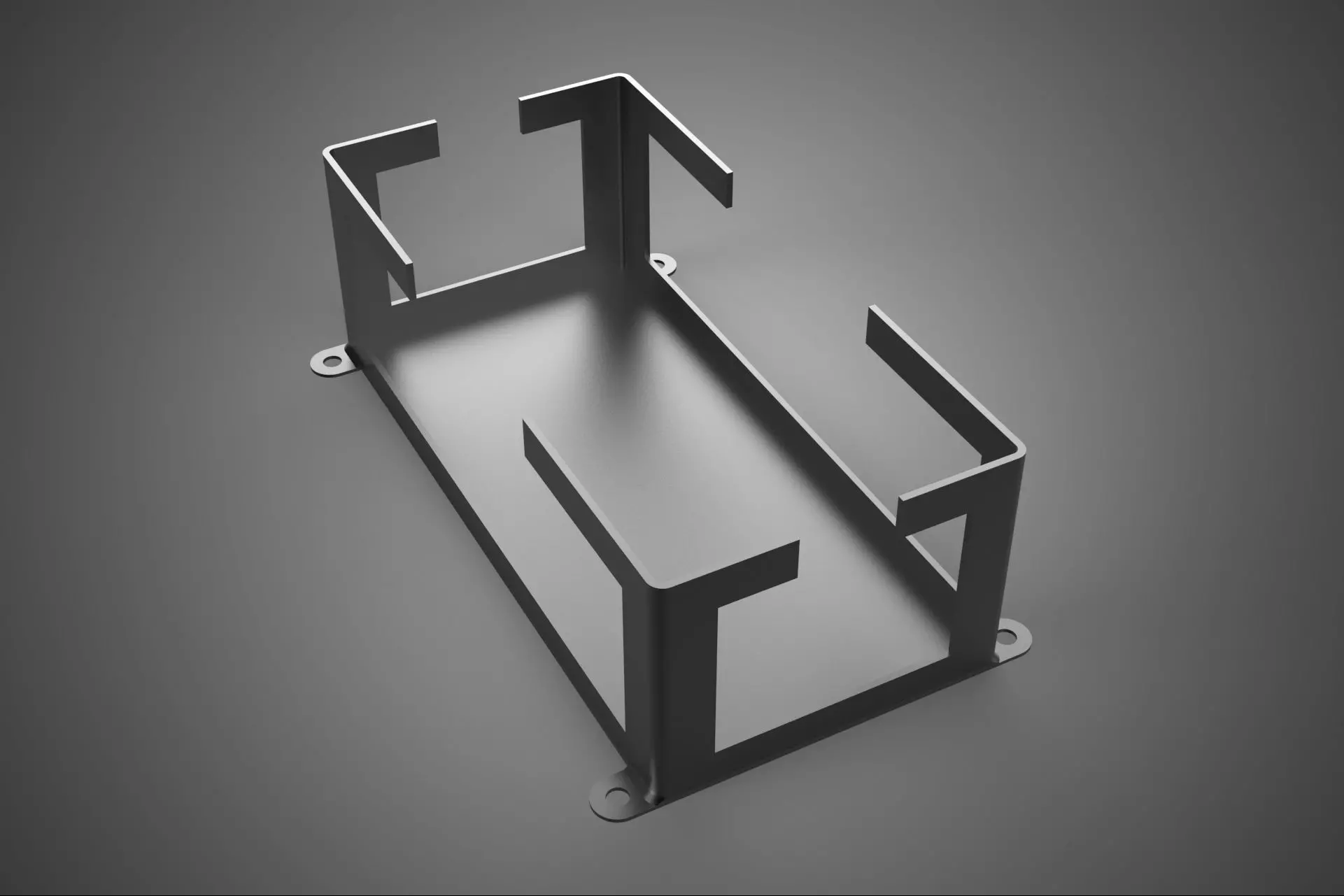
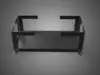
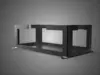
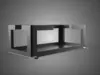
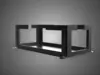
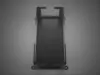
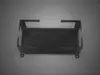
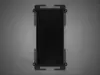
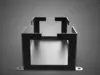
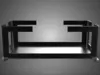
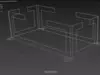
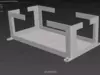
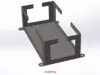
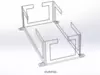
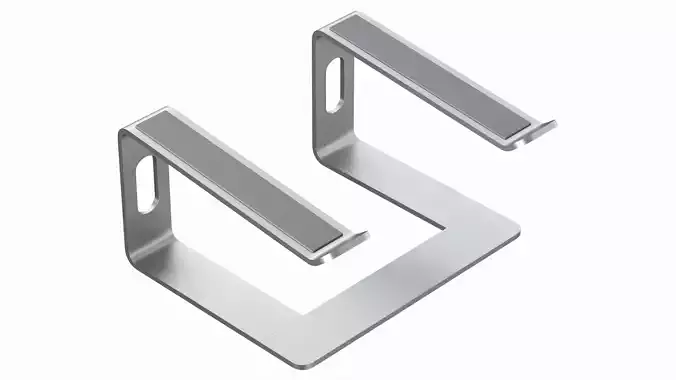
The Battery Housing Frame Bracket, also known by the composite terms Accumulator Casing Holder Mount or simply Battery Mounting Structure, is a fundamental mechanical subsystem designed to secure, protect, and integrate an electrochemical energy storage unit (ESU), commonly referred to as an accumulator (ACCU) or battery pack, within a host system platform. This component is essential for maintaining the operational integrity, safety, and longevity of the power source across diverse applications, ranging from mobility platforms to stationary power backup systems.
Nomenclature and Definition
The varied nomenclature reflects the component's multi-faceted structural role. Housing signifies enclosure and environmental protection; Frame denotes the primary structural element capable of bearing static and dynamic loads; and Bracket or Mount specifies the precise interface mechanism used to anchor the ESU rigidly to the main chassis or structural foundation of the device (e.g., an automobile chassis or a server rack). The design mandates that the assembly provide precise dimensional stability and mechanical support for the cells, modules, or the complete battery pack assembly.
Structural Design and Materials
Battery housing frame brackets are engineered to meet strict specifications concerning weight, stiffness, durability, and thermal management. Material selection is critical and typically involves high-strength alloys, reinforced polymers, or composite structures.
- Materials: Common materials include aluminum alloys (e.g., 6000 series) selected for their superior strength-to-weight ratio and excellent thermal conductivity, which aids in passive cooling. In applications requiring high dielectric strength or enhanced corrosion resistance, glass-fiber reinforced plastics (GFRP) or similar engineering polymers are utilized. For specialized contexts, high-tensile steel or carbon fiber composites may be employed to maximize impact resistance (crashworthiness).
- Construction: The construction methodology often involves casting, extrusion, or precision welding, depending on the complexity and load requirements. The structure invariably features integrated rigid supports, internal ribs or baffles for stiffness enhancement, and precision-machined interfaces for alignment with peripheral components, such as cooling lines, wiring harnesses, and control units (e.g., Battery Management Systems - BMS).
- Vibration Mitigation: A crucial design feature is the incorporation of Noise, Vibration, and Harshness (NVH) mitigation strategies. This is typically achieved through elastomeric mounts, rubber isolators, or integrated damping materials situated between the bracket and the battery casing. These mechanisms absorb external shocks and high-frequency vibrations, preventing damage to the sensitive internal cell connections and maximizing cycle life.
### Functional Requirements
The primary function of the mounting assembly extends beyond mere physical retention. It is integral to safety and performance specifications:
- Mechanical Protection: It shields the battery cells from external impacts, punctures, and crush loads, particularly critical in vehicular applications where regulatory standards for collision safety must be met.
- Load Bearing: The bracket transfers dynamic forces (acceleration, braking, cornering) efficiently to the host vehicle or system structure, ensuring the battery remains fixed even under extreme operational stresses.
- Thermal Management Integration: The bracket often serves as a heat sink or provides dedicated channels and mounting points for active thermal management systems (liquid cooling plates or forced air vents) necessary to maintain the cells within their optimal temperature window, crucial for preventing degradation and thermal runaway events.
- Electrical Grounding and Shielding: The metallic components of the housing often contribute to electromagnetic shielding and provide a secure, low-resistance pathway for system grounding, fulfilling safety requirements against short circuits or electrostatic discharge.
### Applications
Battery housing frame brackets are ubiquitous in systems requiring reliable, secured power sources:
- Automotive: Found in all Electric Vehicles (EVs) and Hybrid Electric Vehicles (HEVs), often forming a fundamental part of the vehicle's structural integrity, located typically beneath the floor pan.
- Aerospace and Defense: Used in securing avionics batteries and military power units where extreme shock and vibration endurance is mandatory.
- Industrial and Robotics: Employed in heavy machinery, Automated Guided Vehicles (AGVs), and high-payload robotic systems where robust, easily interchangeable battery packs are necessary.
- Telecommunications and Data Centers: Used in rack-mounted Uninterruptible Power Supply (UPS) systems to manage large arrays of stationary storage cells securely.
KEYWORDS: Battery, Housing, Frame, Bracket, Accumulator, ACCU, Casing, Mount, Holder, Mounting Structure, Energy Storage, Chassis Integration, Thermal Management, Vibration Dampening, Crashworthiness, Load Bearing, Structural Component, Electric Vehicle, EV, Hybrid, Lithium-Ion, Fabrication, Aluminum Alloy, Reinforced Polymer, Safety Mechanism, NVH Mitigation, Enclosure, Mechanical Support, UPS, Power Source, System Integration.