High-quality 3D assets at affordable prices — trusted by designers, engineers, and creators worldwide. Made with care to be versatile, accessible, and ready for your pipeline.
Included File Formats
This model is provided in 14 widely supported formats, ensuring maximum compatibility:
• - FBX (.fbx) – Standard format for most 3D software and pipelines
• - OBJ + MTL (.obj, .mtl) – Wavefront format, widely used and compatible
• - STL (.stl) – Exported mesh geometry; may be suitable for 3D printing with adjustments
• - STEP (.step, .stp) – CAD format using NURBS surfaces
• - IGES (.iges, .igs) – Common format for CAD/CAM and engineering workflows (NURBS)
• - SAT (.sat) – ACIS solid model format (NURBS)
• - DAE (.dae) – Collada format for 3D applications and animations
• - glTF (.glb) – Modern, lightweight format for web, AR, and real-time engines
• - 3DS (.3ds) – Legacy format with broad software support
• - 3ds Max (.max) – Provided for 3ds Max users
• - Blender (.blend) – Provided for Blender users
• - SketchUp (.skp) – Compatible with all SketchUp versions
• - AutoCAD (.dwg) – Suitable for technical and architectural workflows
• - Rhino (.3dm) – Provided for Rhino users
Model Info
• - All files are checked and tested for integrity and correct content
• - Geometry uses real-world scale; model resolution varies depending on the product (high or low poly)
• • - Scene setup and mesh structure may vary depending on model complexity
• - Rendered using Luxion KeyShot
• - Affordable price with professional detailing
Buy with confidence. Quality and compatibility guaranteed.
If you have any questions about the file formats, feel free to send us a message — we're happy to assist you!
Sincerely,
SURF3D
Trusted source for professional and affordable 3D models.
More Information About 3D Model :
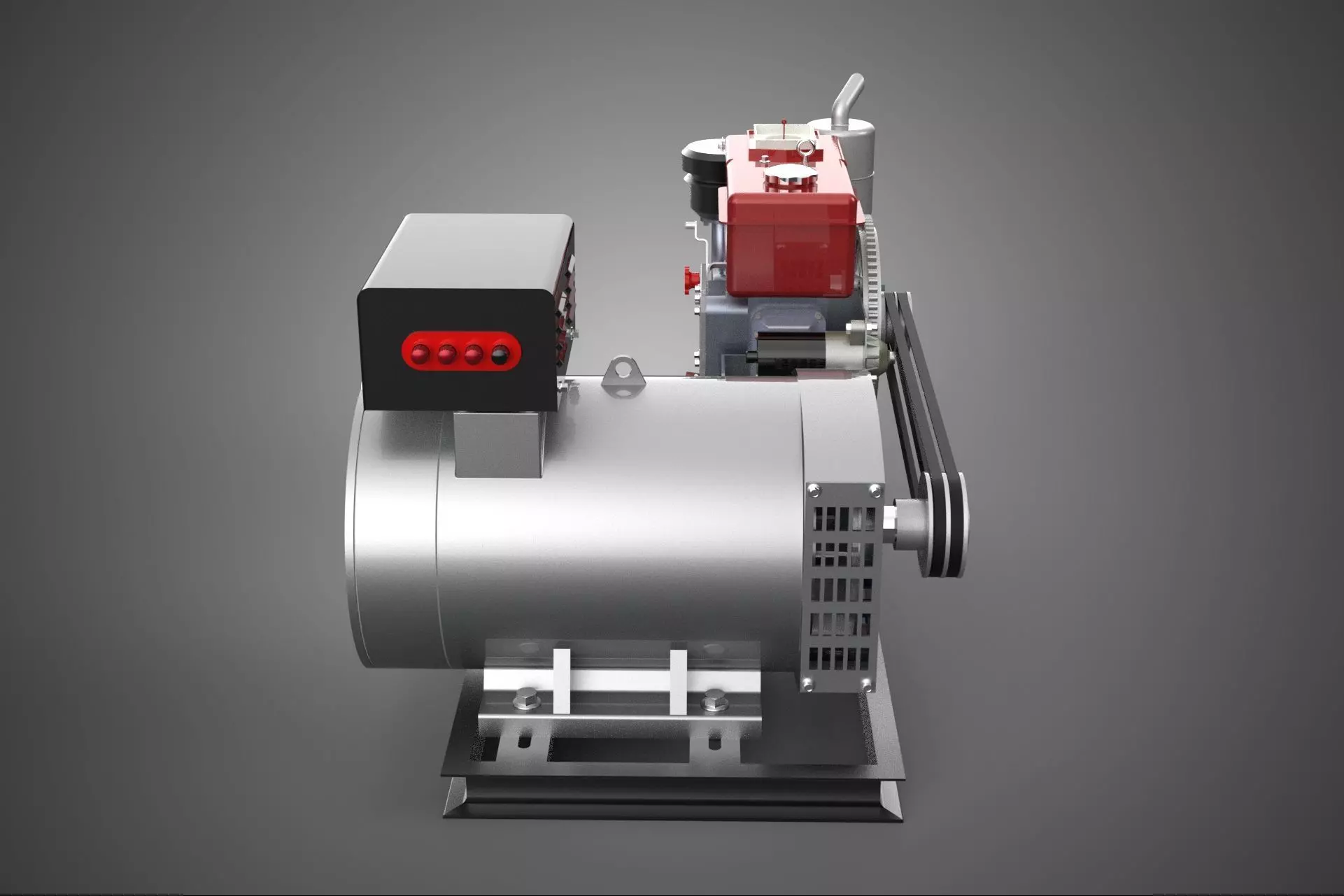
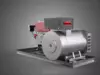
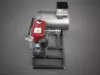
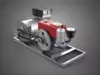
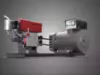
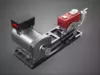
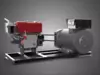
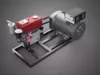
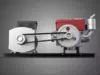
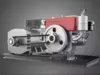
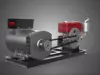
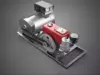
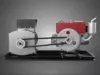
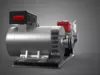
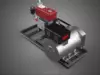
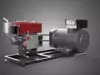
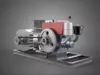
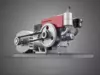
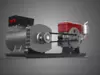
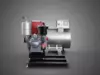
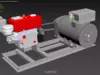
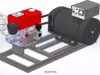
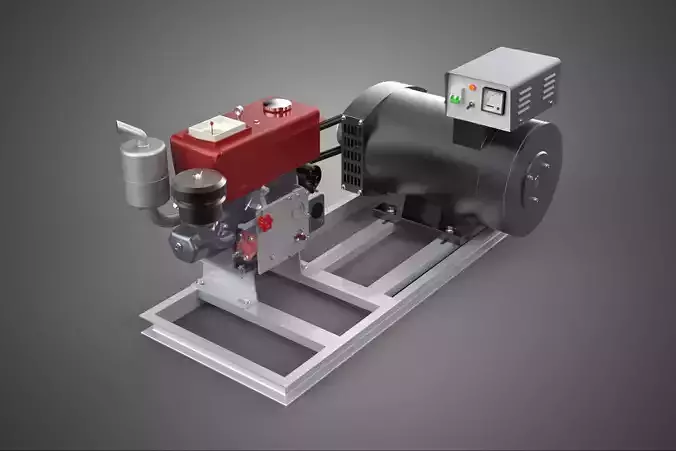
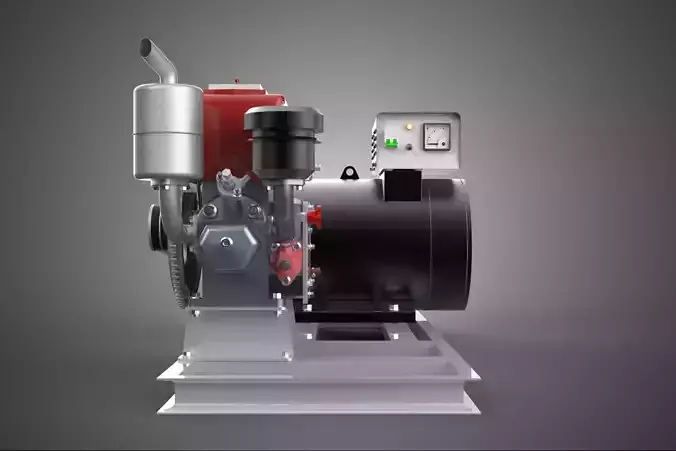
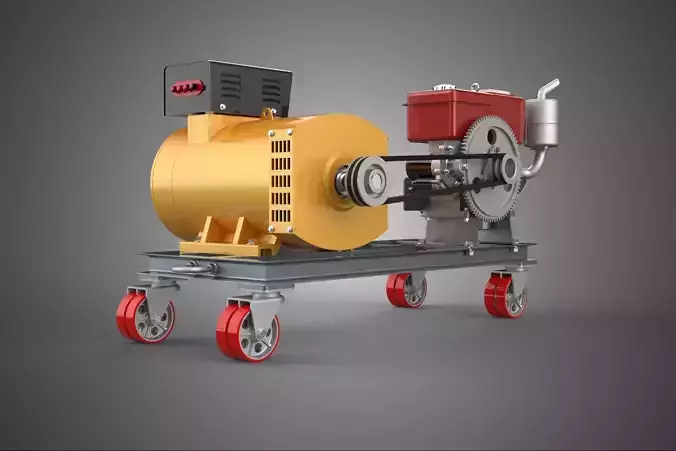
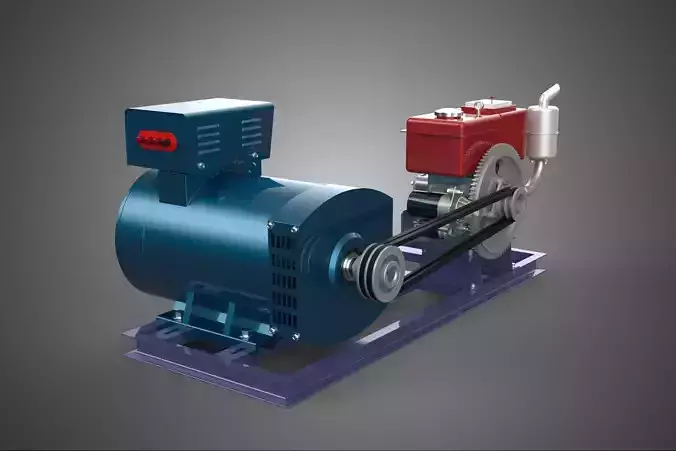
COMPACT DIESEL ENGINE TURBINE DYNAMO GENERATOR SET MACHINERY KVA
A Compact Diesel Engine Turbine Dynamo Generator Set (often abbreviated as CDGTGS or simply a Diesel Genset) is a self-contained, integrated power generation unit designed for high volumetric power density. This specialized machinery converts the chemical energy stored in diesel fuel into usable electrical power, typically delivered as alternating current (AC). These units are distinguished by their optimized footprint and modular construction, making them suitable for installations where space constraints are critical, such as urban environments, mobile platforms, or within existing industrial infrastructure.
Nomenclature and Component Clarification
The terminology associated with the CDGTGS integrates historical and technical terms:
- Diesel Engine (Prime Mover): This is the core compression-ignition internal combustion engine responsible for converting thermal energy into rotational mechanical energy.
- Turbine: In the context of modern diesel gensets, turbine refers overwhelmingly to the exhaust gas turbine utilized within a turbocharger. The turbocharger increases the engine’s volumetric efficiency and overall power output by using exhaust gases to spin a turbine, which in turn drives a compressor to force more air into the cylinders.
- Dynamo Generator Set (Alternator): Historically, dynamo referred strictly to a direct current (DC) generator. In contemporary engineering usage, particularly within the context of sets generating KVA output, the term encompasses the synchronous or asynchronous alternator—the machine that translates mechanical rotation into electrical energy via electromagnetic induction.
- KVA (Kilovolt-Ampere): This is the standard unit of apparent power (S), representing the total power capacity of the generator set. KVA is the product of the effective voltage and current, defining the machine's maximum rated capacity under specified load conditions, irrespective of power factor.
### Operational Principle and Machinery Integration
The CDGTGS operates on the standard four-stroke compression-ignition cycle. Fuel is injected into highly compressed air, resulting in ignition and expansion, driving the piston and rotating the crankshaft.
The defining characteristic of a compact genset is the close-coupled integration of the prime mover and the alternator, often mounted on a unified, high-strength skid or frame. The engine’s flywheel is directly connected to the alternator rotor, ensuring minimal power loss during transmission.
The turbocharger enhances system efficiency by recovering thermal energy from the exhaust stream, thereby reducing fuel consumption per unit of power produced and contributing to the overall high power-to-weight ratio characteristic of compact designs.
Auxiliary systems integral to the machinery include:
- Cooling System: Utilizing radiator or heat exchanger technologies to manage engine and lubricant temperatures.
- Fuel Delivery System: Including tanks, pumps, and sophisticated electronic control units (ECUs) for precise fuel metering.
- Control Panel/Switchgear: The critical interface for monitoring engine parameters (speed, temperature, pressure) and regulating electrical output (voltage, frequency, and load synchronization).
### Applications and Performance Specifications
Compact diesel gensets ranging from a few KVA to several thousand KVA are deployed in diverse environments requiring reliable, modular power.
- Standby/Emergency Power: Essential in hospitals, data centers, and commercial buildings to provide power continuity during grid outages.
- Prime Power: Used in remote locations (e.g., mining operations, construction sites, isolated communities) where connection to the utility grid is unfeasible.
- Mobile Power: Integrated into vehicles, trailers, or marine vessels due to their robust construction and relatively small physical footprint.
The KVA rating is the principal metric for specifying the machine's capacity. When coupled with the power factor (typically 0.8 lagging for industrial loads), the KVA determines the maximum usable real power output (Kilowatts, kW). Compact designs emphasize acoustic suppression and vibration damping to meet environmental regulations, often enclosed in weather-resistant, sound-attenuated cabinets.
KEYWORDS: Diesel Generator Set, Genset, Turbocharger, Prime Mover, Alternator, KVA Rating, Apparent Power, Compression-Ignition, Standby Power, Cogeneration, Skid-Mounted, Compact Design, Volumetric Efficiency, Synchronous Generator, High Power Density, Industrial Machinery, Emergency Power, Electrical Generation, Engine Control Unit, Exhaust Gas Turbine, Switchgear, Power Factor, Cooling System, Fuel Efficiency, Modular Power, Rotational Speed, Power Continuity, Distributed Generation, Diesel Engine, Dynamo.