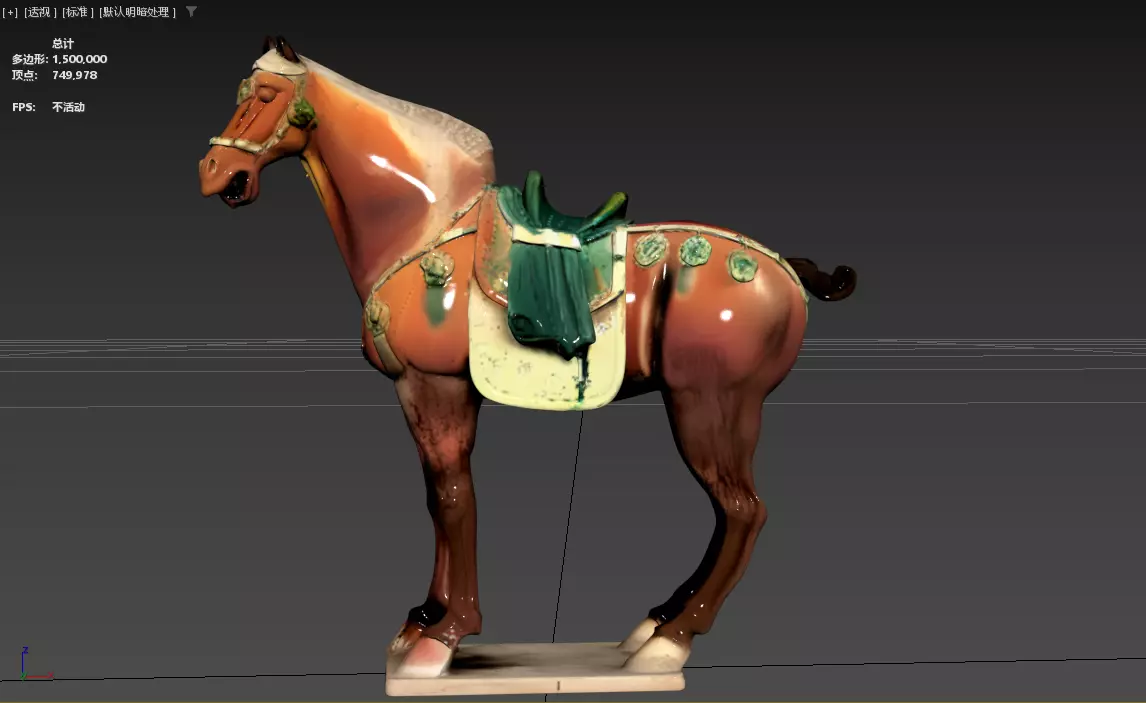
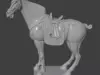
The Tang Dynasty tri colored horse figurines are highly representative works of art in Tang Dynasty tri colored glazed pottery, popular in the Tang Dynasty and mainly used for burial in tombs. It uses yellow, green, and white as the basic glaze colors, often supplemented by brown, blue, black, and other colors. It is made through low-temperature secondary firing technology, with vivid shapes and natural glaze color blending. It not only reflects the level of craftsmanship in the Tang Dynasty, but also reflects the social style and cultural integration at that time.
1、 Main types and styling featuresThe Tang Dynasty tri colored horse figurines have diverse shapes and can be mainly divided into the following categories:
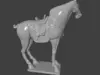
- Static standing horse figurine: This type of horse figurine has four legs separated on a square base, presenting a peaceful demeanor when standing. Horses usually wear reins and saddles, with neatly trimmed manes and precise detailing. For example, a 32 centimeter high Tang Dynasty tri colored horse figurine, with white glaze as the main color of the horse body, brown mane, and alternating green and brown reins and martins, has an accurate shape and symmetrical proportions. In a horse riding figurine in the collection of Jining, the horse's body is based on yellow brown glaze, with blue spots dotted in some areas. The rider's clothing is interwoven with yellow green dual color glaze.
- Cavalry figurines: Cavalry figurines are a common form, with a variety of rider images.*Hu people riding horses figurines: Riders often have the characteristics of deep eyes, high noses, and full beards from the Western Regions. They wear long sleeved shirts with collars and right lapels, and long leather boots. This confirms the historical fact that the Silk Road trade was prosperous during the Tang Dynasty, and Persian and Sogdian merchants were active in the Central Plains.*Hunting and horseback riding figurines: commonly found in royal and noble tombs, such as those unearthed from the tombs of Prince Zhanghuai and Princess Yongtai. Knights often wear headbands, narrow sleeved clothing with collars, and wear Hulu arrow bags and Pantao bow bags, recreating the hunting scenes of Tang Dynasty nobles.*Other horse riding figurines: There are also child shaped riders, such as a 10.9-centimeter high horse riding figurine housed in the Yanzhou Museum in Jining City. The horse stands in a standing position and sits on top of a mischievous child with a childish face and tightly gripping the reins, showcasing the skilled sculpting techniques of Tang Dynasty craftsmen.
- Dynamic galloping horse figurines: This type of design is relatively rare, and the most representative one is the Three Colored Flying Horse Riding Figurines collected by the Xi'an Museum. The terracotta horse is depicted with four hooves soaring into the air, with a robust physique. The rider is a young man from the Western Regions Hu ethnic group, dressed in a blue robe made of imported cobalt material. It is the only existing Tang Dynasty tri colored galloping horse with four hooves soaring into the air in China, depicting the image of the Western Regions Hu people traveling to Chang'an on the Silk Road.
2、 Production processThe production process of Tang Dynasty tri colored horse figurines is complex and exquisite.
- Molding and firing: The main method used is secondary firing. First, shape the body with white clay and then burn it at a high temperature of about 1100 ℃; After cooling, apply glaze on the raw material, and then perform glaze firing at a low temperature of about 800 ℃. To maintain clear facial details of the characters, the face opening process is often performed after firing, which involves directly painting the facial features on the body.
- Glaze color characteristics: The glaze uses lead as a flux and different metal oxides as coloring agents. After calcination, it presents rich colors. The glaze color naturally flows and blends during the firing process, forming a unique artistic effect. Among them, blue glaze is expensive due to the need to import cobalt materials, and is only found in high-level tomb excavated objects. Its use is one of the important indicators for identifying the grade of Tang Dynasty tri colored glazed pottery.
3、 Historical significance and cultural connotationThe Tang Dynasty tri colored horse figurines have significant historical and cultural value.
- Reflection of social life: Horses are indispensable in the lives of the Tang people, and the large number of tri colored horse figurines unearthed from tombs reflect the Tang people's love for horses. Different shapes of horse figurines, such as static standing figures, may imply ceremonial features specifically designed for burial, while hunting figurines are associated with the military training concept of the Tang Dynasty royal family's never forget to fight and the Five Fang system.
- Witness to the integration of diverse cultures: The riders or horse carrying figurines of the Hu people (such as the Tang Dynasty tri colored Hu horse carrying figurines collected in the Shaanxi History Museum), as well as the Western Regions elements on clothing and horse equipment, vividly reflect the inclusiveness of Chang'an as an international city during the Tang Dynasty, and are tangible examples of cultural exchange on the Silk Road.
- Artistic and collectible value: The Tang Dynasty tri colored horse figurines have realistic shapes and superb craftsmanship, representing the peak level of Tang Dynasty tri colored art. As a treasure of Chinese art, it not only provides valuable physical materials for understanding Tang culture, but its artistic charm has also attracted long-term attention from the collection industry at home and abroad.
4、 Important Collection ExamplesThe Tang Dynasty tri colored horse figurines are widely collected in museums both domestically and internationally.*The queue style terracotta warriors (36-38 centimeters high) unearthed in Qin'an, Gansu Province are housed in the Gansu Provincial Museum, fully showcasing the Tang Dynasty cavalry ceremonial arrangements.*The tri colored flying horse riding figurine is housed in the Xi'an Museum and is a rare dynamic galloping horse shaped treasure in China.*The cultural and museum institutions of the Provincial Games Command Center in Taibai Lake New District, Jining City, and the Yanzhou Museum both have Tang Dynasty tri colored horse riding figurines with regional characteristics.*The Palace Museum houses typical tri colored horse riding and hunting figurines from the tomb of Prince Zhang Huai, which are 42 centimeters high.*The Shaanxi History Museum houses the Tang Dynasty tri colored Hu people's horse pulling figurines unearthed in Xi'an in 1959, which are first-class cultural relics.
In summary, the Tang Dynasty tri colored horse figurines combine the beauty of craftsmanship, cultural charm, and historical reality, and are an important physical carrier for studying Tang society, art, and Sino foreign exchanges.