High-quality 3D assets at affordable prices — trusted by designers, engineers, and creators worldwide. Made with care to be versatile, accessible, and ready for your pipeline.
Included File Formats
This model is provided in 14 widely supported formats, ensuring maximum compatibility:
• - FBX (.fbx) – Standard format for most 3D software and pipelines
• - OBJ + MTL (.obj, .mtl) – Wavefront format, widely used and compatible
• - STL (.stl) – Exported mesh geometry; may be suitable for 3D printing with adjustments
• - STEP (.step, .stp) – CAD format using NURBS surfaces
• - IGES (.iges, .igs) – Common format for CAD/CAM and engineering workflows (NURBS)
• - SAT (.sat) – ACIS solid model format (NURBS)
• - DAE (.dae) – Collada format for 3D applications and animations
• - glTF (.glb) – Modern, lightweight format for web, AR, and real-time engines
• - 3DS (.3ds) – Legacy format with broad software support
• - 3ds Max (.max) – Provided for 3ds Max users
• - Blender (.blend) – Provided for Blender users
• - SketchUp (.skp) – Compatible with all SketchUp versions
• - AutoCAD (.dwg) – Suitable for technical and architectural workflows
• - Rhino (.3dm) – Provided for Rhino users
Model Info
• - All files are checked and tested for integrity and correct content
• - Geometry uses real-world scale; model resolution varies depending on the product (high or low poly)
• • - Scene setup and mesh structure may vary depending on model complexity
• - Rendered using Luxion KeyShot
• - Affordable price with professional detailing
Buy with confidence. Quality and compatibility guaranteed.
If you have any questions about the file formats, feel free to send us a message — we're happy to assist you!
Sincerely,
SURF3D
Trusted source for professional and affordable 3D models.
More Information About 3D Model :
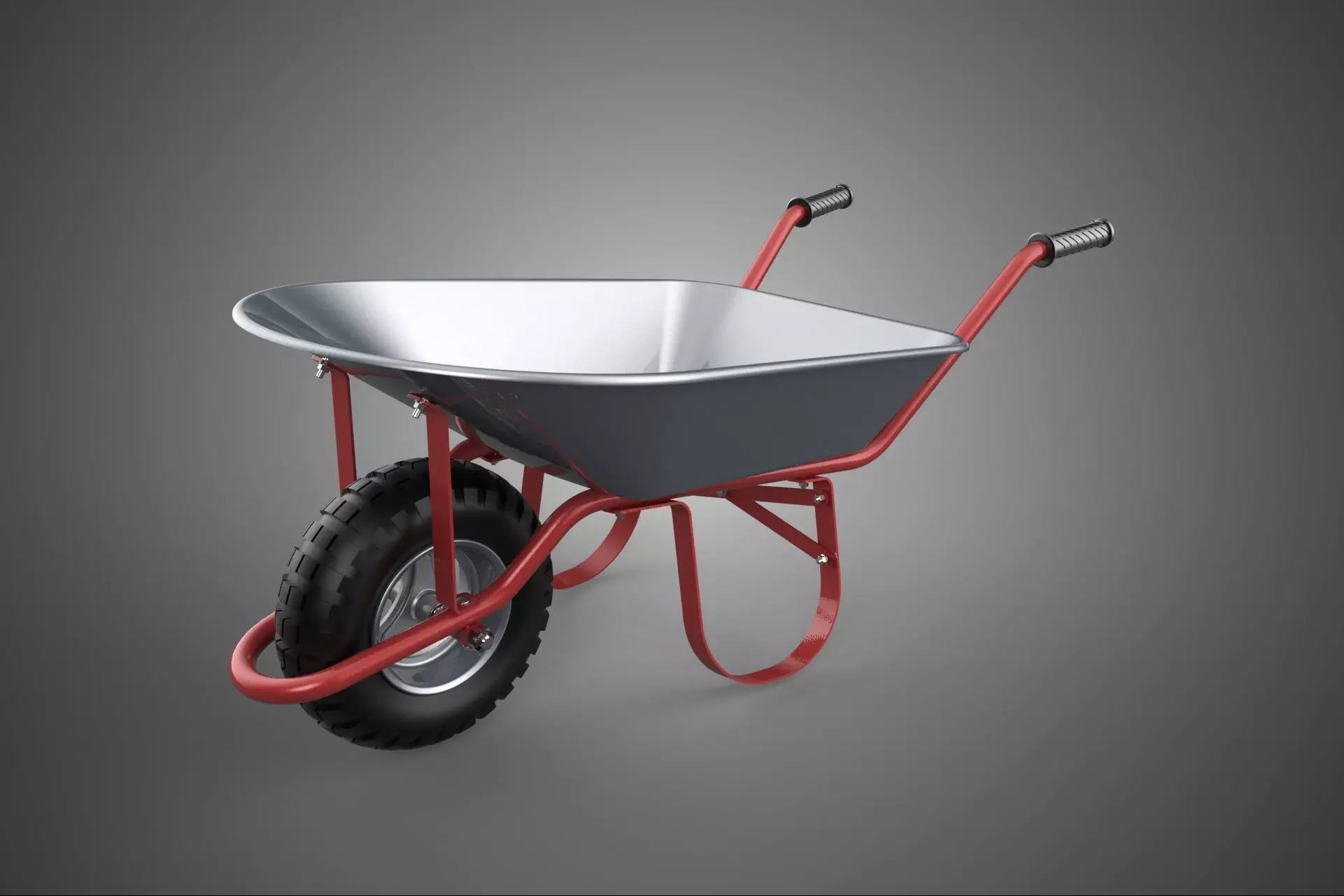
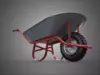
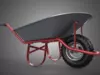
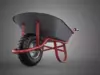
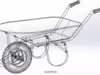
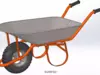
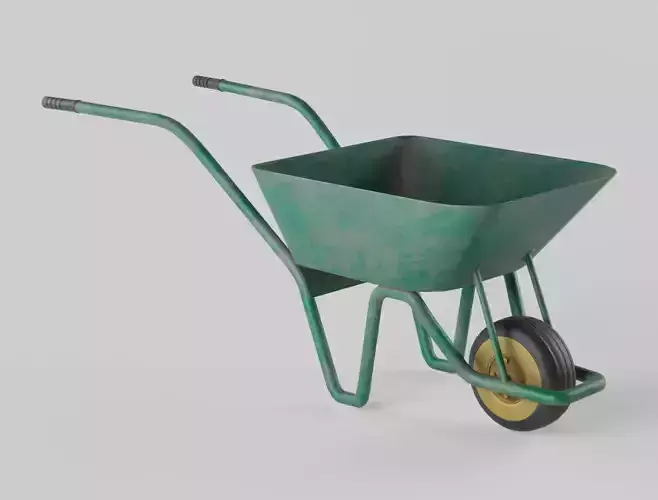
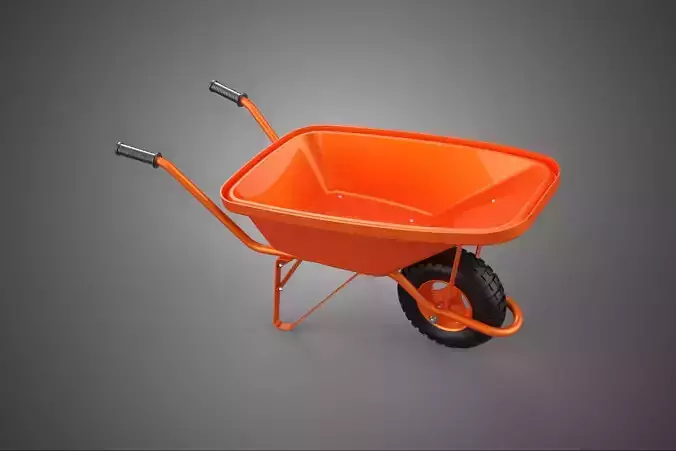
MONOWHEEL CART WHEELBARROW TROLLEY WAGON MONO WHEEL BARROW AXLE
The classification defined by the terms Monowheel Cart Wheelbarrow Trolley Wagon Mono Wheel Barrow Axle refers collectively to a specific class of unpowered or minimally assisted material handling vehicles distinguished primarily by their mechanical reliance upon a singular, centrally positioned, load-bearing wheel and its accompanying axle assembly. This design maximizes maneuverability and applies the principle of leverage to facilitate the transport of loads by human operators, contrasting fundamentally with multi-wheel conveyances (carts, wagons, and trolleys) which utilize inherent static stability derived from multiple points of contact.
Nomenclature and Typology
While the term Monowheel accurately describes the mechanical configuration, the most common exemplar and definitive application of this design is the Wheelbarrow. A wheelbarrow functions as a Class 2 lever system, where the wheel acts as the fulcrum, the load is centrally placed, and the operator applies the effort via the handles.
The inclusion of terms like Cart, Trolley, and Wagon within this monowheel classification typically denotes specialized variants or historical iterations:
- Wheelbarrow (Standard): Characterized by two handles and a frontal wheel. The load is distributed between the axle (bearing the majority of the weight, often 75-90%) and the operator's lifting effort.
- Monowheel Cart/Trolley (Heavy Duty): Historically, especially prevalent in China (often termed the Chinese wheelbarrow), these devices featured a significantly larger wheel positioned directly beneath the load's center of gravity. This configuration allowed the vehicle to carry substantially greater weights, often replacing two-person transport systems, and sometimes included sails for wind assistance, blurring the lines between a simple barrow and a small wagon. These versions occasionally possessed side-panels or structures that conceptually link them to small wagons or box carts.
### Mechanical Principles and the Role of the Axle
The functional efficiency of any monowheel conveyance is predicated entirely upon the integrity and placement of the Axle. The axle is the mechanical component that connects the wheel to the body or frame, allowing the rotational movement essential for translation while bearing the primary vertical load ($F_v$).
- Load Distribution: In a standard wheelbarrow, the axle assembly transforms the downward force of the load into translational motion. The mechanical advantage is achieved by moving the wheel closer to the load (decreasing the load arm) and maximizing the distance between the wheel and the operator (increasing the effort arm).
- The Axle Assembly: The axle must be robust enough to withstand significant bending moments and sheer forces. In basic designs, the axle is fixed to the frame (a dead axle), while the wheel rotates around it via bushings or bearings. In high-performance or heavy-duty units, a live axle (rotating with the wheel) or more complex bearing systems are employed to minimize friction and wear.
- Lateral Stability: The defining challenge of the monowheel design is the inherent lack of lateral (side-to-side) stability. Unlike multi-wheeled vehicles, the monowheel system requires continuous dynamic stabilization provided by the operator. The operator must manage both the lifting force and the torque required to prevent tipping, especially when traversing uneven terrain or inclines.
### Applications and Historical Significance
The monowheel design has proven enduringly useful due to its combination of high weight capacity relative to the operator's effort, and its unmatched maneuverability in confined spaces.
Historically, the Chinese wheelbarrow, dating back perhaps as far as the 1st century CE, represents the most advanced early implementation. Its design, placing the load high and centered directly over a large wheel, demonstrated superior efficiency in difficult terrain and became fundamental to infrastructure development and agriculture in East Asia.
Modern applications remain prominent across several sectors:
- Construction: Essential for moving mortar, debris, and raw materials across active job sites.
- Agriculture and Horticulture: Utility in gardening and farming for soil, compost, and harvest transport.
- Specialized Utility: Adapted monowheel hand trucks or trolleys are used for moving large, single items (e.g., kayaks, gas cylinders) where two wheels would hinder access.
The monowheel system, dependent on the fundamental operation of the wheel and the structural support of the axle, remains a critical device in manual material handling, balancing payload capacity against the requirement for dynamic stability.
KEYWORDS: Wheelbarrow, Monowheel, Axle, Load carrier, Material handling, Mechanical advantage, Lateral stability, Center of gravity, Transport, Single wheel, Pushcart, Conveyance, Manual labor, Lever system, Bearing, Wheel, Utility vehicle, Construction, Gardening, Hand truck, Trolley, Cart, Wagon, Single-axle, Unicycle cart, Historical technology, Chinese wheelbarrow, Load distribution, Mobility, Balancing.