High-quality 3D assets at affordable prices — trusted by designers, engineers, and creators worldwide. Made with care to be versatile, accessible, and ready for your pipeline.
Included File Formats
This model is provided in 14 widely supported formats, ensuring maximum compatibility:
• - FBX (.fbx) – Standard format for most 3D software and pipelines
• - OBJ + MTL (.obj, .mtl) – Wavefront format, widely used and compatible
• - STL (.stl) – Exported mesh geometry; may be suitable for 3D printing with adjustments
• - STEP (.step, .stp) – CAD format using NURBS surfaces
• - IGES (.iges, .igs) – Common format for CAD/CAM and engineering workflows (NURBS)
• - SAT (.sat) – ACIS solid model format (NURBS)
• - DAE (.dae) – Collada format for 3D applications and animations
• - glTF (.glb) – Modern, lightweight format for web, AR, and real-time engines
• - 3DS (.3ds) – Legacy format with broad software support
• - 3ds Max (.max) – Provided for 3ds Max users
• - Blender (.blend) – Provided for Blender users
• - SketchUp (.skp) – Compatible with all SketchUp versions
• - AutoCAD (.dwg) – Suitable for technical and architectural workflows
• - Rhino (.3dm) – Provided for Rhino users
Model Info
• - All files are checked and tested for integrity and correct content
• - Geometry uses real-world scale; model resolution varies depending on the product (high or low poly)
• • - Scene setup and mesh structure may vary depending on model complexity
• - Rendered using Luxion KeyShot
• - Affordable price with professional detailing
Buy with confidence. Quality and compatibility guaranteed.
If you have any questions about the file formats, feel free to send us a message — we're happy to assist you!
Sincerely,
SURF3D
Trusted source for professional and affordable 3D models.
More Information About 3D Model :
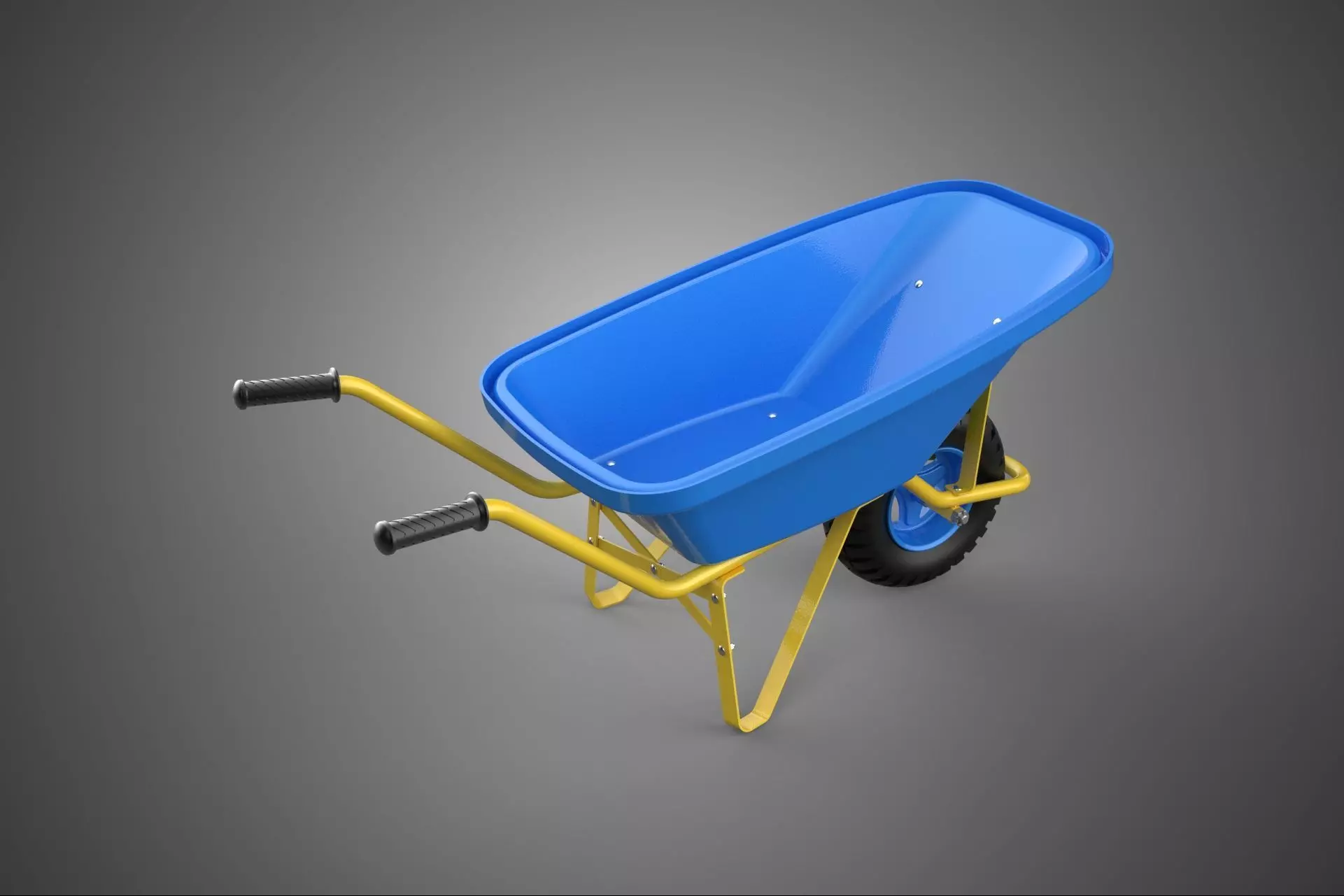
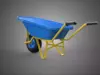
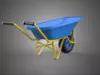
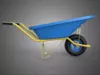
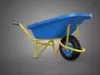
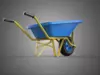
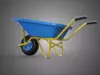
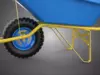
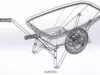
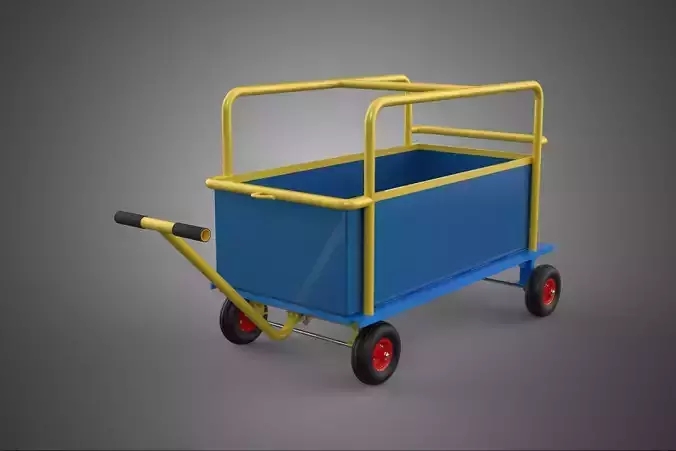
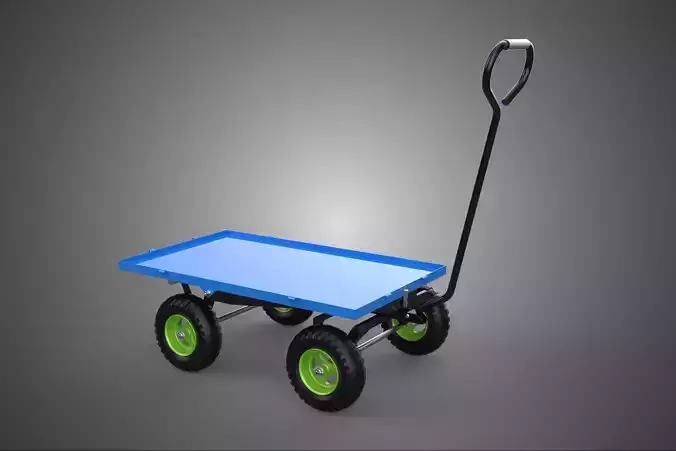
BLUE YELLOW WHEELBARROWS PUSH DUMP CART WHEELS BARROWS TROLLEY
The collective terminology Blue Yellow Wheelbarrows Push Dump Cart Wheels Barrows Trolley refers to a diverse category of non-motorized utility vehicles designed for the manual conveyance and manipulation of bulk materials. These devices, integral to sectors such as construction, landscaping, agriculture, and general warehousing, are primarily distinguished by their leverage system, wheel configuration, and mechanism for controlled discharge (dumping).
1. Nomenclature and Classification
The descriptive title encompasses three primary classes of material transport apparatus, often overlapping in function but differentiated by design principles:
A. Wheelbarrows (Barrows): Typically defined as a Class 2 lever system, the classic wheelbarrow utilizes a single wheel positioned forward, allowing the operator to lift and balance the majority of the load weight onto the axle, significantly reducing the required lifting force. Modern variants may employ dual forward wheels for increased stability.
B. Dump Carts: These vehicles are generally characterized by a two- or multi-wheel axle configuration, providing superior stability compared to single-wheel barrows, especially over uneven terrain. Dump carts often feature a hinged basin or hopper specifically designed to pivot forward past the center of gravity, facilitating rapid and controlled unloading (the 'dump' function). They are usually larger in capacity and designed for heavy-duty use or towing behind small vehicles (e.g., garden tractors).
C. Trolleys: In the context of material handling, ‘trolley’ refers broadly to multi-wheeled utility platforms or deep-bin carts (often called dollies or push carts). While some heavy-duty industrial trolleys may feature hydraulic or mechanized dumping capabilities, manual push trolleys are primarily designed for static transport rather than leveraged conveyance. The inclusion of this term signifies the broader family of push-operated transport equipment.
2. Functional Mechanics (Push and Dump)
The operation of these units relies on the push mechanism, where the operator provides locomotion via handles or a tow bar. The critical differentiator is the dump capability, which is essential for efficient material handling.
In standard wheelbarrows, dumping is achieved manually by leveraging the handles upward and forward, causing the basin to tip and discharge its contents. In specialized dump carts, the process is often assisted by a latch or release lever that disengages the tub from the frame, allowing it to rotate on an integrated pivot point, thus ensuring quick and complete material clearance (e.g., gravel, soil, debris).
3. Key Components and Design Features
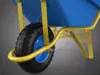
Wheels: The effectiveness of these carts hinges on the wheel design. Options include pneumatic (air-filled) tires, which provide cushioning and superior performance on soft or rough ground, and solid rubber or semi-pneumatic wheels, which offer puncture resistance and high load capacity, typically found on heavy-duty construction models. Axle strength is proportionate to the intended maximum payload.
Barrows/Tubs: The load containment vessel (the barrow or tub) is constructed from materials selected based on durability and weight. Common materials include:
- Steel: Used for maximum durability and resistance to abrasion (heavy-duty construction).
- Polyethylene (Plastic): Lighter, rust-resistant, and commonly utilized for garden or lighter construction applications.
### 4. Color Coding (Blue and Yellow)
The specification of Blue and Yellow indicates common industrial and consumer manufacturing standards for these utility vehicles. Color coding often serves multiple purposes:
- High Visibility: Yellow, in particular, is frequently employed for heavy-duty, high-capacity barrows and dump carts used on active construction sites to adhere to safety protocols requiring conspicuous equipment.
- Material Designation: Blue is often associated with poly-tub units or specific manufacturer branding for lighter-duty, non-corrosive material handling (e.g., feed, fertilizer).
- Branding: Specific manufacturers utilize proprietary color schemes (e.g., bright yellow frames or blue plastic tubs) to differentiate product lines based on capacity or intended application (e.g., commercial vs. residential grade).
These vehicles are fundamental tools in logistics and manual labor, optimizing the transport of heavy, cumbersome, or loose materials across short distances.
KEYWORDS: Wheelbarrow, Dump Cart, Trolley, Material Handling, Utility Vehicle, Cart Wheels, Push Cart, Manual Transport, Barrow, Garden Cart, Construction Equipment, Poly Tub, Steel Barrow, Pneumatic Tires, Class 2 Lever, Tipping Mechanism, Load Capacity, Heavy Duty, Ergonomics, Hand Truck, Dolly, Blue Cart, Yellow Equipment, Conveyance, Chassis, Axle, Haulage, Horticulture, Landscaping, Push Dump.