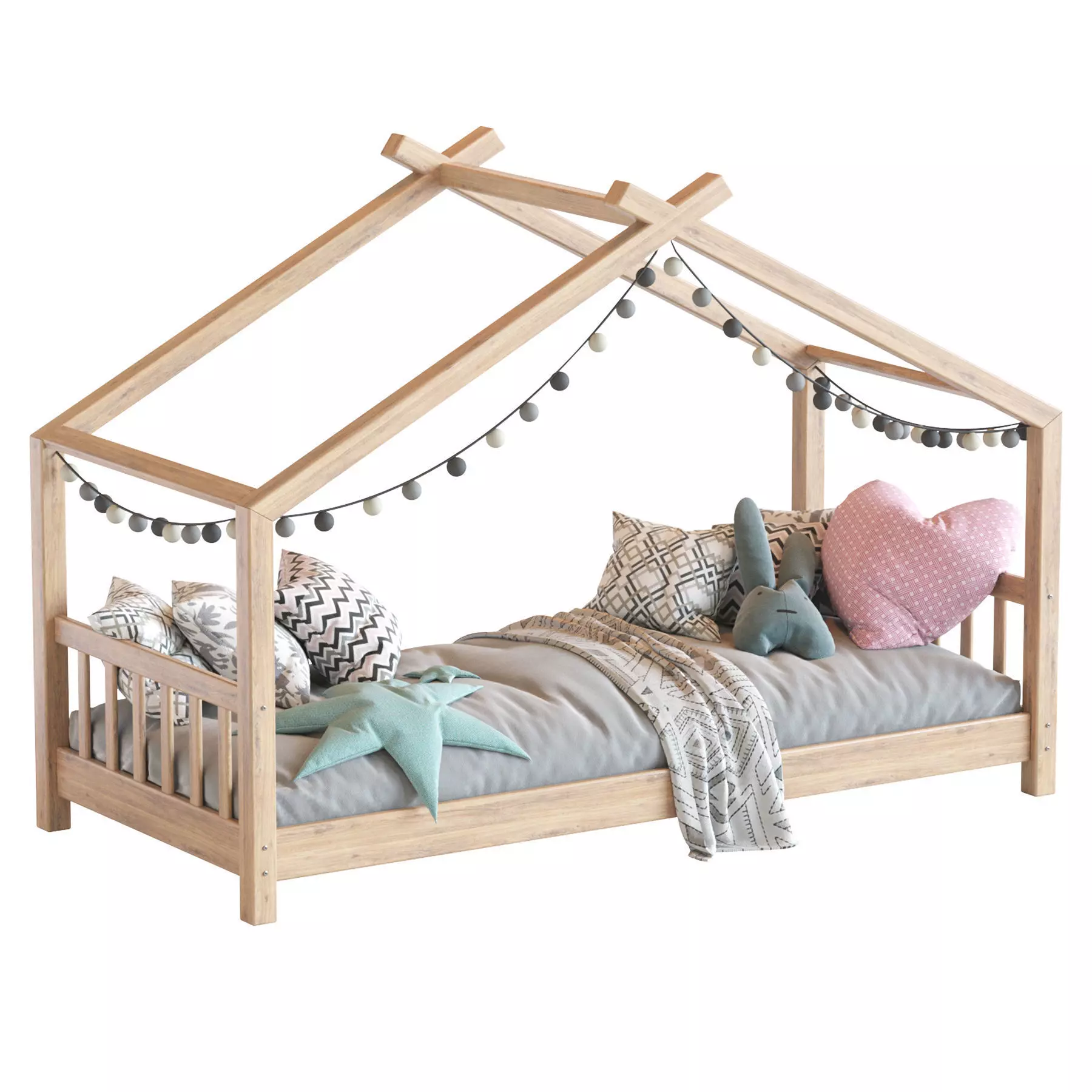
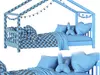
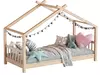
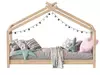
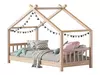
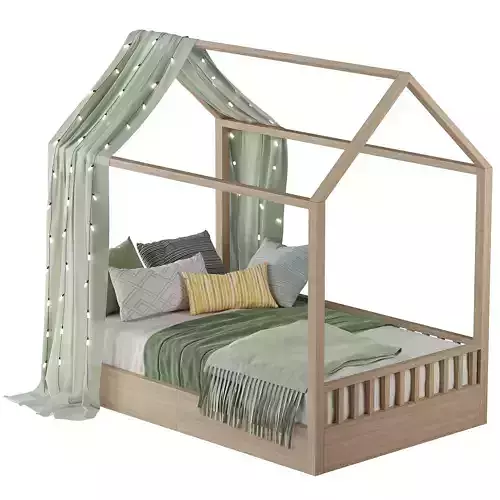
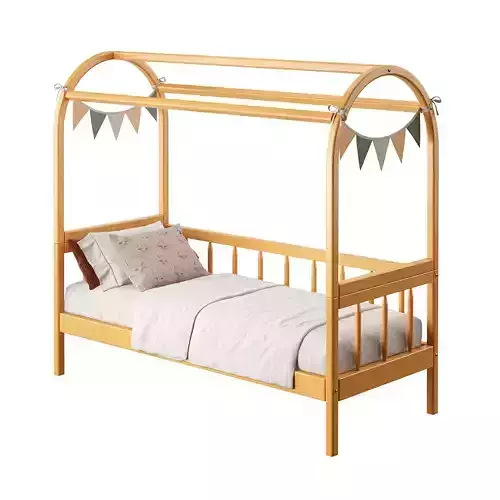
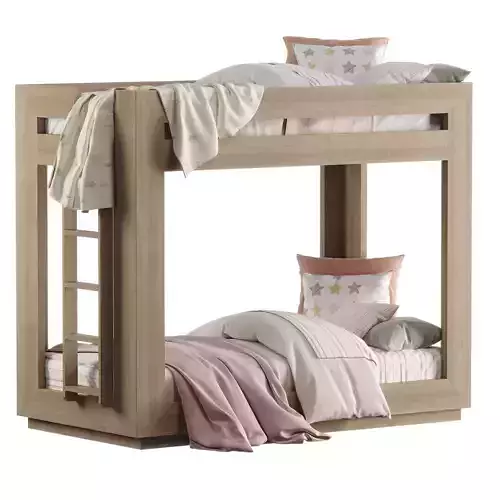
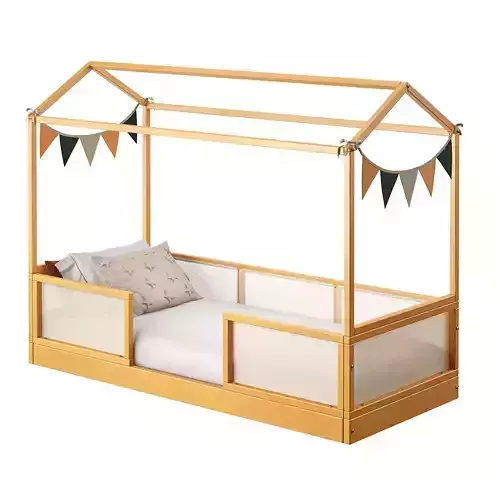
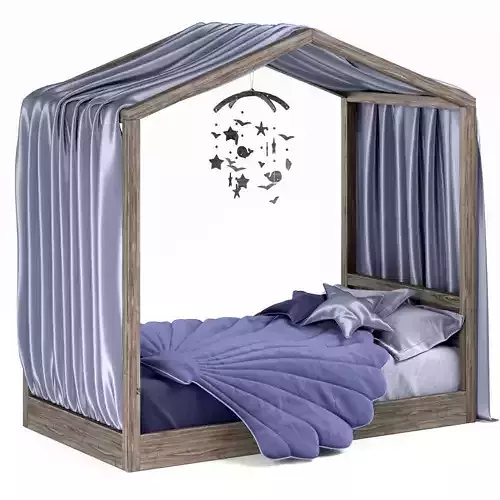
Dimensions
W. 208 x D. 97 x H. 146 cm
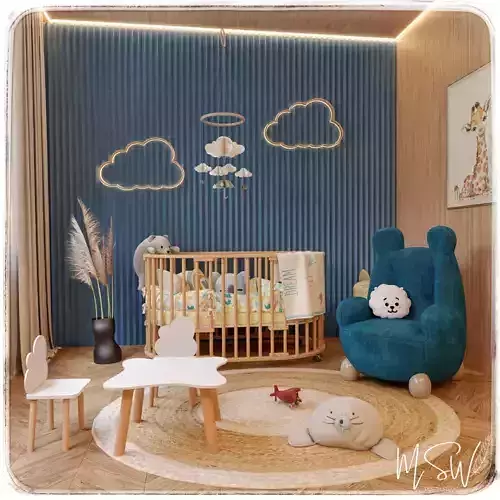
VitaliSpa Kinderbett Hausbett DESIGN 90x200cm Kinder Bett Holz Haus Hausbett natur
The name crib was used to describe a slatted, high-sided child's bed.[1] It derives from the Old English word cribb which means manger (food trough, referring to the shape of a bassinette) or stall (implying corralling the child).
It wasn't until the 19th century that infant beds developed from bassinettes, acquiring a role of keeping the child in their bed. The development of a distinction between infant beds and bassinettes was natural because it was considered vital that the child's bed be raised off the ground.[1] This was due to a perception of noxious fumes below knee level, and explosive vapours near the ceiling, with good air in between.[1] Once children's beds were raised off the ground the role of the sides changed from a convenience to a safety feature.
It was recognised that once children learn to stand they may be able to get out of a bed with low sides. According to an expert of the time, infant beds were used once the child was 12 months old. Often one side was hinged to open the enclosure, a function fulfilled in modern infant beds with a dropside. With the hinge side lowered, the bed could be moved on casters, and they could be moved right up to the carer's bed when needed.[1]
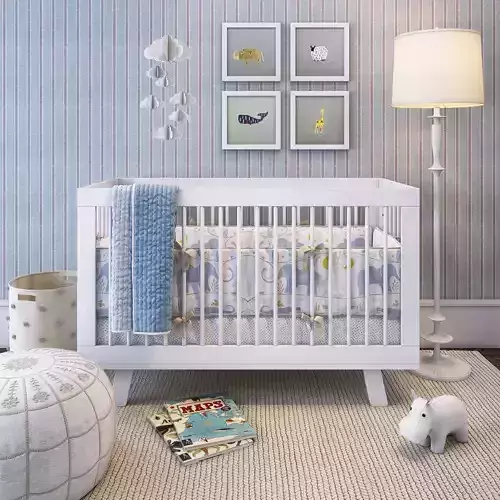
Iron beds were developed in 17th century Italy to address concerns about bed bug infestation and moths.[2] This new application was quickly extended to children's beds - a rockable iron bassinette (with spear-like corner posts) has been dated to 1620–1640.[2] Proponents promoted the supposed health benefits of iron beds. Infant beds constructed from metal became popular during the later half of the 19th century.[1] Infant beds (and bassinettes) constructed from iron with mesh or chain sides were common. Childcare experts gave iron beds their approval because it was hygienic material (compared with wood) and could not habour vermin,[1] of which bed bug infestation, lice and moths were cited concerns.[2] Commonly painted with a white vitreous enamel, later manufacturers working with wood continued to paint in the now traditional white; unfortunately this was often lead paint, and children were notorious for chewing and sucking the sweet surface