High-quality 3D assets at affordable prices — trusted by designers, engineers, and creators worldwide. Made with care to be versatile, accessible, and ready for your pipeline.
Included File Formats
This model is provided in 14 widely supported formats, ensuring maximum compatibility:
• - FBX (.fbx) – Standard format for most 3D software and pipelines
• - OBJ + MTL (.obj, .mtl) – Wavefront format, widely used and compatible
• - STL (.stl) – Exported mesh geometry; may be suitable for 3D printing with adjustments
• - STEP (.step, .stp) – CAD format using NURBS surfaces
• - IGES (.iges, .igs) – Common format for CAD/CAM and engineering workflows (NURBS)
• - SAT (.sat) – ACIS solid model format (NURBS)
• - DAE (.dae) – Collada format for 3D applications and animations
• - glTF (.glb) – Modern, lightweight format for web, AR, and real-time engines
• - 3DS (.3ds) – Legacy format with broad software support
• - 3ds Max (.max) – Provided for 3ds Max users
• - Blender (.blend) – Provided for Blender users
• - SketchUp (.skp) – Compatible with all SketchUp versions
• - AutoCAD (.dwg) – Suitable for technical and architectural workflows
• - Rhino (.3dm) – Provided for Rhino users
Model Info
• - All files are checked and tested for integrity and correct content
• - Geometry uses real-world scale; model resolution varies depending on the product (high or low poly)
• • - Scene setup and mesh structure may vary depending on model complexity
• - Rendered using Luxion KeyShot
• - Affordable price with professional detailing
Buy with confidence. Quality and compatibility guaranteed.
If you have any questions about the file formats, feel free to send us a message — we're happy to assist you!
Sincerely,
SURF3D
Trusted source for professional and affordable 3D models.
More Information About 3D Model :
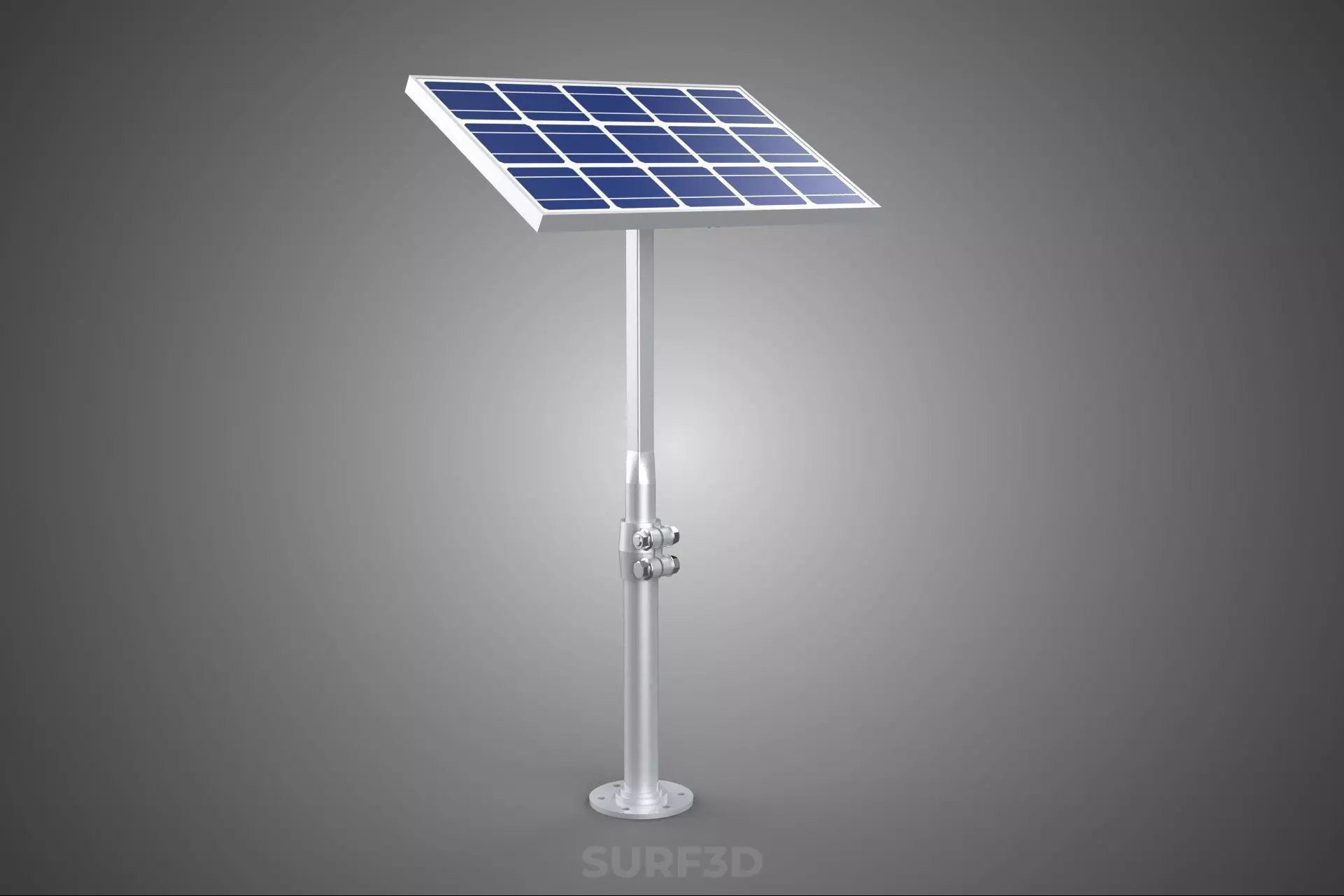
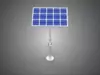
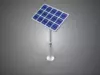
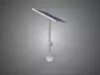
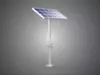
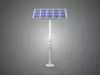
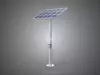
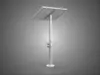
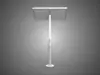
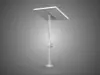
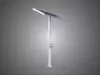
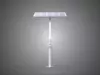
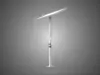
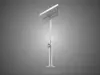
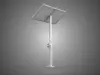
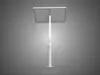
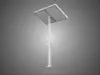
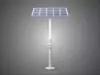
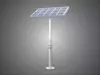
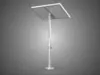
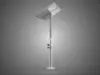
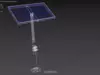
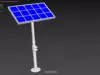
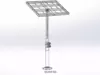
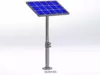
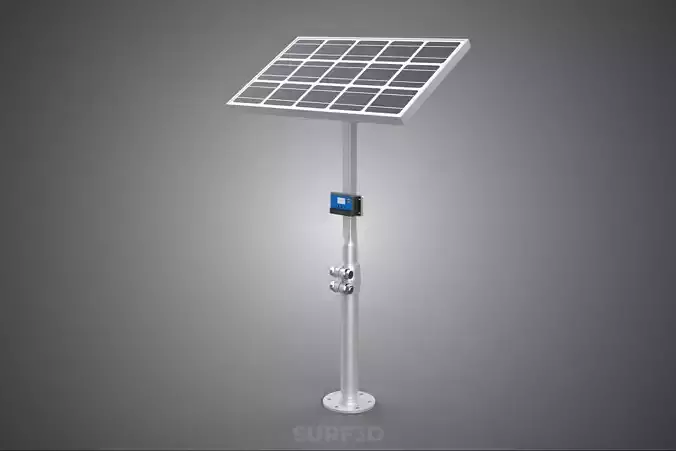
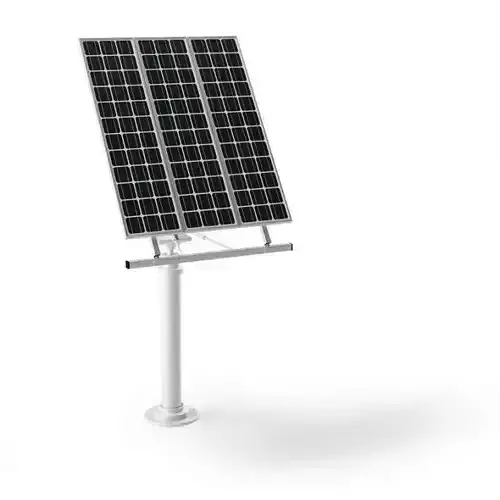
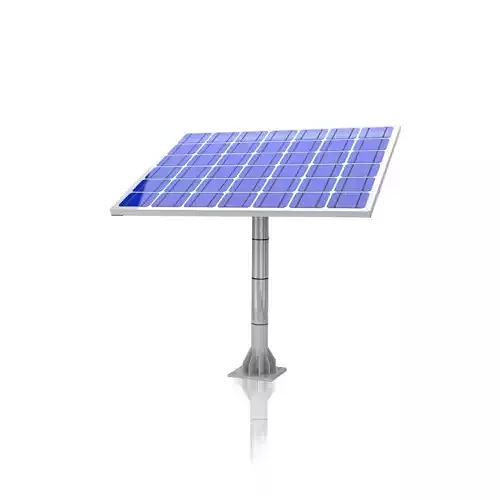
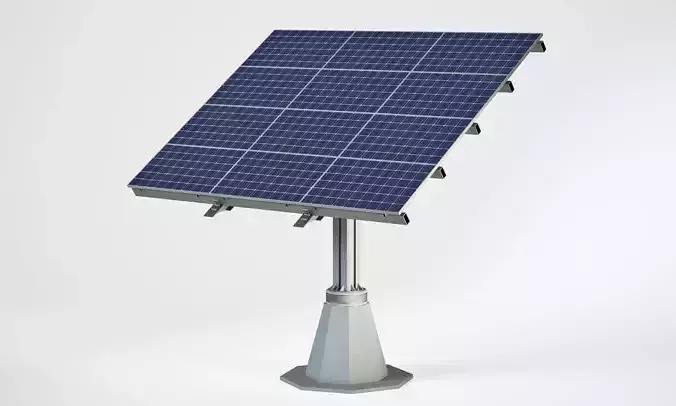
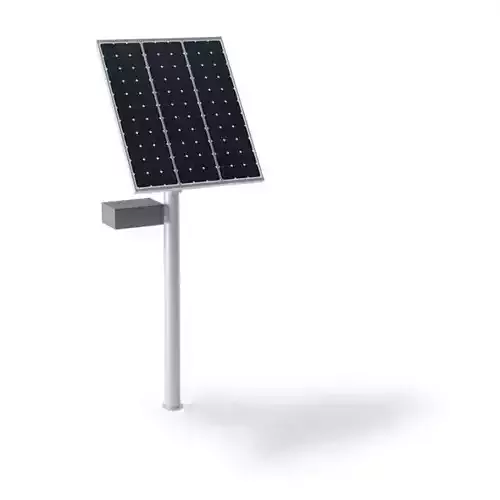
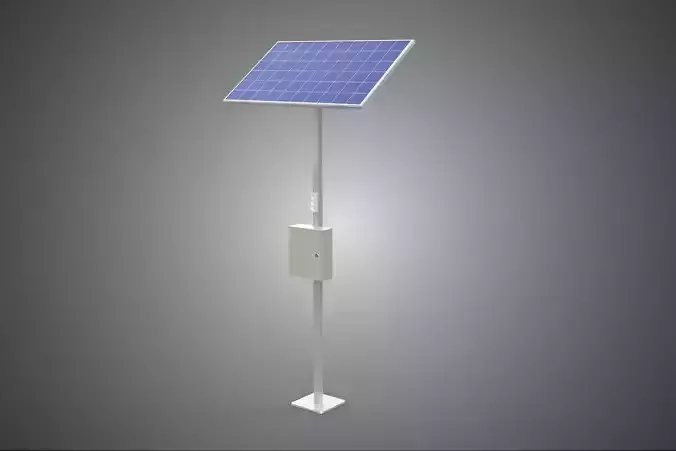
A Stand Mounted Frame Pole Solar Cell Panel PV Module Photovoltaic system describes a complete solar power generation unit designed for autonomous deployment, comprising one or more photovoltaic (PV) modules, structurally protected and supported by an integrated frame, which is then affixed to a robust stand, often integrated with or mounted upon a vertical pole. This configuration is engineered for the direct conversion of solar radiation into electrical energy, offering a self-contained, and frequently adjustable, power generation solution suitable for a wide array of applications where fixed-structure integration is impractical or where optimal solar capture through precise positioning is desired.
At its core, the system relies on photovoltaic technology. This involves individual solar cells, typically fabricated from semiconductor materials such as crystalline silicon (monocrystalline or polycrystalline) or thin-film compounds. These cells absorb incident photons from sunlight, which excites electrons and generates an electrical current through the photovoltaic effect. To achieve practical voltage and current outputs, multiple solar cells are electrically interconnected in series and/or parallel within a single unit.
This assembled unit is known as a PV module or solar cell panel. A standard PV module is a durable, encapsulated assembly designed for long-term outdoor operation. Its typical construction includes:
- Solar Cells: The active elements responsible for energy conversion.
- Encapsulant Layers: Materials like Ethylene Vinyl Acetate (EVA) that laminate the cells, providing protection against moisture, dust, and physical stress while ensuring maximum light transmittance.
- Front Glass: A low-iron, high-transparency tempered glass sheet that forms the outermost layer, offering superior mechanical protection against impact and environmental elements.
- Backsheet: A multi-layered polymer film (e.g., Tedlar) on the rear surface that provides electrical insulation, protects against moisture ingress, and offers mechanical robustness.
- Junction Box: An electrical enclosure affixed to the module's rear, containing bypass diodes (to prevent hotspots from shading) and providing the connection terminals for the module's DC output cables.
- Frame: Typically crafted from anodized aluminum, this structural perimeter encases the edges of the encapsulated cell stack. The frame provides essential structural rigidity, protects the module's vulnerable edges, and, crucially, offers standardized attachment points for mounting hardware, ensuring secure integration with support structures.
The stand mounted frame pole component refers to the specific mechanical support system for these PV modules. The module's inherent frame interfaces directly with a stand, which is a engineered structure designed to hold one or more PV modules. This stand is configured to position the modules at an optimal tilt angle relative to the horizontal plane to maximize solar irradiance capture. Stands can be fixed-tilt, seasonally adjustable, or part of sophisticated solar tracking systems (single-axis or dual-axis trackers) that dynamically follow the sun's path to enhance energy yield throughout the day and year. The pole, commonly constructed from galvanized steel or aluminum, provides elevation and stability. It securely anchors the stand and modules into the ground or a concrete foundation, offering benefits such as ground clearance (useful for snow accumulation areas), prevention of shading from surrounding obstacles, and secure placement in various terrains.
This type of system is widely deployed in diverse applications, including:
- Off-grid power generation: For remote cabins, telecommunication repeater stations, meteorological equipment, and scientific instrumentation where grid access is unavailable.
- Outdoor lighting: Self-sufficient power for streetlights, pathway lights, and security lighting systems.
- Security and surveillance: Powering remote cameras and sensors.
- Water pumping: For irrigation and domestic water supply in rural and agricultural settings.
- Educational and demonstration projects: Due to ease of installation and adjustability for research purposes.
The primary advantages of a stand-mounted, frame-pole PV system include its flexibility in placement, allowing installation in areas independent of existing building structures; its capacity for optimal orientation and tracking to maximize energy harvesting; and its enhanced accessibility for maintenance and cleaning. These systems are engineered for durability, capable of withstanding various environmental conditions, including significant wind loads and temperature extremes.
KEYWORDS: Photovoltaic, PV Module, Solar Panel, Solar Cell, Stand Mounted, Pole Mounted, Off-grid, Renewable Energy, Solar Energy, Energy Conversion, Electrical Generation, Sustainable Power, Module Frame, Aluminum Frame, Mounting System, Tilt Angle, Azimuth Angle, Solar Tracking, Remote Power, Street Lighting, Telecommunications, Security Systems, Ground Mount, Elevated Mount, Semiconductor, Encapsulation, Junction Box, Bypass Diode, Monocrystalline Silicon, Polycrystalline Silicon