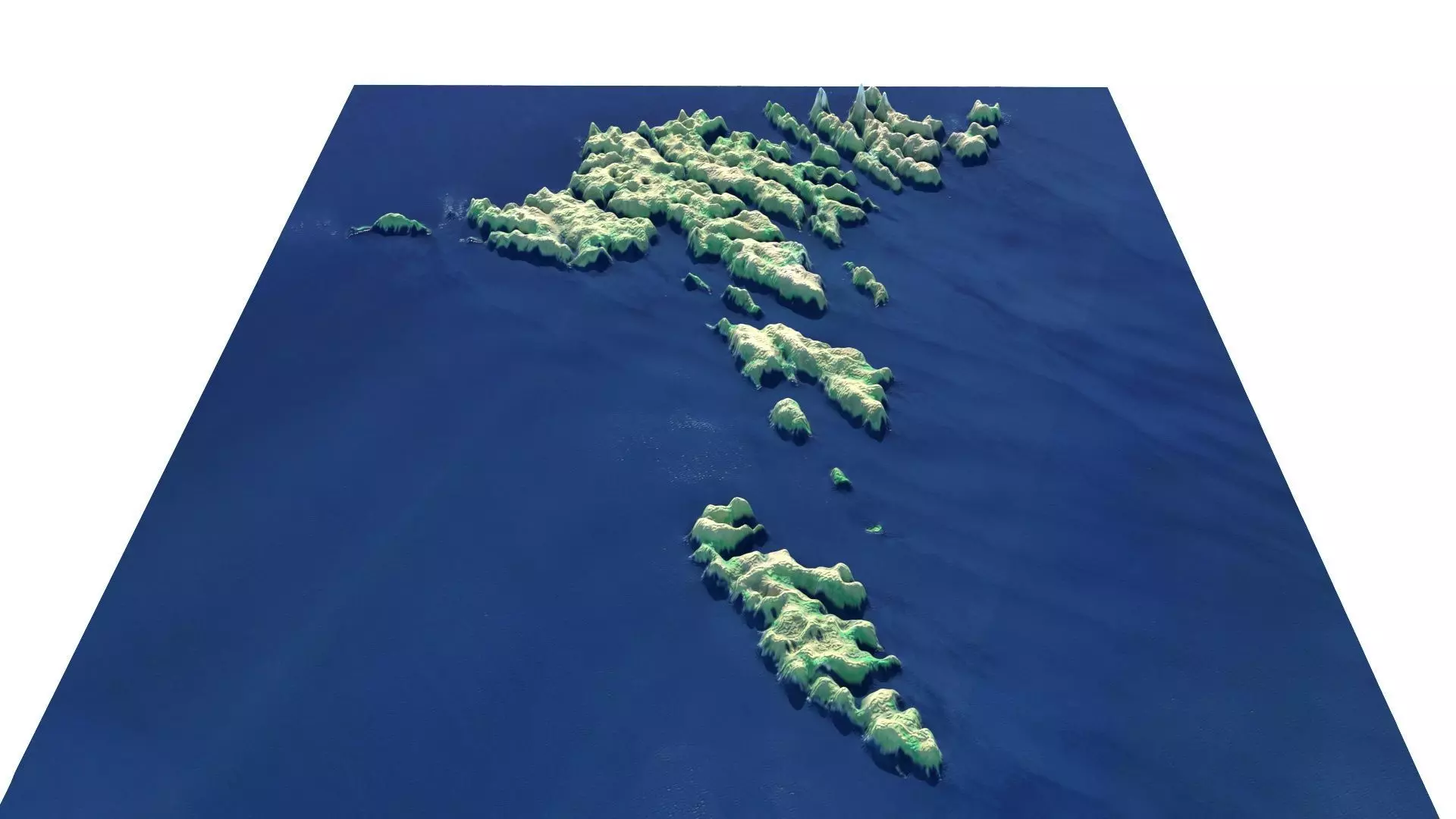
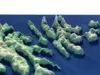
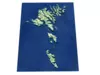
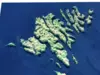
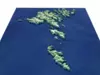
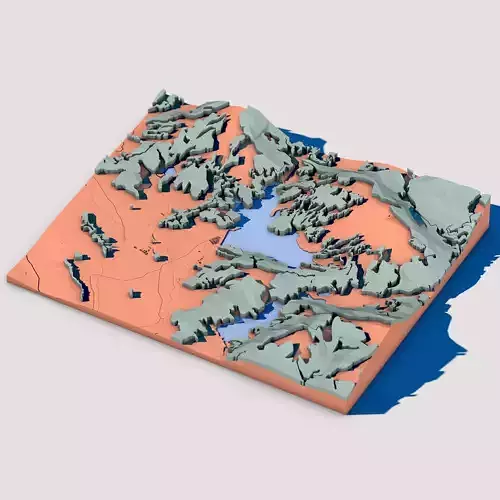
DescriptionThe Faroe Islands (/ˈfɛəroʊ/ FAIR-oh) (alt. the Faroes) are an archipelago in the North Atlantic Ocean and an autonomous territory of the Kingdom of Denmark. Located between Iceland, Norway, and the Hebrides and Shetland isles of Scotland, the islands have a population of 54,885 as of September 2025 and a land area of 1,393 km². The official language is Faroese, which is partially mutually intelligible with Icelandic. The terrain is rugged, dominated by fjords and cliffs with sparse vegetation and few trees. As a result of their proximity to the Arctic Circle, the islands experience perpetual civil twilight during summer nights and very short winter days; nevertheless, they experience a subpolar oceanic climate and mild temperatures year-round due to the Gulf Stream. The capital, Tórshavn, receives the fewest recorded hours of sunshine of any city in the world at only 840 per year. Færeyinga saga and the writings of Dicuil place initial Norse settlement in the early 9th century, with Grímur Kamban recorded as the first permanent settler. As with the subsequent settlement of Iceland, the islands were mainly settled by Norwegians and Norse-Gaels who also brought thralls (i.e. slaves or serfs) of Gaelic origin. However, new study has found that Viking colonizers of the Faroe Islands and nearby Iceland had different origins. Initially governed as an independent commonwealth under the Løgting, the islands came under Norwegian rule in the early 11th century after the introduction of Christianity by Sigmundur Brestisson. The Faroe Islands followed Norway's integration into the Kalmar Union in 1397 and came under de facto Danish rule following that union's dissolution in 1523. Following the introduction of Lutheranism in 1538, the Faroese language was banned in public institutions and disappeared from writing for more than three centuries. The islands were formally ceded to Denmark in 1814 by the Treaty of Kiel along with Greenland and Iceland, and the Løgting was subsequently replaced by a Danish judiciary. Following the re-establishment of the Løgting and an official Faroese orthography, the Faroese language conflict saw Danish being gradually displaced by Faroese as the language of the church, public education, and law in the first half of the 20th century. The islands were occupied by the British during the Second World War, who refrained from governing Faroese internal affairs: inspired by this period of relative self-government and the declaration of Iceland as a republic in 1944, the islands held a referendum in 1946 that resulted in a narrow majority for independence. The results were annulled by Christian X, and subsequent negotiations led to the Faroe Islands being granted home rule in 1948. While remaining part of the Kingdom of Denmark to this day, the Faroe Islands have extensive autonomy and control most areas apart from military defence, policing, justice and currency, with partial control over foreign affairs. Because the Faroe Islands are not part of the same customs area as Denmark, they have an independent trade policy and can establish their own trade agreements with other states. The islands have an extensive bilateral free trade agreement with Iceland, known as the Hoyvík Agreement. In certain sports, the Faroe Islands field their own national teams. In the Nordic Council and Council of Europe, they are represented as part of the Danish delegation. The islands' fishing industry accounts for around 90% of their exports, with tourism becoming increasingly prominent since the 2010s. They did not become a part of the European Economic Community in 1973, instead keeping autonomy over their own fishing waters; as a result, the Faroe Islands are not a part of the European Union today. The Løgting, albeit suspended between 1816 and 1852, claims to be one of the oldest continuously running parliaments in the world.
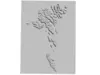
Texture Resolution: 1920 x 2400