High-quality 3D assets at affordable prices — trusted by designers, engineers, and creators worldwide. Made with care to be versatile, accessible, and ready for your pipeline.
Included File Formats
This model is provided in 14 widely supported formats, ensuring maximum compatibility:
• - FBX (.fbx) – Standard format for most 3D software and pipelines
• - OBJ + MTL (.obj, .mtl) – Wavefront format, widely used and compatible
• - STL (.stl) – Exported mesh geometry; may be suitable for 3D printing with adjustments
• - STEP (.step, .stp) – CAD format using NURBS surfaces
• - IGES (.iges, .igs) – Common format for CAD/CAM and engineering workflows (NURBS)
• - SAT (.sat) – ACIS solid model format (NURBS)
• - DAE (.dae) – Collada format for 3D applications and animations
• - glTF (.glb) – Modern, lightweight format for web, AR, and real-time engines
• - 3DS (.3ds) – Legacy format with broad software support
• - 3ds Max (.max) – Provided for 3ds Max users
• - Blender (.blend) – Provided for Blender users
• - SketchUp (.skp) – Compatible with all SketchUp versions
• - AutoCAD (.dwg) – Suitable for technical and architectural workflows
• - Rhino (.3dm) – Provided for Rhino users
Model Info
• - All files are checked and tested for integrity and correct content
• - Geometry uses real-world scale; model resolution varies depending on the product (high or low poly)
• • - Scene setup and mesh structure may vary depending on model complexity
• - Rendered using Luxion KeyShot
• - Affordable price with professional detailing
Buy with confidence. Quality and compatibility guaranteed.
If you have any questions about the file formats, feel free to send us a message — we're happy to assist you!
Sincerely,
SURF3D
Trusted source for professional and affordable 3D models.
More Information About 3D Model :
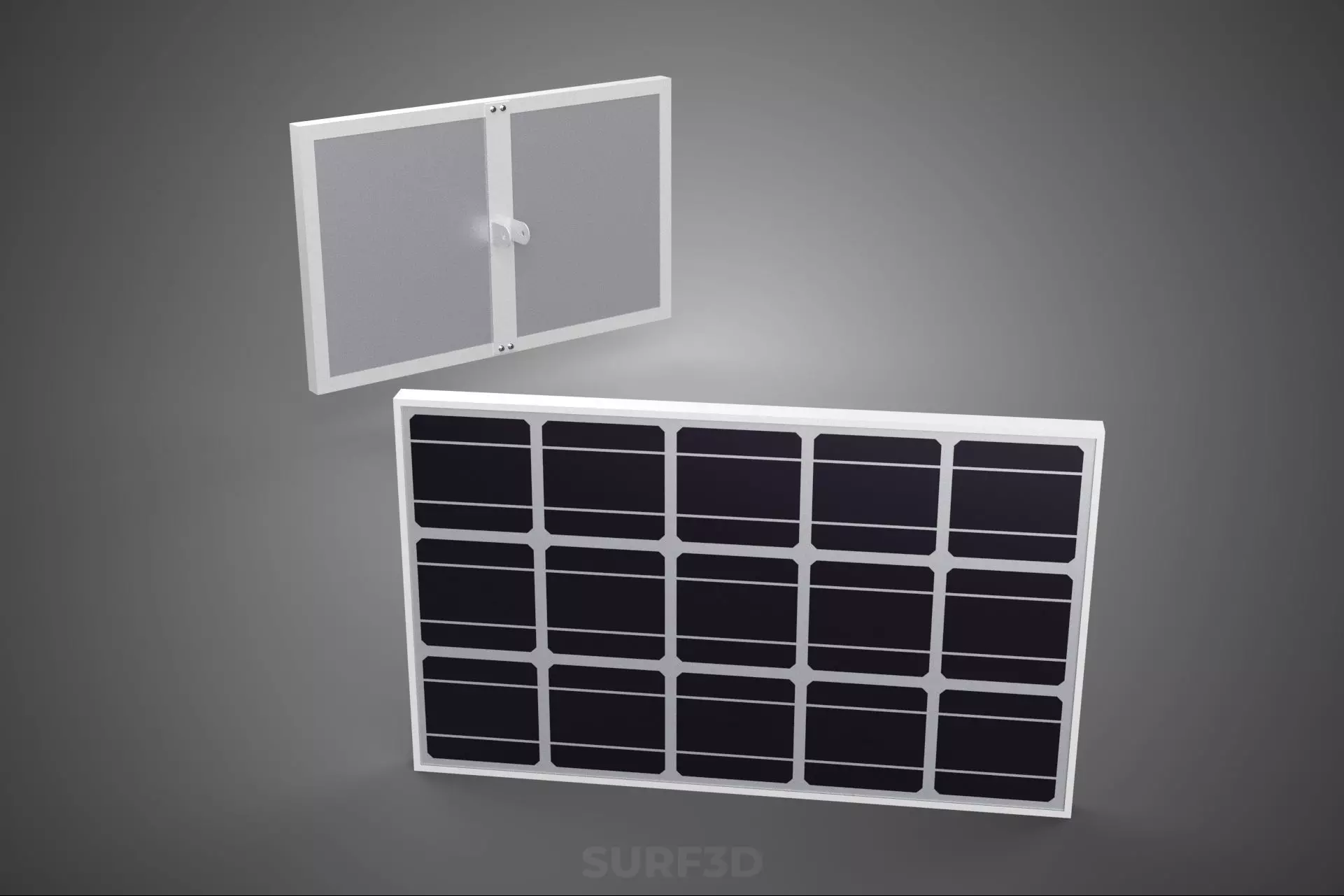
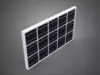
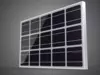
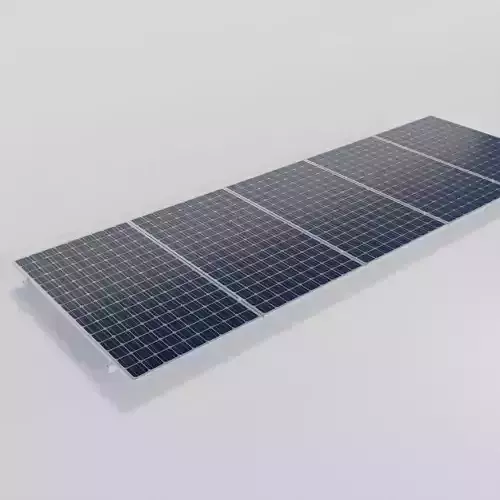
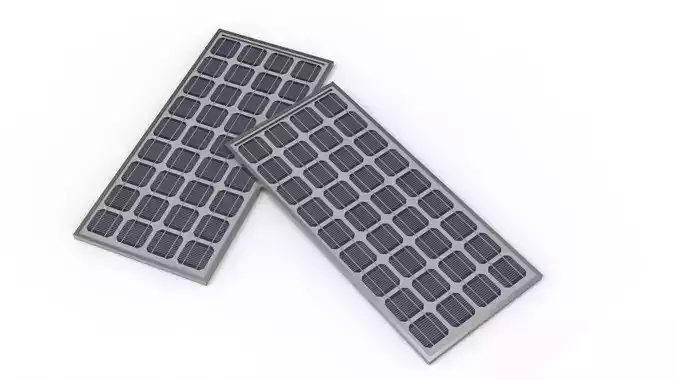
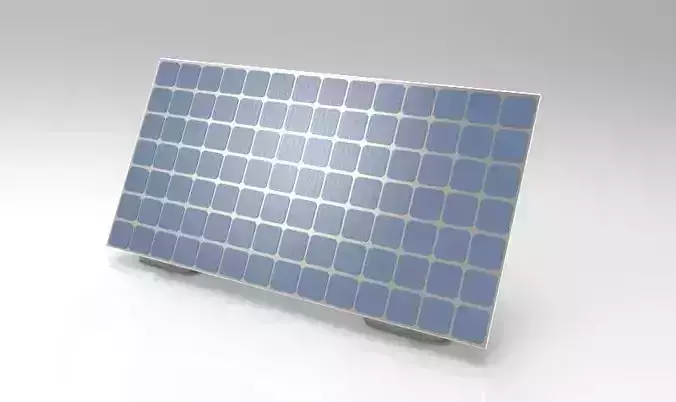
A standard solar cell photovoltaic (PV) panel represents a mature and widely adopted technology for the direct conversion of solar irradiance into electrical energy, leveraging the fundamental principles of the photovoltaic effect. These panels are integral components of renewable energy infrastructure, offering a sustainable and environmentally benign method of power generation from the abundant energy of sunlight.
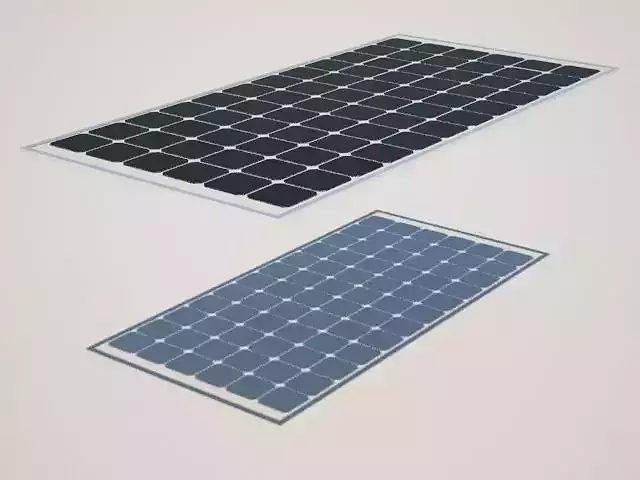
At its core, a PV panel comprises multiple individual solar cells, typically fabricated from semiconductor materials, most commonly crystalline silicon (either monocrystalline or polycrystalline). The photovoltaic effect, a quantum phenomenon, describes the generation of an electric current when light strikes a suitable material. In a solar cell, a P-N junction is meticulously engineered within the semiconductor material. When photons from sunlight strike the cell, they impart energy to electrons, exciting them to a higher energy state. If the photon's energy exceeds the band gap of the semiconductor, these excited electrons can break free from their atomic bonds, creating mobile charge carriers (electron-hole pairs). The inherent electric field at the P-N junction then spatially separates these charge carriers, directing electrons to the N-type layer and holes to the P-type layer. This charge separation establishes a potential difference across the cell. When an external circuit is connected, these separated charges flow, generating a direct current (DC) electricity.
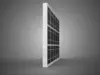
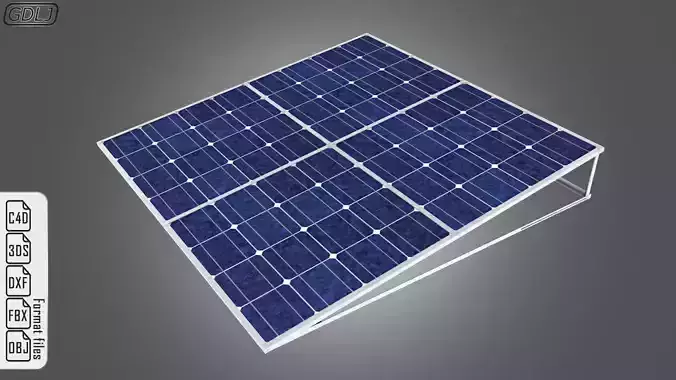
A single solar cell typically produces a relatively low voltage (e.g., 0.5-0.6 volts) and a specific current, depending on its size and illumination. To achieve practical voltage and current levels suitable for various applications, multiple solar cells are interconnected electrically, usually in series to increase voltage and in parallel to increase current, forming a solar module or panel. These interconnected cells are then encapsulated within a robust, multi-layered laminate structure. A typical PV panel consists of a top layer of highly transparent, tempered glass for durability and light transmission, followed by an encapsulant material (such as ethylene-vinyl acetate, EVA) that binds the cells to the glass and provides environmental sealing. The interconnected solar cells are sandwiched between two layers of this encapsulant. A robust backsheet (often made of polymer composites like Tedlar or PET) forms the bottom layer, offering electrical insulation, UV protection, and resistance to moisture. An anodized aluminum frame surrounds these layers, providing structural integrity, protection against mechanical stress, and facilitating mounting. A junction box on the rear of the panel houses bypass diodes (which prevent current backflow and minimize power loss from shaded cells) and provides terminals for electrical connections.
The DC electricity generated by PV panels is typically converted into alternating current (AC) by an electronic device known as an inverter. AC electricity is the standard for most domestic, commercial, and industrial applications, and for feeding into national electricity grids. Solar power systems can be configured as grid-tied (connected to the utility grid), off-grid (independent systems often incorporating battery storage for continuous power supply), or hybrid systems combining both approaches.
Harnessing sunlight for energy production is inherently renewable. Sunlight is an inexhaustible resource on a human timescale, and its conversion to electricity by PV panels produces no greenhouse gas emissions, air pollutants, or significant waste during operation. This characteristic positions PV technology as a critical component in global efforts to mitigate climate change, reduce reliance on finite fossil fuels, and enhance energy security. The environmental benefits extend to reduced water consumption compared to many conventional power generation methods and a significantly lower carbon footprint over the system's entire lifecycle.
The performance of standard PV panels is primarily characterized by their conversion efficiency, typically ranging from 15% to 22% for commercially available silicon-based modules, and their degradation rate, which averages less than 1% per year over a warranted lifespan of 25-30 years. Factors influencing output include solar irradiance intensity, ambient temperature (higher temperatures generally reduce efficiency), panel orientation and tilt angle relative to the sun, and shading. Continuous advancements in materials science, cell design, and manufacturing processes consistently enhance panel efficiency, reduce production costs, and improve long-term durability.
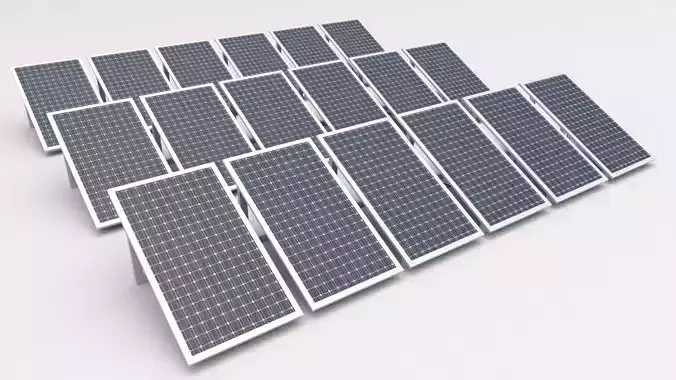
The widespread adoption of standard solar cell photovoltaic panels has profoundly transformed the global energy landscape, providing scalable and decentralized solutions for electricity generation, from residential rooftops to vast utility-scale solar farms. As technological innovation continues and economies of scale drive down costs, PV panels are poised to play an increasingly central role in the transition towards a fully sustainable and decarbonized global energy future.
KEYWORDS: Photovoltaic, Solar panel, Renewable energy, Sunlight conversion, Solar cell, Crystalline silicon, Monocrystalline, Polycrystalline, P-N junction, Photovoltaic effect, Direct current (DC), Alternating current (AC), Inverter, Grid-tied system, Off-grid system, Energy security, Sustainable energy, Climate change mitigation, Greenhouse gas emissions, Semiconductor, Module efficiency, Solar irradiance, Encapsulation, Junction box, Energy transition, Solar power system, Clean energy, Environmental impact, Electron-hole pairs, Solar farm