







DESCRIPTION

The Greeks began again to carve in stone as they came out of their Dark Age. They were inspired by the large stone sculptures of Mesopotamia and Egypt.[2] Free-standing figures share the solidity and front-facing stance of their Eastern models. However, their style is more dynamic than those of Egyptian sculpture. This is clear in the Lady of Auxerre and the Torso of Hera (Early Archaic period, c. 660–580 BC. Both are in the Louvre, Paris). After about 575 BC, figures such as these, both male and female, began wearing the so-called 'archaic smile'. This may have been a device to give the figures a distinctive human appearance.

Three types of figures are common – the standing youth (kouros, plural kouroi), the standing draped girl (kore, plural korai), and the seated woman. All emphasize and generalize the essential features of the human figure and show an increasingly accurate understanding of humanLady of AuxerreThe (75 cm high) limestone Cretan sculpture called the Lady of Auxerre, at the Louvre is a Greek goddess of c. 650–625 BC. It is a Kore (maiden) whose her right hand touches her solar plexus and her left is stiffly at her side (Basel 2001).

Maxime Collignon, a Louvre curator, found the sculpture in a storage vault in the Museum of Auxerre, a city east of Paris, in 1907. No-one knows how it got there, according to the Louvre monograph.

This archaic sculpture has traces of coloured paint. It dates from the 7th century BC, when Greece was emerging from its Dark Age. The Lady of Auxerre still has the narrow waist of a Minoan–Mycenaean goddess, and her stiff hair suggests Egyptian influence.

The Classical period saw better Greek sculpture. There was a big improvement in producing realistic human forms. Poses became more naturalistic, notably during the beginning of the period (see the Charioteer of Delphi for an example of the transition to more naturalistic sculpture).

From about 500 BC, Greek statues began increasingly to depict real people. The statues of Harmodius and Aristogeiton, set up in Athens mark the overthrow of the aristocratic tyranny, are said to be the first public monuments to show actual individuals.

Also, we begin to see references to the sculptors themselves in writings of the period. Examples include Phidias, known to have overseen the design and building of the Parthenon, and Praxiteles, whose female sculptures were the first to be considered artistically respectable.

The Classical period also saw an increase in the use of statues and sculptures as decorations of buildings. The temples of the Classical era included the Parthenon in Athens, and the Temple of Zeus at Olympia. They had relief sculpture for decorative friezes, and sculpture in the round to fill the triangular fields of the pediments.[3] Most of these works survive only in fragments, for example the Parthenon Marbles, roughly half of which are in the British Museum.

The Hellenistic period is from 323 BC to 146 BC. A number of the best-known works of Greek sculpture belong to this period, including Laocoön and his Sons, Venus de Milo, and the Winged Victory of Samothrace.[5]All these statues show classical themes, but their treatment is far more sensuous and emotional than the Classical period would have allowed. Hellenistic sculpture was also marked by an increase in size, which culminated in the Colossus of Rhodes (late 3rd century), thought to have been roughly the same size as the Statue of Liberty. The combined effect of earthquakes and looting have destroyed this.

Almost all forms of Greek and Roman art were coloured in the original. Most Greek sculptures were painted in strong and bright colours. The clothing and hair were painted, with the skin left in the natural colour of the stone. Some sculptures were entirely painted. The polychromy of stone statues was paralleled by the use of different materials to distinguish skin, clothing and other details, and by the use of different metals for lips, fingernails, etc. on high-quality bronzes like the Riace bronzes.

REVIEWS & COMMENTS

See what other buyers think about this model - real feedback on quality,
accuracy, and usability.
There are no reviews or comments yet. Please be the first one to write it.

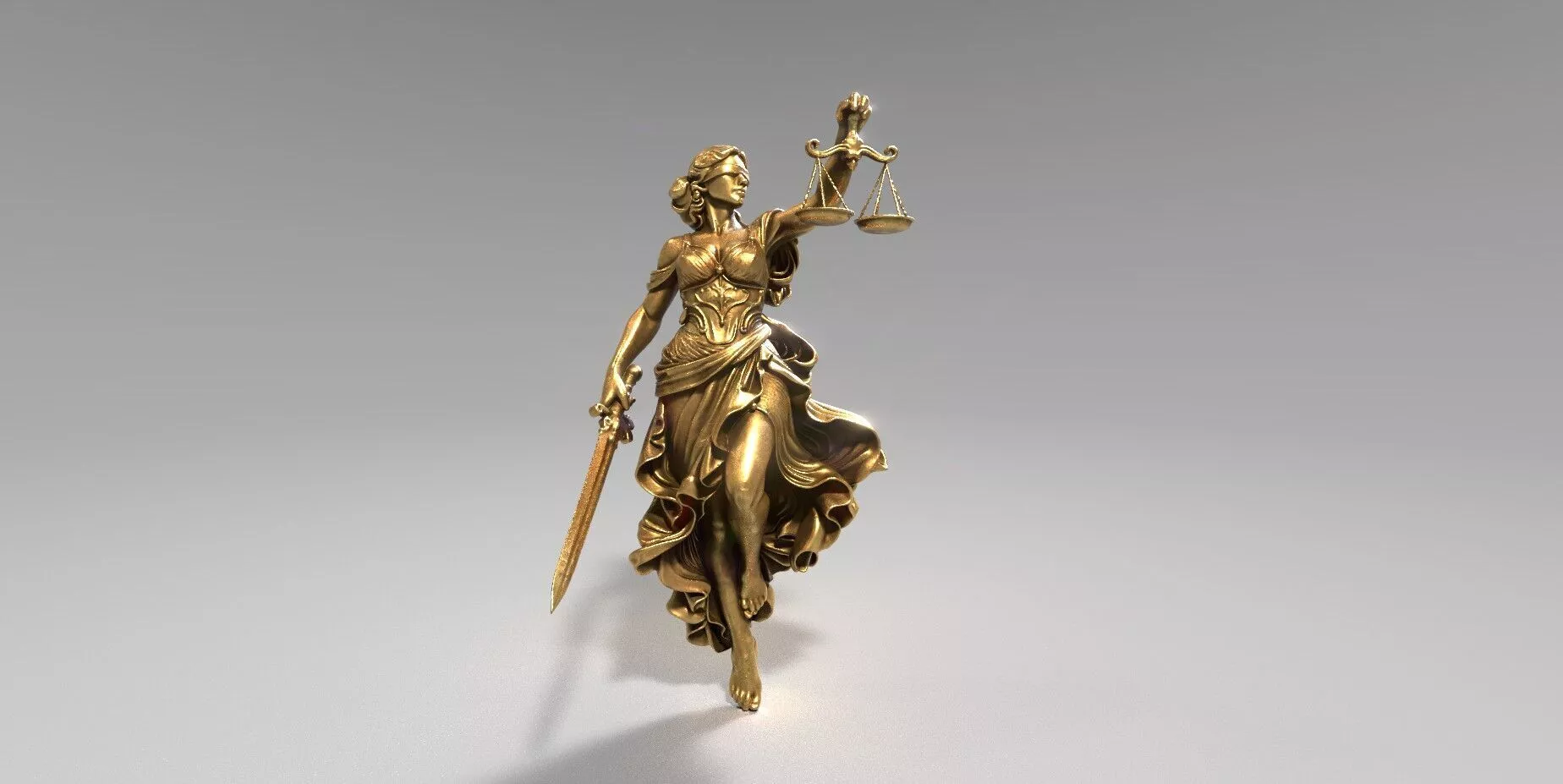
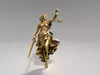
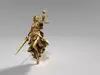
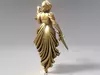
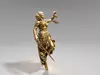
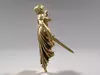
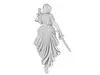
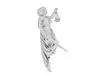
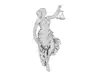
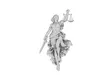
Statue of Justice 3D model Low-poly 3D model

$69.00
Royalty Free License
Hire
Like this model to show appreciation to the designer.
See how many times this model was viewed.
Share this model to support the designer and boost their visibility.
File formats
STL
Stereolithography<br />Version: 1<br />File Size: 32.7 MB
FBX
Autodesk FBX<br />Version: 7.5<br />File Size: 30 MB
3DS
3D Studio<br />Version: 1<br />File Size: 18.3 MB
DAE
Collada<br />Version: 1.5<br />File Size: 52 MB
C4D
Cinema 4D<br />Version: 19 - Renderer: Default 19<br />File Size: 24.3 MB
JPG
JPG<br />Version: 1<br />File Size: 8.07 MB
Verified by CGTrader
Verified models are of higher quality as they have
passed CGT Standard technical and visual checks,
making them more professional-grade 3D assets.
Learn more.
FBX
This FBX file has successfully passed the CGT Standard technical and visual checks. The verification results are detailed in the section below.
File & scene
Binary FBX
Binary FBX file is more compact and faster to load and process.
Learn more
No unsupported objects
Unsupported objects:
- Lights
- Cameras
Learn more
Geometry
No N-gons
N-gons are polygons with five or more sides which might cause issues in certain processes like rendering or animation. Learn more
No faceted geometry
Faceted geometry uses flat surfaces without smoothing, which can look unrealistic on curves.
Learn more
Manifold geometry
Manifold geometry ensures all surfaces are properly connected, avoiding issues like edges shared by more than two faces.
Learn more
Textures & material
PBR textures
PBR textures simulate how light interacts with materials, making the model look realistic under different lighting.
Required PBR textures:
- Base Color
- Roughness
- Metalness
- Normal
Learn more
No embed textures
Embedded textures are stored inside the model file, increasing its size and sometimes causing compatibility issues.
Learn more
Square textures
Texture aspect ratio is the width-to-height ratio of a texture. Expected texture aspect ratio: 1:1
Learn more
Power of 2 texture sizes
Textures with dimensions in power of two (e.g. 512x512px, 1024x1024px) are used to optimize performance and memory usage.
Learn more
Assigned materials
Materials are applied to the 3D model to allow visualize a model's surface properties and appearance.
Learn more
UVs & naming
No UV overlaps
UVs overlap when multiple points on the 3D model's surface are mapped to the same point on the UV island causing texture stretching.
Learn more
UV unwrapped model
A UV unwrapped model means its 3D surface is flattened into 2D space, allowing textures to be applied accurately.
Learn more
Allowed characters
Allowed ASCII characters: a-zA-Z0-9-_
Learn more
Provided by designer
Information and details shared directly by the model's designer.
3D Features
Textures
The model includes image files (textures) that add color, patterns, or detail to its surfaces.
Materials
The model has material settings that define how surfaces look (color, shine, transparency, etc.).
UV Mapping
The model's surfaces are mapped to a 2D image, allowing textures to display correctly.
Plugins Used
Some external plugins were used to create the model. These may be required for full functionality.
3D printing
Indicates whether the designer marked this model as suitable for 3D printing.
Model is not 3D printable
The designer indicates this model is intended for digital use only (rendering, animation, or AR/VR) and not for 3D printing.
Geometry
Polygon mesh
A model built from polygons (triangles or quads) connected in a mesh.
383000 polygons
The total number of polygons (flat shapes) that make up the 3D model.
/
345999 vertices
The number of points (corners) that define the shape of the model's polygons.
Unwrapped UVs
Publish date
Model ID
Chat