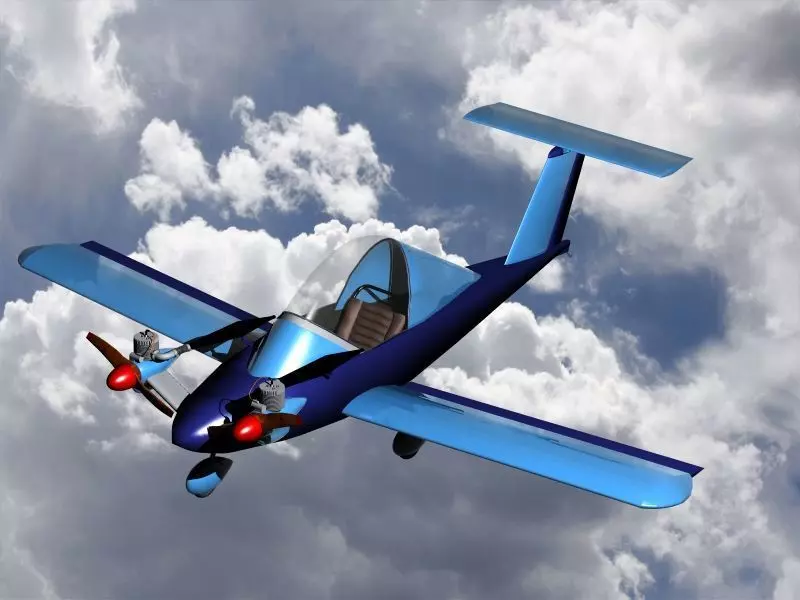
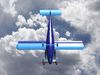
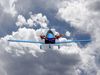
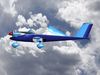
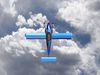
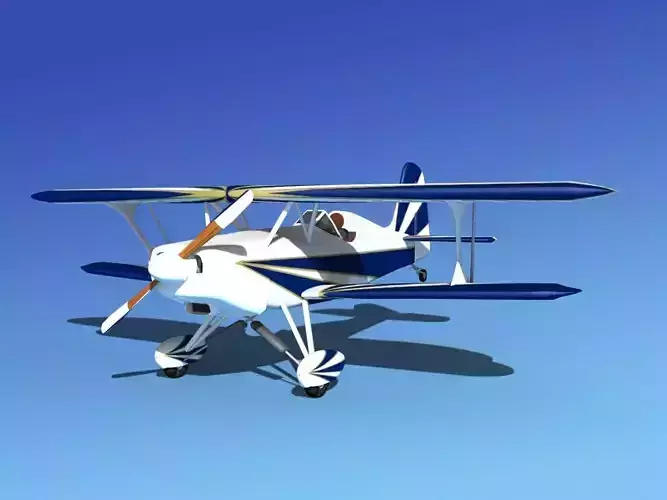
The single seat Cri-Cri is the smallest twin-engined aircraft in the world. It was designed in the 1970s by French aeronautical engineer Michel Colomban. It has a lightweight aluminum frame and sheet glued to Klegecell foam. It is one of the more successful homebuilt aircraft with many variations. It is a very stable aircraft and it's easy to fly. Despite its small size, it can handle cross-winds of up to 20 knots. It can continue to fly on one engine. If both engines fail, its lift-to-drag ratio is 11 to 1 and the rate of sink is about 2,5 m/s - this is comparable to most good light aircraft. Aerial acrobatics are handled with ease by experienced pilots.
Length: 3.9 m (12 ft 10 in) Wingspan: 4.9 m (16 ft 1 in) Wing area: 3.1 m2 (33 sq ft) Airfoil: Wortmann 21.7 Empty weight: 78 kg (172 lb) Max takeoff weight: 170 kg (375 lb) Powerplant: 2 × JPX PUL 212 single-cylinder piston engines, 11 kW (15 hp) each there have also been electric and turbojet versions Propellers: 2-bladed 690mm diameterPerformance Maximum speed: 220 km/h (137 mph; 119 kn) Cruise speed: 185 km/h; 115 mph (100 kn) Range: 463 km; 288 mi (250 nmi) Service ceiling: 3,700 m (12,100 ft) Rate of climb: 6.6 m/s (1,300 ft/min) Wing loading: 55 kg/m2 (11 lb/sq ft)
vert 37778The single seat Cri-Cri is the smallest twin-engined aircraft in the world. It was designed in the 1970s by French aeronautical engineer Michel Colomban. It has a lightweight aluminum frame and sheet glued to Klegecell foam. It is one of the more successful homebuilt aircraft with many variations. It is a very stable aircraft and it's easy to fly. Despite its small size, it can handle cross-winds of up to 20 knots. It can continue to fly on one engine. If both engines fail, its lift-to-drag ratio is 11 to 1 and the rate of sink is about 2,5 m/s - this is comparable to most good light aircraft. Aerial acrobatics are handled with ease by experienced pilots. Length: 3.9 m (12 ft 10 in) Wingspan: 4.9 m (16 ft 1 in) Wing area: 3.1 m2 (33 sq ft) Airfoil: Wortmann 21.7 Empty weight: 78 kg (172 lb) Max takeoff weight: 170 kg (375 lb) Powerplant: 2 × JPX PUL 212 single-cylinder piston engines, 11 kW (15 hp) each there have also been electric and turbojet versions Propellers: 2-bladed 690mm diameterPerformance Maximum speed: 220 km/h (137 mph; 119 kn) Cruise speed: 185 km/h; 115 mph (100 kn) Range: 463 km; 288 mi (250 nmi) Service ceiling: 3,700 m (12,100 ft) Rate of climb: 6.6 m/s (1,300 ft/min) Wing loading: 55 kg/m2 (11 lb/sq ft)