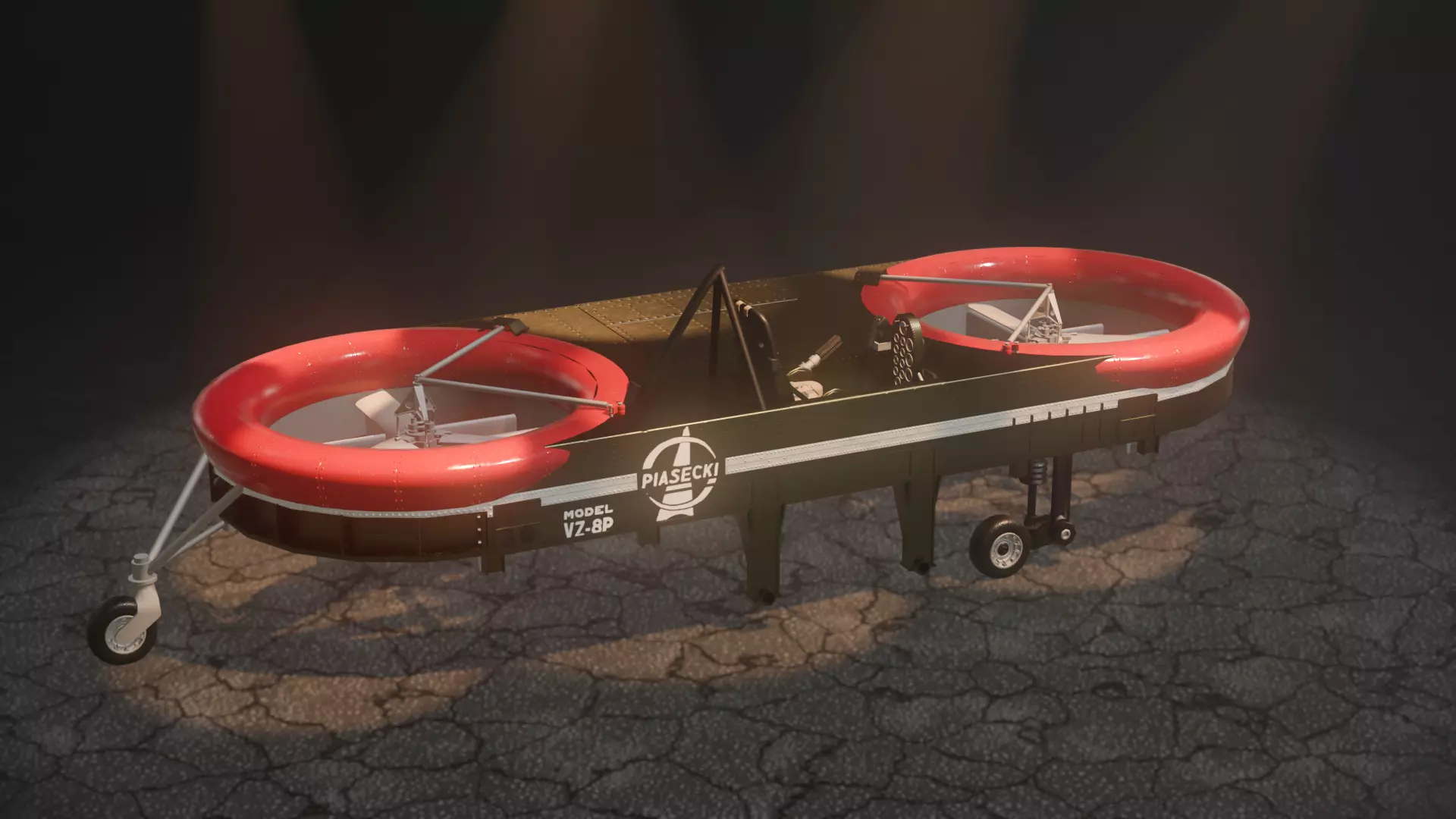
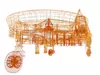
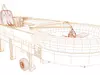
Perfect for use in games and simulation projects.
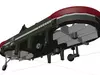
The Piasecki VZ-8 Airgeep was a vertical takeoff and landing (VTOL) aircraft developed in the United States during the late 1950s and early 1960s. It was conceived as part of a U.S. Army initiative to explore new types of highly mobile tactical transport vehicles capable of operating across rugged terrain. The goal was to develop a compact, low-flying aircraft that could perform the logistical and operational duties of a helicopter while being easier to fly, smaller in profile, and more maneuverable in combat zones. This effort was part of the Army's flying jeep program, which sought to enhance battlefield mobility by creating lightweight aerial vehicles for reconnaissance, personnel transport, and limited cargo carriage.
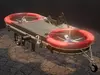
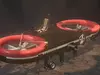
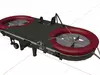
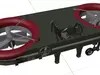
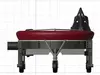
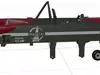
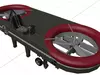
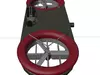
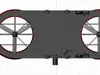
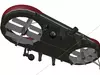
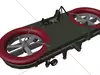
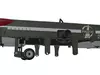
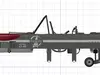
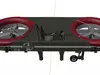
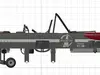
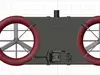
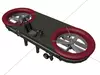
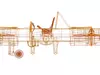
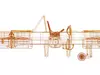
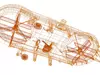
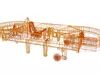
Developed by the Piasecki Aircraft Corporation (which later became Vertol and was subsequently acquired by Boeing), the aircraft was initially designated as the Model PA-59 and later became known officially as the VZ-8. The Airgeep program produced two primary variants: the VZ-8P (Airgeep I) and the VZ-8P(B) (Airgeep II). The original Airgeep I design featured a flat, open-frame fuselage with two large, ducted fans mounted in tandem—one in the front and one in the rear. These ducted rotors provided both lift and thrust, and the vehicle was capable of vertical takeoff and landing as well as forward flight. The pilot and co-pilot were seated centrally between the rotors, with exposed seating and minimal protection.
The first version, Airgeep I, was initially powered by two 180 horsepower Lycoming piston engines. However, this powerplant proved insufficient for the desired performance characteristics. It was soon replaced with a single 425 horsepower Turbomeca Artouste II turboshaft engine, and later a more powerful 550 horsepower Garrett AiResearch TPE331-6 engine. These upgrades improved the aircraft’s lift capability and overall reliability. The Airgeep I first flew on September 22, 1958, demonstrating basic hover, low-speed flight, and maneuverability tests.
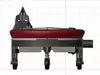
The second and more advanced version, the VZ-8P(B) or Airgeep II, was developed to incorporate improvements based on the Army's feedback. It used two Turbomeca Artouste IIC turboshaft engines mounted on either side of the fuselage, driving the same twin ducted fan configuration. Airgeep II featured a more enclosed cockpit with ejection seats for the pilot and gunner, and it included accommodations for three additional passengers. It also added a powered tricycle landing gear system, allowing it to taxi under its own power on the ground. The Airgeep II made its first flight on February 15, 1962, piloted by Piasecki test pilot Tom Atkins.
The aircraft was capable of flying at low altitudes, which was intended to allow it to use terrain masking to avoid radar detection and minimize exposure to enemy fire. Its maximum service ceiling was approximately 900 meters (around 3,000 feet), though it was optimized for flight close to the ground. The Airgeep I achieved a top speed of roughly 104 kilometers per hour (65 miles per hour), while the Airgeep II improved on this with a top speed of about 136 kilometers per hour (85 miles per hour). It was also tested in hover, forward flight, and tight maneuvering, proving capable of stable operation in all flight modes.
The Airgeep's unconventional design showed promise in many respects. It was compact, relatively easy to operate, and stable in hover. It also had the potential to serve as a weapons platform. At one point, the vehicle was evaluated with various armaments, including light machine guns and recoilless rifles, to assess its utility as a scout or light attack craft. Additionally, a naval variant with floats was tested by the U.S. Navy for amphibious operations, although it never entered service.
Despite its innovative characteristics, the VZ-8 program was eventually discontinued. The aircraft was ultimately deemed impractical for military use when compared to traditional helicopters, which offered greater payload, range, and operational flexibility. Limitations of the Airgeep included its exposed crew positions, limited armor protection, mechanical complexity, and relatively high noise signature. Moreover, by the early 1960s, helicopter technology had advanced significantly, making conventional rotorcraft such as the UH-1 Huey more attractive options for troop transport and battlefield mobility.
Only two prototypes of the Airgeep were built. One of them, the Airgeep II, is preserved today and on display at the U.S. Army Transportation Museum at Fort Eustis, Virginia. Though the concept was never adopted for production or operational deployment, the VZ-8 Airgeep remains a significant historical example of VTOL innovation and a reflection of the experimental spirit in Cold War-era military aviation. It contributed to the broader understanding of ducted-fan lift systems and helped influence later developments in tiltrotor and VTOL aircraft design.
Formats include: OBJ, FBX. Feel free to check out the other models, just click on the user name to see the complete portfolio.