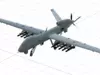
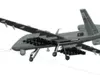
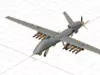
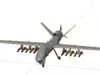
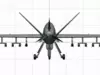
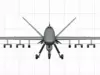
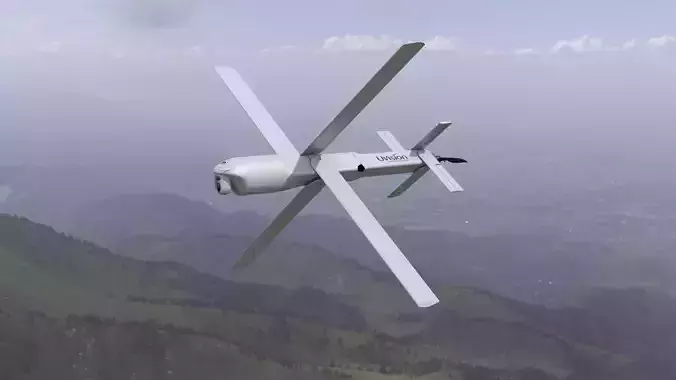
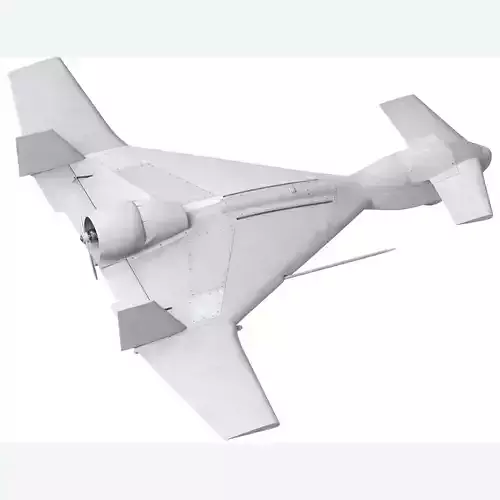
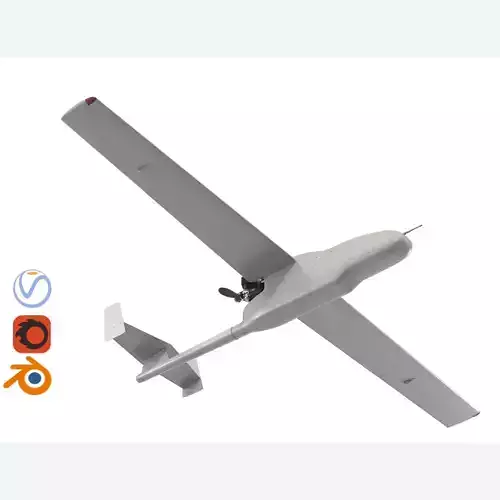
Perfect for use in games and simulation projects.
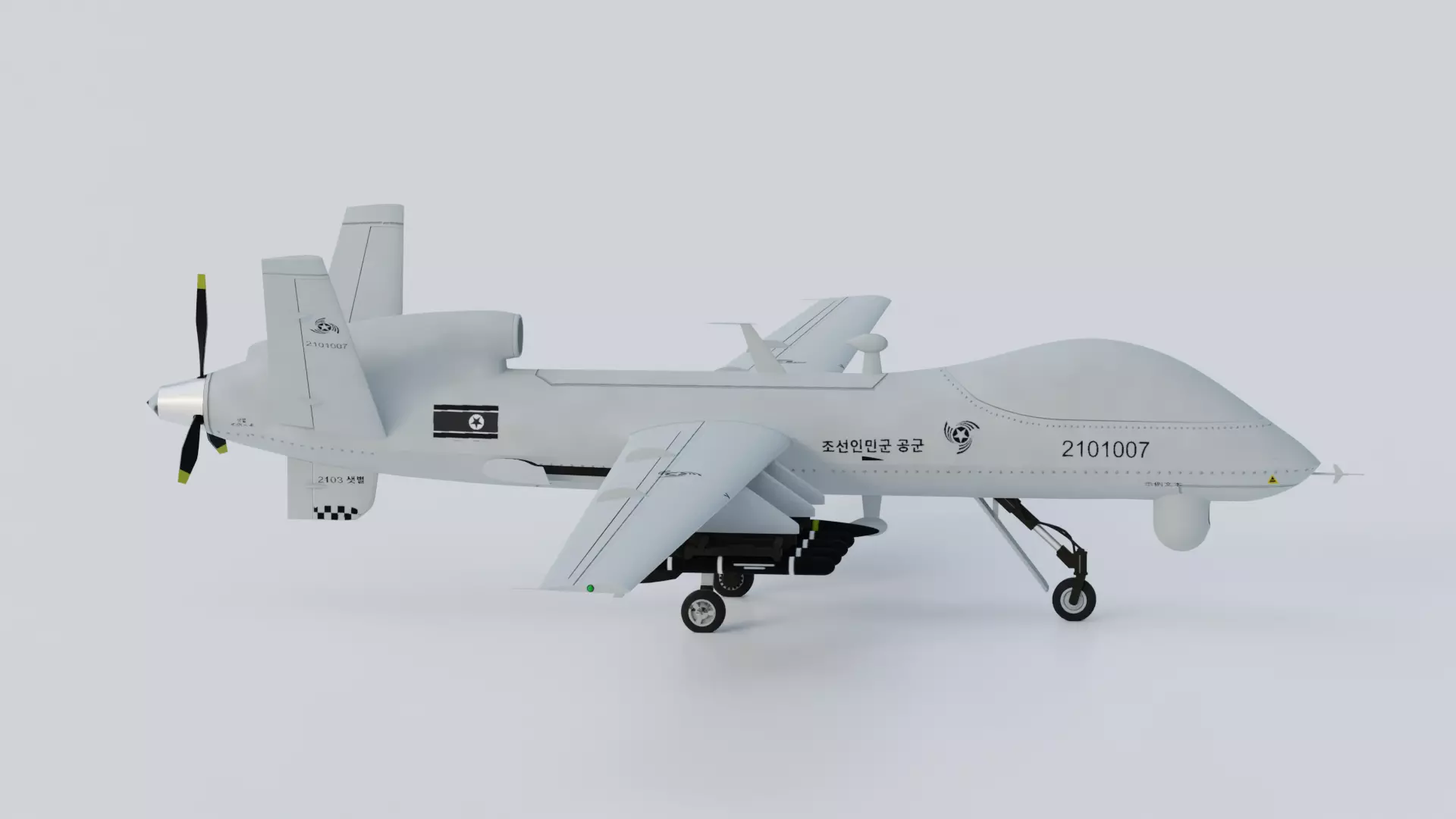
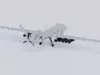
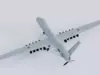
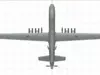
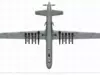
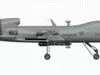
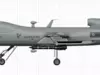
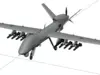
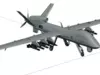
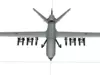
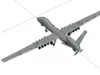
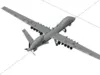
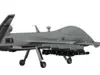
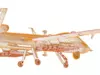
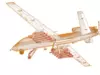
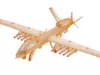
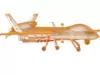
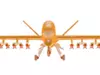
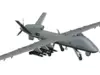
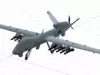
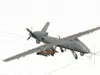
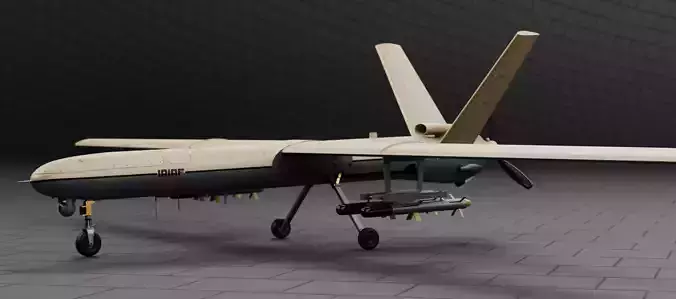
Saetbyol‑9 (샛별‑9), nicknamed “Bright Star‑9,” is a North Korean medium‑altitude unmanned aerial vehicle that was publicly unveiled in July 2023 and first observed in satellite imagery at Panghyon Airbase in 2022. The DPRK presents it as a multi-purpose platform for reconnaissance and strike missions, designed to enhance both surveillance and tactical offensive capabilities. Its airframe visually resembles the U.S. MQ‑9 Reaper, featuring a three‑bladed pusher propeller, a nose-mounted sensor turret, dorsal fairings, and wing hardpoints capable of carrying external stores. The drone measures approximately 20 meters in wingspan with an overall length of around 9 meters, making it somewhat smaller than Western counterparts, yet sufficiently large to support a combination of reconnaissance sensors and weapon payloads.Imagery from North Korean parades and commercial satellites shows the drone equipped with wing-mounted hardpoints and provisions for external munitions, suggesting that it can carry bombs or air-to-surface missiles. While its exact sensor suite and weapons integration remain unverified, the design indicates an intention to combine surveillance with limited precision strike capability, allowing the Saetbyol-9 to perform both intelligence-gathering and tactical attack roles. Open-source assessments suggest that the drone likely employs domestically produced propulsion and avionics, as well as simpler electro-optical and infrared sensors than those found on comparable Western UAVs. Its communication and datalink systems are probably less secure and lower bandwidth, which could limit endurance, sensor resolution, and command-and-control effectiveness, particularly in contested or electronic warfare environments.
Since its unveiling, multiple airframes have been identified, and North Korea appears to have invested in hangars and support infrastructure consistent with limited serial production and operational testing. Reports indicate ongoing flight testing and potential integration into the Korean People’s Army Air Force, although independent verification of operational numbers, sortie rates, sustainment, and combat employment is lacking. Functionally, the Saetbyol-9 is intended to expand North Korea’s medium-altitude reconnaissance capabilities, battlefield surveillance, target acquisition, and limited stand-off strike capacity. It can be used alongside smaller drones, including swarming attack platforms and existing ISR assets, creating a layered unmanned operational framework that enhances tactical flexibility. Strategically, the Saetbyol-9 serves multiple purposes. It demonstrates the regime’s ability to adapt foreign UAV designs into indigenous production, strengthens its reconnaissance and strike capabilities, and projects a perception of technological advancement for both domestic and international audiences. Its existence allows North Korea to perform real-time intelligence collection, conduct preemptive or retaliatory strikes, and improve coordination with ground forces through drone-mediated target acquisition. Despite likely limitations in sensor quality, datalink security, and precision strike reliability, the Saetbyol-9 represents a significant step in the DPRK’s ongoing effort to develop an integrated and increasingly capable unmanned aerial system. Its deployment underscores the regime’s focus on expanding aerial surveillance and strike options, enhancing tactical and strategic deterrence, and leveraging unmanned platforms to compensate for conventional military limitations, while also projecting the image of technological parity with more advanced militaries.
The drone’s operational role may evolve as North Korea refines its avionics, munitions integration, and control systems. With continued development, Saetbyol-9 could become a central element in North Korea’s layered UAV strategy, enabling longer-range surveillance, more precise targeting, and coordinated operations with other air and ground assets. Its introduction reflects a broader trend in DPRK military modernization, emphasizing indigenous development of advanced unmanned systems that can augment traditional force structures, improve situational awareness, and increase the flexibility and responsiveness of military operations in both conventional and asymmetric contexts.
Formats include: OBJ, FBX. Feel free to check out the other models, just click on the user name to see the complete portfolio.