



































DESCRIPTION

Perfect for use in games and simulation projects.

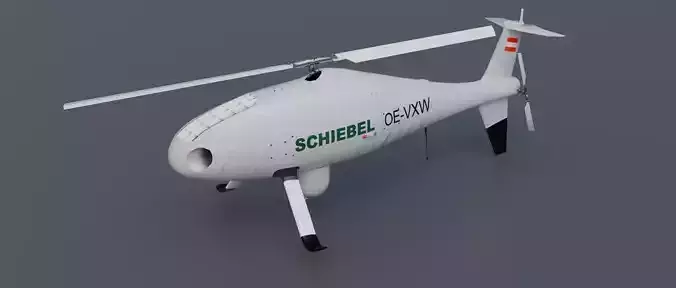
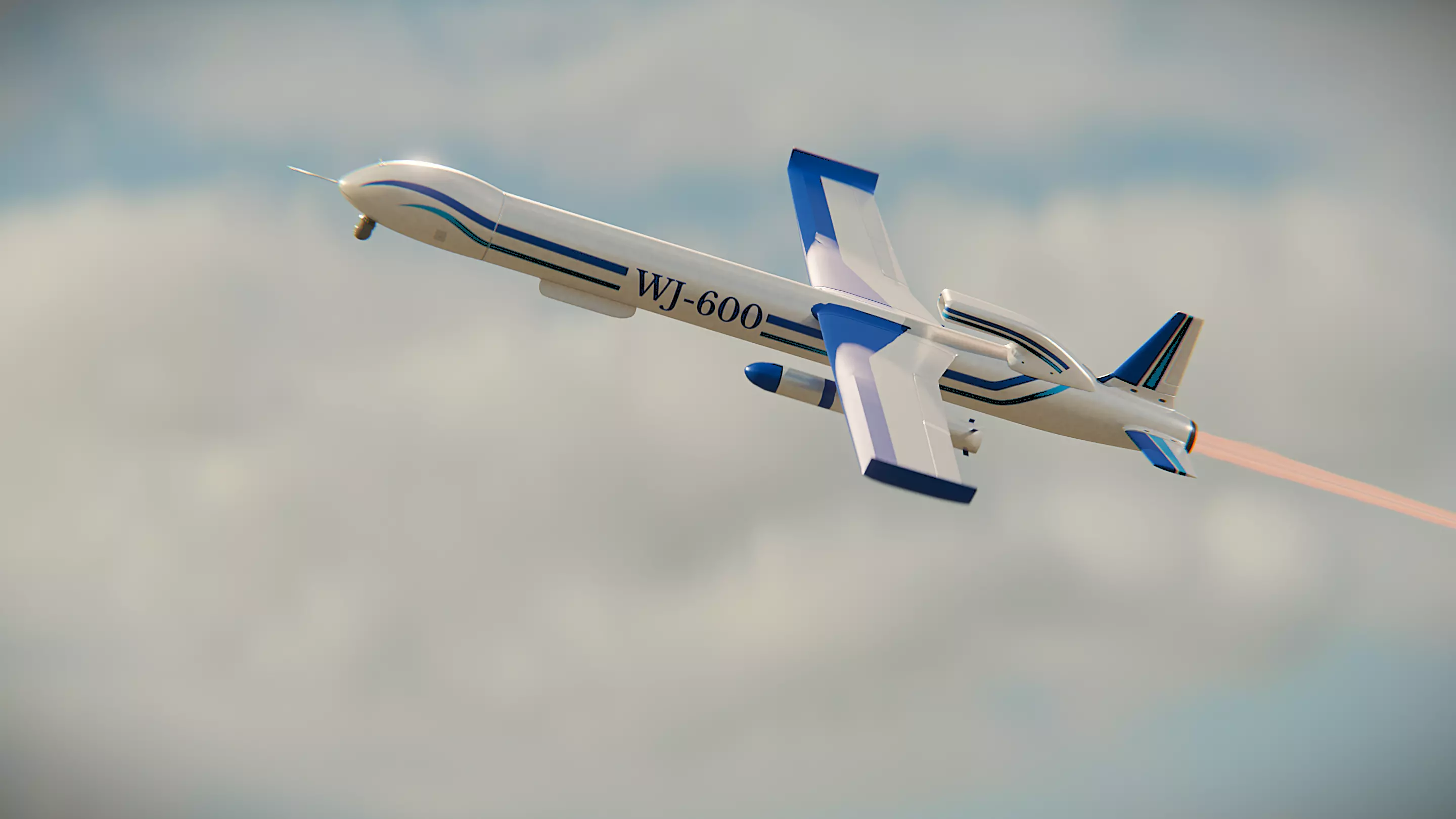
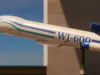
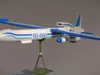
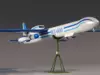
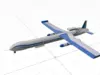
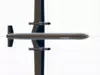
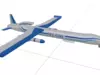
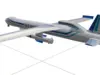
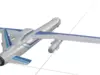
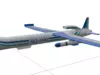
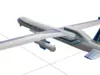
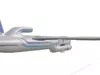
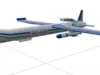
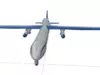
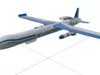
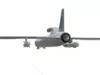
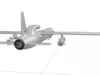
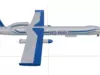
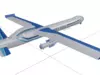
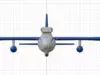
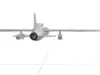
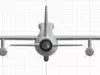
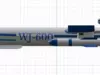
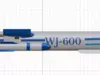
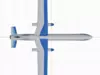
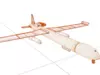
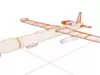
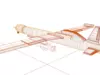
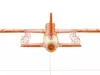
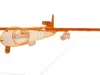
The CASIC WJ‑600 (also sometimes referred to as the HW‑600 or “Sky Hawk”) is a Chinese unmanned combat aerial vehicle (UCAV) developed by the China Aerospace Science & Industry Corporation with the explicit aim of marrying high‑speed reconnaissance with precision strike capability in a single, exportable airframe. Visually the WJ‑600 departs from many conventional UAV silhouettes, adopting a somewhat missile‑like, streamlined fuselage that emphasizes speed and a reduced radar cross‑section profile; this design philosophy supports rapid ingress/egress over contested areas and a smaller detection footprint. Functionally the platform is intended to serve as a tactical, multi‑role asset: equipped with electro‑optical/infrared (EO/IR) sensors and, in many descriptions, synthetic aperture radar (SAR), it can perform medium‑altitude surveillance and target acquisition, then carry out strikes using small precision munitions or guided rockets from underwing hardpoints. A notable derivative, the WJ‑600 A/D, packages reconnaissance and attack systems together so a single sortie can both locate and engage targets without needing separate airframes.

On the performance side, the WJ‑600 is commonly reported to be a compact, relatively fast system: dimensions are roughly in the mid single‑digit meters for wingspan and length (roughly ~5.8 m wingspan and ~6.5 m length in reported figures), with a takeoff weight on the order of 1,000 kg and a payload capacity in the low hundreds of kilograms. Cruising and dash speeds are comparatively high for a tactical UAV—estimates place operational speed in the several‑hundred km/h range up to claimed maximums around 500–700 km/h—allowing quick transit to target areas and reduced exposure time. Service ceiling and endurance are traded off for speed and payload: typical figures reported place the service ceiling near 10,000 meters and endurance in the 3–5 hour window, while command and control is usually line‑of‑sight limited without satellite datalinks, giving an effective operating radius on the order of a few hundred kilometres from the ground control station. Launch and recovery methods for the WJ‑600 family are also non‑traditional compared with runway‑dependent UAVs: the design supports rocket‑assisted takeoff (RATO) to enable dispersed launches from unprepared sites, and recovery can be accomplished using parachute systems with cushioning (airbags)—a pragmatic choice for expeditionary export customers but one that also influences sortie turnaround and sortie reliability considerations.

In operational and market terms, the WJ‑600 occupies an export‑oriented niche in China’s growing UAV portfolio: it has been marketed as a lower‑cost, quickly deployable strike/recon solution for nations seeking stand‑off attack and surveillance capability without investing in larger, more complex systems. Known fielding and export reports have named a small number of countries as operators of variants such as the A/D model, illustrating the platform’s appeal for buyers wanting an all‑in‑one reconnaissance‑and‑strike package. Strengths of the WJ‑600 include its speed, compactness, and flexible launch/recovery options, which facilitate operations from austere locations and naval platforms; limitations include its relatively modest payload and endurance compared with larger MALE (medium-altitude, long-endurance) UAVs, the survivability tradeoffs inherent in using parachute recovery, and potential dependence on shorter‑range line‑of‑sight command links unless augmented with satellite communications. Taken together, the WJ‑600 family represents China’s pragmatic approach to designing exportable combat UAVs: merging offensive capability, sensor packages, and operational flexibility in a compact airframe to meet the needs of buyers that prioritise quick, tactical strike and surveillance rather than the extended persistence or heavy payloads of larger platforms.

Formats include: OBJ, FBX. Feel free to check out the other models, just click on the user name to see the complete portfolio.

REVIEWS & COMMENTS

See what other buyers think about this model - real feedback on quality,
accuracy, and usability.
There are no reviews or comments yet. Please be the first one to write it.
BEST PRICE GUARANTEED
Found this model cheaper on another marketplace? Let our support team know - we’ll match it.
NEW
Recently added to CGTrader - explore one of the latest models on the marketplace.

CASIC WJ-600 - Chinas Jet Powered UCAV - The SKYHAWK Low-poly 3D model

Royalty Free License
Hire
Like this model to show appreciation to the designer.
See how many times this model was viewed.
Share this model to support the designer and boost their visibility.
File formats
OBJ
OBJ | 5 files<br />File Size: 5.54 MB
BLEND
Blender<br />Version: 4.0 - Renderer: Cycles<br />File Size: 159 MB
FBX
Autodesk FBX | 2 files<br />File Size: 310 MB
PNG
PNG<br />File Size: 166 MB
Verified by CGTrader
Verified models are of higher quality as they have
passed CGT Standard technical and visual checks,
making them more professional-grade 3D assets.
Learn more.
FBX
This FBX file has successfully passed the CGT Standard technical and visual checks. The verification results are detailed in the section below.
File & scene
Binary FBX
Binary FBX file is more compact and faster to load and process.
Learn more
No unsupported objects
Unsupported objects:
- Lights
- Cameras
Learn more
Geometry
No N-gons
N-gons are polygons with five or more sides which might cause issues in certain processes like rendering or animation. Learn more
No faceted geometry
Faceted geometry uses flat surfaces without smoothing, which can look unrealistic on curves.
Learn more
Manifold geometry
Manifold geometry ensures all surfaces are properly connected, avoiding issues like edges shared by more than two faces.
Learn more
Textures & material
PBR textures
PBR textures simulate how light interacts with materials, making the model look realistic under different lighting.
Required PBR textures:
- Base Color
- Roughness
- Metalness
- Normal
Learn more
No embed textures
Embedded textures are stored inside the model file, increasing its size and sometimes causing compatibility issues.
Learn more
Square textures
Texture aspect ratio is the width-to-height ratio of a texture. Expected texture aspect ratio: 1:1
Learn more
Power of 2 texture sizes
Textures with dimensions in power of two (e.g. 512x512px, 1024x1024px) are used to optimize performance and memory usage.
Learn more
Assigned materials
Materials are applied to the 3D model to allow visualize a model's surface properties and appearance.
Learn more
UVs & naming
No UV overlaps
UVs overlap when multiple points on the 3D model's surface are mapped to the same point on the UV island causing texture stretching.
Learn more
UV unwrapped model
A UV unwrapped model means its 3D surface is flattened into 2D space, allowing textures to be applied accurately.
Learn more
Allowed characters
Allowed ASCII characters: a-zA-Z0-9-_
Learn more
Provided by designer
Information and details shared directly by the model's designer.
3D Features
The model includes animations (movement or actions) that can be played in supported software or engines.
The model has a skeleton or bone structure, making it ready for posing or animation.
PBR
Uses Physically Based Rendering materials, which give the model realistic lighting and surface properties.
Textures
The model includes image files (textures) that add color, patterns, or detail to its surfaces.
Materials
The model has material settings that define how surfaces look (color, shine, transparency, etc.).
UV Mapping
The model's surfaces are mapped to a 2D image, allowing textures to display correctly.
Plugins Used
Some external plugins were used to create the model. These may be required for full functionality.
3D printing
Indicates whether the designer marked this model as suitable for 3D printing.
Model is not 3D printable
The designer indicates this model is intended for digital use only (rendering, animation, or AR/VR) and not for 3D printing.
Geometry
Polygon mesh
A model built from polygons (triangles or quads) connected in a mesh.
32571 polygons
The total number of polygons (flat shapes) that make up the 3D model.
/ 33459 vertices
The number of points (corners) that define the shape of the model's polygons.
Unwrapped UVs
Publish date
Model ID
Chat