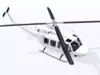
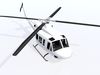
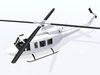
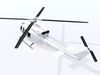
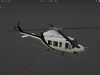
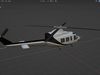
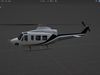
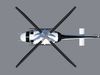
DESCRIPTION

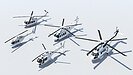
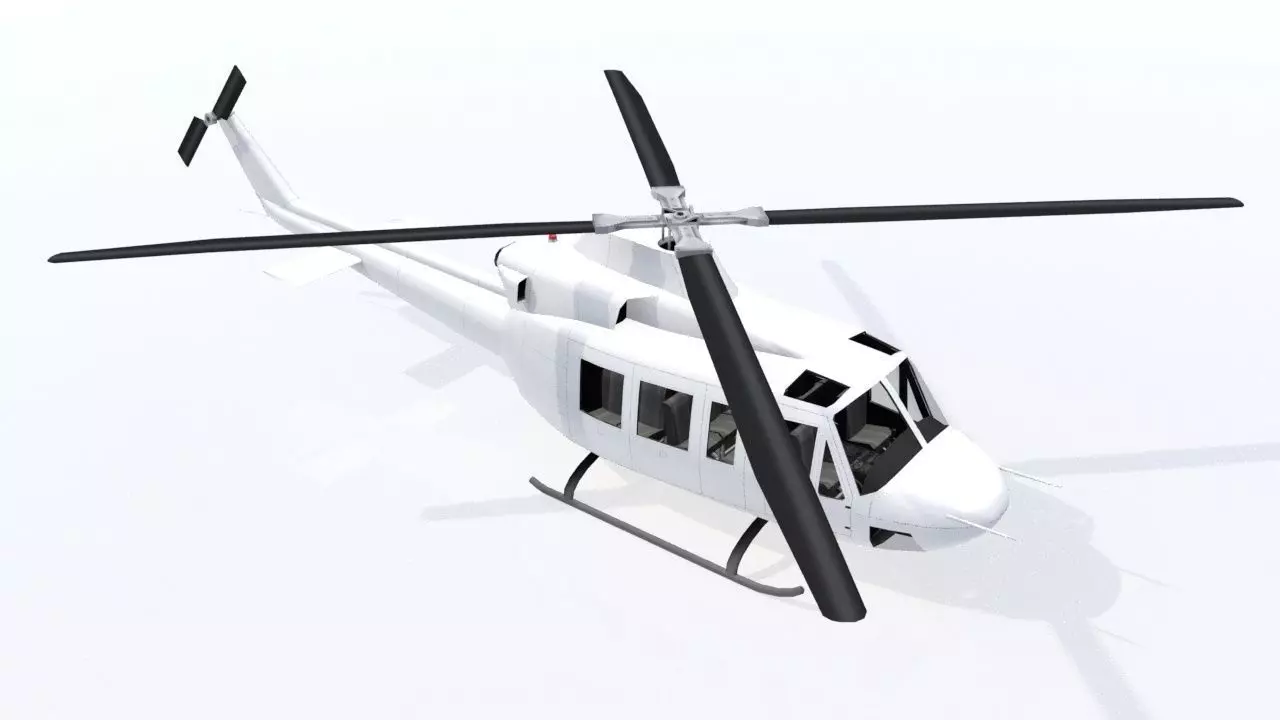
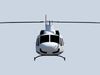
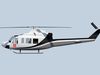
This is basically a Bell 212 but fitted with a new composite four-blade rotor. First flown in 1981, the 412 incorporated a new four-blade rotor system to replace the two-blade teetering rotor system. Bell had spent some time experimenting and developing their new family of composite blades. The new four-blade design gave the Bell 412 an improved performance with reduced noise and vibration. The first modified 412s flew in 1979. The new design had a steel and light alloy main rotor head with elastomeric bearings and dampers. The blades, fitted with a Nomex honeycomb core, are bonded together by glassfibre wrapping incorporating anti-icing heater mats and are interchangeable. The elastomeric bearings of the hub eliminate both mechanical hinges and heavy, viscous dampers. This improves the ride and also extends the rotor system life, while the flex beam yoke of the main rotor hub provides quick control response. The new bearings require no lubrication and require only a quick visual inspection to confirm integrity. In the drive system, five of the six-rotor drive shaft sections are interchangeable, reducing spares. Main transmission chip detectors help protect the system and will alert the pilot to possible problems. The four composite blades have an unlimited life and are exceptionally strong. Span wise variation of their chord, twist and thickness of airfoils give added turning and aerodynamic efficiency. The 412SP (Special Performance) is powered by Pratt & Whitney PT6T-3B-1 turbo Twin-Pacs developing around 1400shp and has a maximum speed of 260kph and a range of over 650km.

In 1986 Bell produced the 412 Attack Helicopter (AH) based on the Bell 412SP. It is armed with a nose-mounted Lucas Aerospace under-nose turret fitted with a 0.50 calibre machine-gun. The gun is slaved into a helmet-mounted sight produced by Sperry and can fire up to 875 rounds of ammunition. The 412AH has a maximum speed of 220kph and can also be armed with air-to-ground rockets.

Under the designation Bell Model 412, the company has developed a version of the Model 212 which introduces a new four-bladed main rotor of advanced design. Each blade is constructed of glassfibre and Nomex honeycomb, incorporates a titanium abrasion strip on the leading edge, has lightning-protecting mesh included in the blade structure, and also has provisions for the inclusion of de-icing heater elements if required. The rotor hub is also of new design, being of steel and light alloy structure, with elastomeric bearings and dampers. Two new Model 212s were modified for use in the development prgramme of this new helicopter/with both IFR and VFR certification gained by 13 February 1980. The initial delivery of a VFR certificated aircraft was made on 18 January 1981, and two were delivered to the Venezuelan Air Force later in the year.

The latest production version is the Model 412SP, with a 55% increase in fuel capacity and other improvements. 100 of these are being built by IPTN in Indonesia, while Helikopter Services A/S is assembling 17 for the Royal Norwegian Air Force. By January 1989, 162 Model 412s had been delivered.

Agusta in Italy manufactures the type as the AB 412SP, and has delivered over 75. It has developed the Griffon, a strengthened version for military duties, the prototype flying in August 1982.

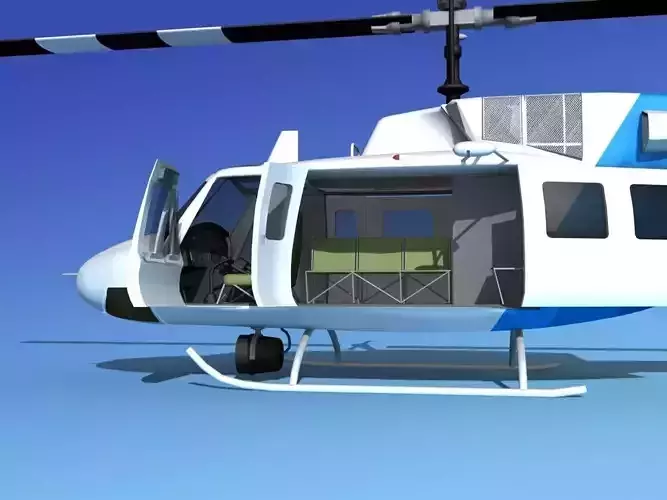
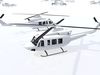
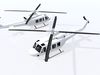
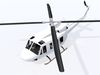
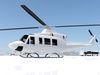
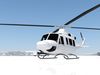
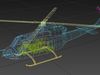
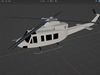
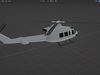
This is an static, non rigged, Lowpoly, blank layered 2048 psd template layered texture, for MSFS or XPlane Scenery Airport development , standard materials, not a detailed interior just enough to be seen as part of enviroment.

thanks for looking! dont forget to check my other models

REVIEWS & COMMENTS

See what other buyers think about this model - real feedback on quality,
accuracy, and usability.
pa
panda180Returning buyer from this seller
This user has purchased multiple models from this seller
Great detail, seemingly high poly but wonderfully low poly based.
BEST PRICE GUARANTEED
Found this model cheaper on another marketplace? Let our support team know - we’ll match it.

Bell B412 Static Helicopter Low Poly blank Low-poly 3D model

Royalty Free License (no AI)
Hire
Like this model to show appreciation to the designer.
See how many times this model was viewed.
Share this model to support the designer and boost their visibility.
File formats
OBJ
OBJ | 2 files<br />File Size: 1.51 MB
3DS
3D Studio<br />File Size: 269 KB
FBX
Autodesk FBX<br />File Size: 320 KB
BLEND
Blender | 2 files<br />File Size: 13.5 MB
MAX
Autodesk 3ds Max<br />File Size: 1.56 MB
GLTF
glTF | 2 files<br />File Size: 6.13 MB
Verified by CGTrader
Verified models are of higher quality as they have
passed CGT Standard technical and visual checks,
making them more professional-grade 3D assets.
Learn more.
FBX
This FBX file has successfully passed the CGT Standard technical and visual checks. The verification results are detailed in the section below.
File & scene
Binary FBX
Binary FBX file is more compact and faster to load and process.
Learn more
No unsupported objects
Unsupported objects:
- Lights
- Cameras
Learn more
Geometry
No N-gons
N-gons are polygons with five or more sides which might cause issues in certain processes like rendering or animation. Learn more
No faceted geometry
Faceted geometry uses flat surfaces without smoothing, which can look unrealistic on curves.
Learn more
Manifold geometry
Manifold geometry ensures all surfaces are properly connected, avoiding issues like edges shared by more than two faces.
Learn more
Textures & material
PBR textures
PBR textures simulate how light interacts with materials, making the model look realistic under different lighting.
Required PBR textures:
- Base Color
- Roughness
- Metalness
- Normal
Learn more
No embed textures
Embedded textures are stored inside the model file, increasing its size and sometimes causing compatibility issues.
Learn more
Square textures
Texture aspect ratio is the width-to-height ratio of a texture. Expected texture aspect ratio: 1:1
Learn more
Power of 2 texture sizes
Textures with dimensions in power of two (e.g. 512x512px, 1024x1024px) are used to optimize performance and memory usage.
Learn more
Assigned materials
Materials are applied to the 3D model to allow visualize a model's surface properties and appearance.
Learn more
UVs & naming
No UV overlaps
UVs overlap when multiple points on the 3D model's surface are mapped to the same point on the UV island causing texture stretching.
Learn more
UV unwrapped model
A UV unwrapped model means its 3D surface is flattened into 2D space, allowing textures to be applied accurately.
Learn more
Allowed characters
Allowed ASCII characters: a-zA-Z0-9-_
Learn more
Provided by designer
Information and details shared directly by the model's designer.
3D Features
The model includes animations (movement or actions) that can be played in supported software or engines.
The model has a skeleton or bone structure, making it ready for posing or animation.
PBR
Uses Physically Based Rendering materials, which give the model realistic lighting and surface properties.
Textures
The model includes image files (textures) that add color, patterns, or detail to its surfaces.
Materials
The model has material settings that define how surfaces look (color, shine, transparency, etc.).
UV Mapping
The model's surfaces are mapped to a 2D image, allowing textures to display correctly.
Plugins Used
Some external plugins were used to create the model. These may be required for full functionality.
3D printing
Indicates whether the designer marked this model as suitable for 3D printing.
Model is not 3D printable
The designer indicates this model is intended for digital use only (rendering, animation, or AR/VR) and not for 3D printing.
Geometry
4191 polygons
The total number of polygons (flat shapes) that make up the 3D model.
/ 5203 vertices
The number of points (corners) that define the shape of the model's polygons.
Unwrapped UVs
Publish date
Model ID
Chat