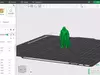
Dr. Doom – High-Detail 3D Printable & Renderable ModelBring the iconic Marvel supervillain to life with this highly detailed, realistic 3D model of Doctor Doom — ruler of Latveria and one of Marvel's most feared masterminds.This model is perfect for 3D printing, display figures, dioramas, game assets, or fan collectibles. Every detail has been carefully crafted — from his signature iron mask and armored suit to his flowing battle cloak — delivering a screen-worthy level of realism.Technical Details:File Formats: STL, OBJPrint Ready: Yes — optimized for FDM and resin printersAI-Assisted Design: Created with the help of AI tools for precise detailingStyle: Highly detailed / realisticSupports: May be required for complex parts (recommendedPrinting Tips:Resin printing recommended for best detailScale to your preference before slicingSeparate parts included for easier printing (if applicable)
The door opens with a soft, deliberate click, and the world outside fades away.The room breathes in silence — a silence that is not empty, but full. Full of antiseptic calm, of fluorescent light humming just below the threshold of hearing, of decades of quiet conversations held between white walls and careful hands. It is a room that has witnessed fear transformed into relief, uncertainty dissolved into answers. It carries that weight gracefully, without showing the strain.The walls are painted in the pale, non-committal white that all medical rooms seem to share — not quite warm, not quite cold, existing in a careful neutrality designed to disturb no one. Yet the light that falls across them is anything but neutral. Overhead, long fluorescent panels cast a clean, flat illumination that leaves no shadow unexamined, no corner in doubt. It is honest light. Unforgiving light. The kind of light that says: here, there are no secrets.Against the far wall stands the examination table — its surface wrapped in a fresh sheet of crinkled paper, white and crisp and waiting. The padding beneath is a dark vinyl, worn smooth at the edges from years of restless patients sitting, swinging their legs nervously, staring at the ceiling and counting tiles. Its metal frame catches the light at sharp angles, gleaming like something both clinical and ceremonial.Beside it, a rolling stool sits slightly askew, as though the doctor has only just stepped away — called by some quiet emergency down the hall, expected back at any moment. The stool's black seat is polished by use, its chrome legs catching twin reflections of the overhead lights, twin stars suspended in silver.On the counter along the side wall, the tools of the trade are arranged with practiced precision. Glass jars, sealed and labeled, stand in a neat row — cotton balls piled like tiny clouds behind clean glass, wooden tongue depressors fanned out in perfect order, gauze folded in careful squares. A stainless steel tray holds instruments whose names belong to a language most people never learn, each one catching the light with quiet authority. Nothing here is out of place. Everything has its purpose, its position, its reason for being exactly where it is.A blood pressure cuff hangs from a hook on the wall like a sleeping creature, its rubber tubing coiled patiently. The wall-mounted otoscope and ophthalmoscope sit in their charging cradles, small LED lights glowing a soft, steady green — always ready, always watching.The desk in the corner is the only place where humanity intrudes upon the room's clinical perfection. A computer screen glows with patient records, the text too small to read from across the room but the blue light unmistakable. Beside it, a coffee mug — slightly off to the side, not quite in line with anything else — breaks the symmetry of the space. A small, stubborn reminder that the hands that work in this room belong to a person, not a machine.A framed diagram of the human anatomy hangs on the wall near the desk, rendered in clean anatomical illustration — the body opened, mapped, explained. Veins in blue, arteries in red, organs labeled with precise, Latin permanence. It is both beautiful and sobering, this image of what we all are beneath the surface.The floor is linoleum — pale grey, faintly flecked with white — and it reflects the light in long, soft streaks that stretch toward the door. Each footstep on this floor would produce a specific, unmistakable sound. A sound that belongs only to places like this.Near the window — a narrow window, frosted for privacy, admitting only the idea of daylight rather than daylight itself — a small chair waits for whoever accompanies the patient. It is a simple chair, padded in the same dark vinyl as the examination table, positioned at a slight angle as though placed there by someone who understood the importance of not sitting too far away, but not too close either.The air in the room is cool and still. It smells faintly of alcohol wipes and latex gloves, of cleanliness carried to its logical extreme. It is a smell that triggers memory instantly — visits past, diagnoses heard, hands held, sighs of relief exhaled. It is one of the most specific smells in the human experience, and it lives here, suspended in the filtered air, as much a part of the room as the walls themselves.This is a room built for truth. For listening. For the extraordinary ordinary act of one person caring for another. And in its stillness, between its careful walls, under its honest light — it waits, as it always has, for whoever comes through the door next.