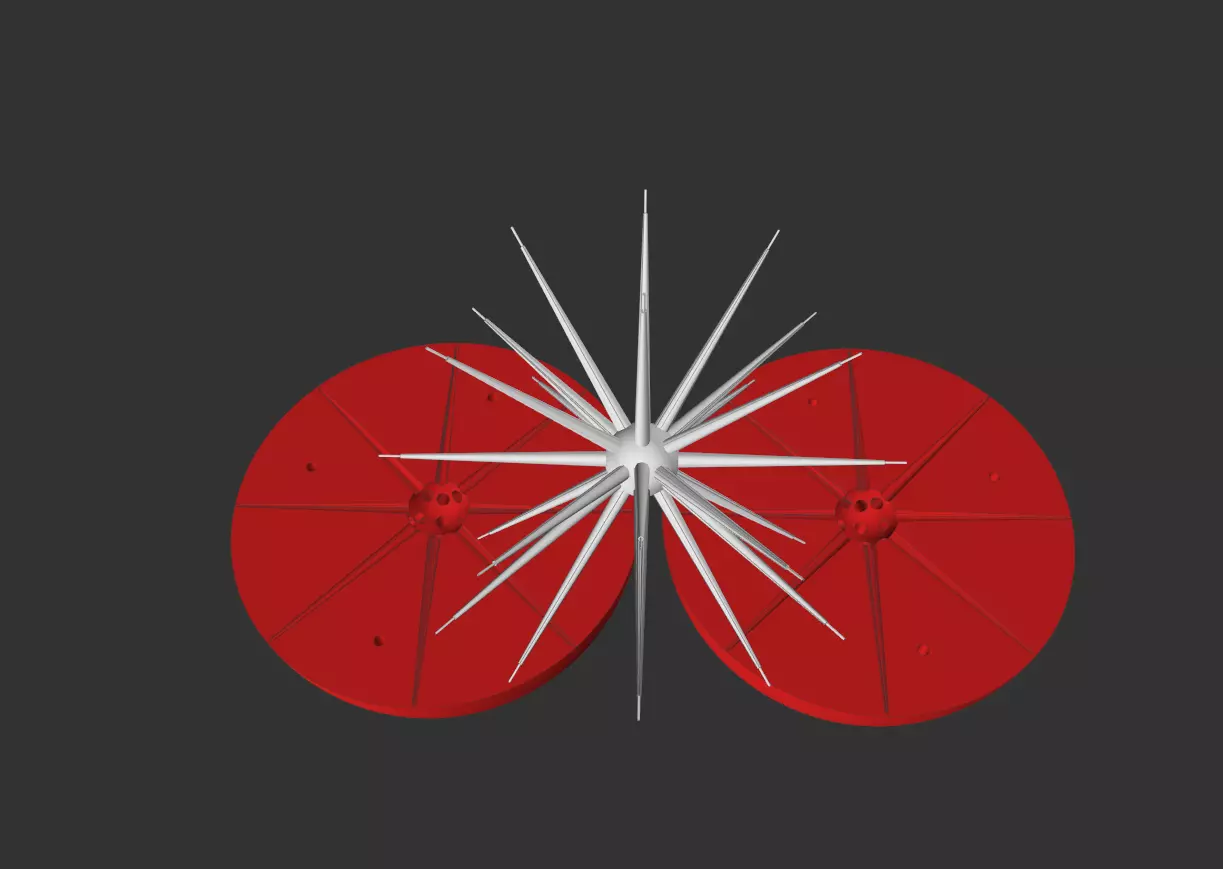
I designed a new mold for trophy bass and ran a full set of tests to compare different 3D printing methods for production.
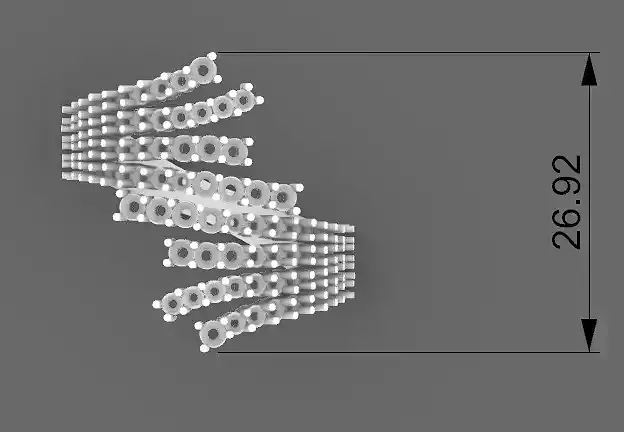
Model specifications:• Ball diameter — 17 mm• Leg length — 46 mm• Lure weight — 6 g• Sprue opening diameter — 16 mm
The first stage was printing the mold on a resin 3D printer using transparent resin. The main advantage of transparent resin is the ability to visually control the pouring process. However, platform limitations did not allow horizontal positioning, which affected the quality of some internal channels. As a result, part of the horizontal passages were filled with resin and not fully formed, so some legs did not print perfectly.
In previous smaller models, horizontal printing showed much better results:• All channels fully formed• Perfectly smooth sealing surface• Minimal post-processing required
After finishing and cleaning, the mold was tested in real pouring conditions. The first pours were done without a clamp, manually, since the clamping system had not yet been printed. Despite this, the mold performed well and remained functional. Even with incomplete filling in some areas, the number of legs was still higher than in many similar commercial molds.
The next step was testing the same design on an FDM printer.
Two materials were used:• PLA• PETG(both Creality Hyper series)
Thanks to the ability to print horizontally on the FDM printer, the results were excellent. Testing showed:• PLA could not withstand the working temperature after the first pour• PETG successfully survived three full pours
Key advantages of the FDM version:• Much lower production cost• No complex post-processing required• Excellent release of the finished lure• Horizontal printing ensures high dimensional accuracy
The lure releases from the mold almost perfectly. The only minor issue is a small flash along the parting line, which is very easy to clean manually.
After producing a proper clamp, the final setup delivered near-perfect results.
Conclusion:For this type of molds, FDM printing can be even more effective than resin printing, especially when using high-temperature resistant materials. https://youtube.com/shorts/YQrYoLLYMU4
At the moment, this is one of the most promising approaches for producing high-quality molds for silicone lures.
The model is available via the link.Feel free to try it and use it in your own projects.
If you have any questions, I’ll be glad to share more details and experience.