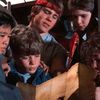
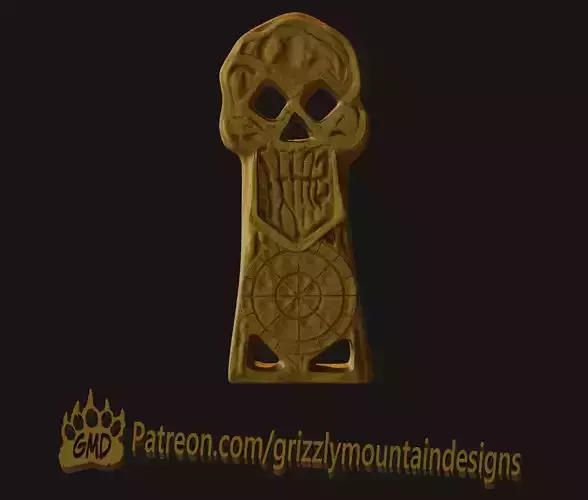
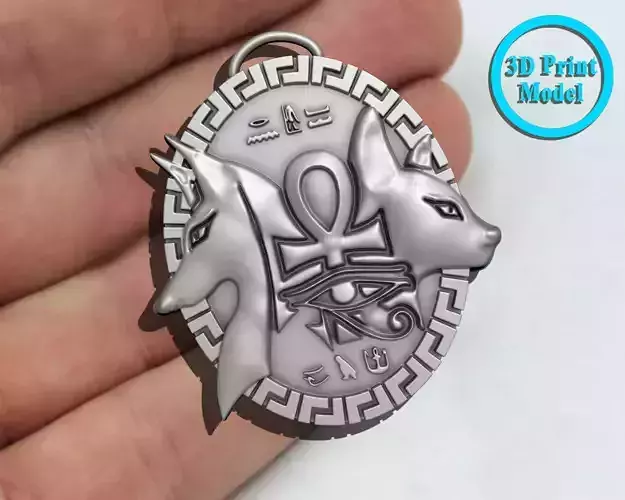
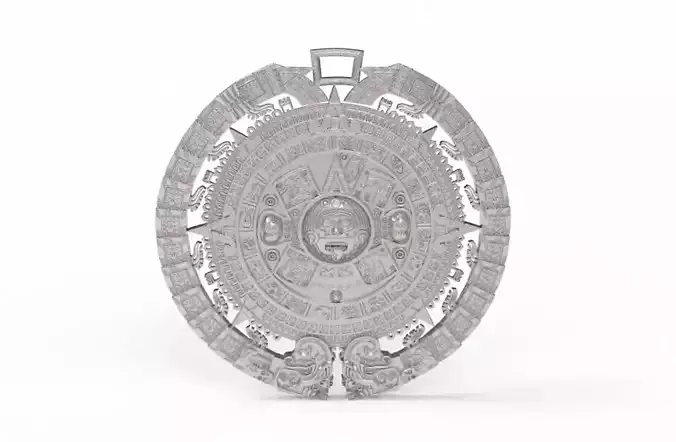
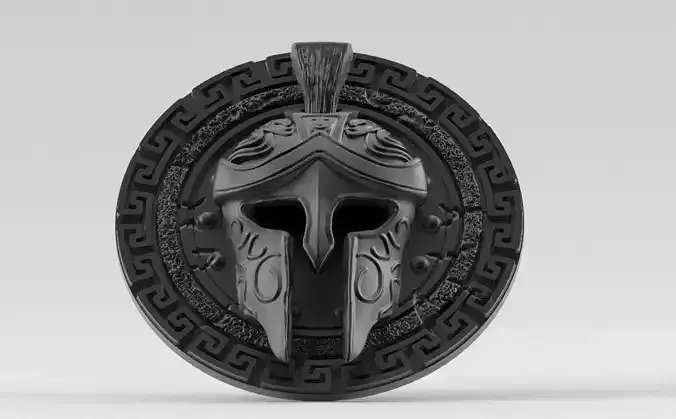
Copper Bones is Chester Copperpot's copper medallion. It is an integral part to finding One-Eyed Willy's treasure.
Previously owned by Chester Copperpot, it sat in the secret caverns under the Lighthouse Lounge for close to fifty years. It is discovered by Mikey, who takes it from Copperpot's corpse. Later, in the Moss Garden Wishing Well, the Goonies solve one of One-Eyed Willy's riddles; they discover a series of stones and use the medallion to slot into the right set. Turning counterclockwise, Mikey activates a booby trap, nearly killing Data in the process.
Adjust to 170 x 70 mm before printing.
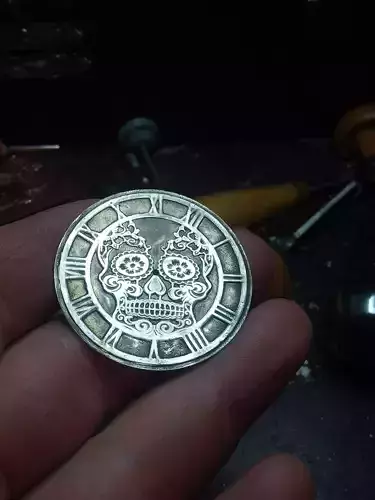
Doubloon
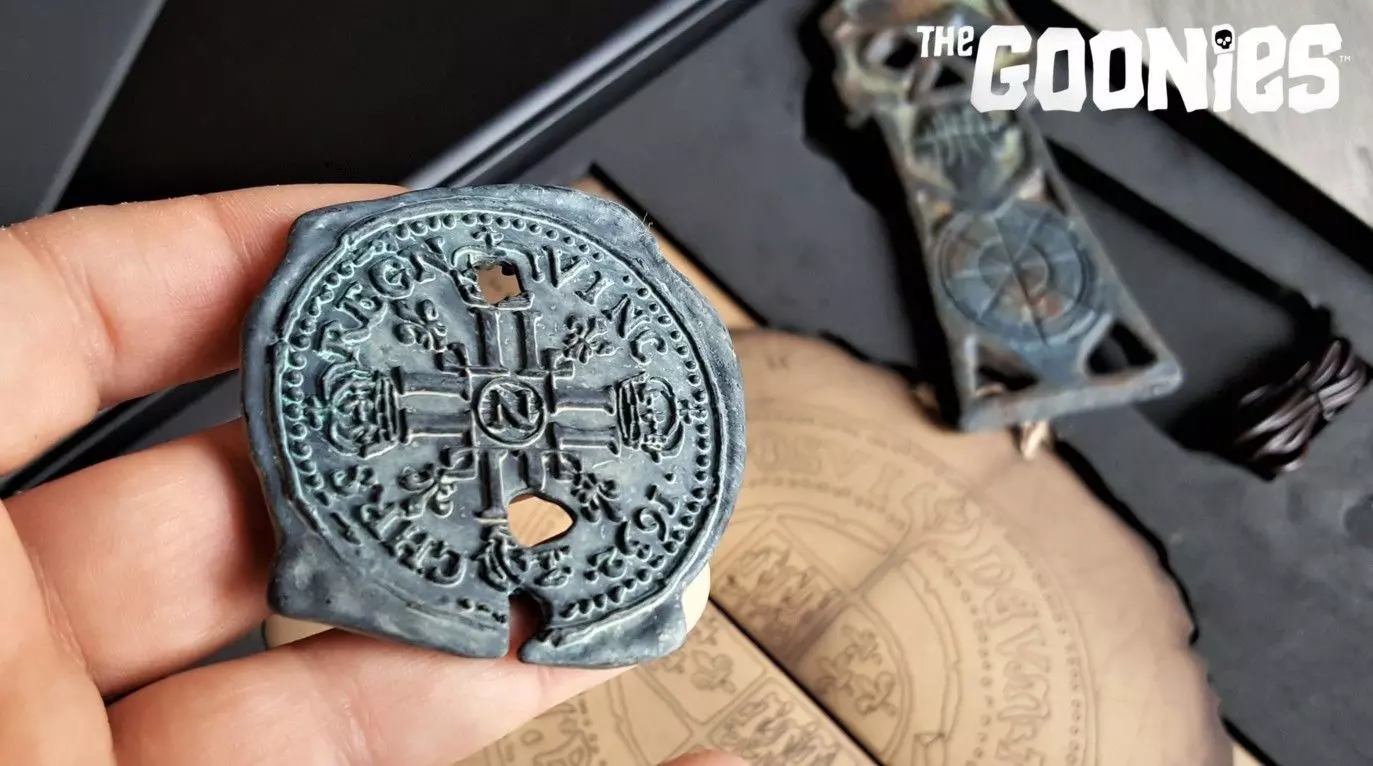
Little is known of the coin's history, except that it was minted in 1632, likely by the treasury of the King of Spain. At some point it came into the possession of One-Eyed Willy or one of his men, presumably through plunder. It has three small holes in it, which were likely intentionally made after Willy's men finished the network of subterranean tunnels to deduce their above ground appearance. These align with the Oregon coastline off of Cannon Beach, specifically with Haystack Rock and the Lighthouse Lounge. The doubloon itself aged with tarnish as centuries passed. At some point in time it was acquired by Irving Walsh in his duties as a historian, where is was included with One-Eyed Willy's map.
Copper Bones es el medallón de cobre de Chester Copperpot. Es un elemento imprescindible para encontrar el tesoro de Willy el tuerto.
Anteriormente propiedad de Chester Copperpot, permaneció en las cavernas secretas debajo del Lighthouse Lounge durante casi cincuenta años. Lo descubre Mikey, quien lo toma del cadáver de Copperpot. Más tarde, en Moss Garden Wishing Well, los Goonies resuelven uno de los acertijos de Willy el tuerto; descubren una serie de piedras y usan el medallón para encajar en el conjunto correcto. Al girar en sentido antihorario, Mikey activa una trampa explosiva y casi mata a Data en el proceso.
Ajustar a 170 x 70 mm antes de imprimir.
El Doblón
Poco se sabe de la historia de la moneda, excepto que fue acuñada en 1632, probablemente por el tesoro del rey de España. En algún momento pasó a manos de Willy el Tuerto o de uno de sus hombres, presumiblemente a través del saqueo. Tiene tres pequeños agujeros, que probablemente se hicieron intencionalmente después de que los hombres de Willy terminaron la red de túneles subterráneos para deducir su apariencia sobre el suelo. Estos se alinean con la costa de Oregón frente a Playa Cannon, específicamente con Haystack Rock y el Salón del faro. El propio doblón envejeció empañado a medida que pasaban los siglos. En algún momento fue adquirido por Irving Walsh en sus funciones como historiador, donde fue incluido en el mapa de Willy Tuerto.