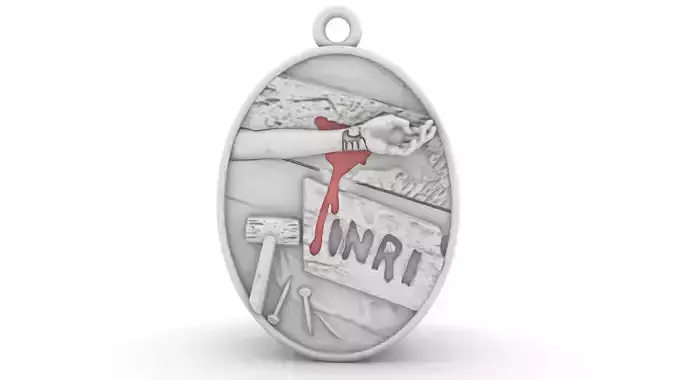
This INRI sign plaque 3D print model is a 3D printable plaque model designed for Christian display projects and sacred craft work. The design presents the traditional INRI inscription as a sacred relief sign for crucifix and chapel themed projects. The piece is suitable for cross builds. devotional wall decor. church craft work. Easter displays. altar scenes. dioramas. and religious gift making. It can be used as a standalone wall accent. cross detail. altar sign. chapel prop. diorama element. gift insert. or decorative label for a larger devotional composition. The design emphasizes legible lettering. clean borders. balanced relief depth. and a presentation that remains recognizable after printing and painting. Makers can scale the plaque for tabletop crosses. wall mounted scenes. shadow boxes. display bases. or product photography sets. For printing. Resin is recommended for smaller plaque sizes because raised letters and recessed borders need clear edges. FDM printing can work well at a larger size when the goal is a sturdy sign or display accessory. Review the raised letters. plaque thickness. border depth. front face. rear surface. and mounting areas before slicing. Supports should avoid the main face when possible so the lettering remains easy to clean and finish. A medium scale is useful for preserving the INRI text while keeping the plaque lightweight. For FDM use 10 to 15 percent infill with extra top layers for a neat front surface. For resin use a careful angle and light supports around the back or edge. OBJ. STL. And PLY formats are included for common slicers and 3D workflows. The finished print can be painted in antique gold. dark bronze. blackened metal. ivory. stone. or aged wood tones. This printable plaque is useful for religious makers. church craft projects. sacred displays. cross builders. painters. and collectors who need a refined 3D printed devotional sign. Please Note: This STL file may require pre-printing preparation such as support analysis and positioning adjustments. Thickness verification and specific settings for your printer and filament may be needed. Other technical adjustments might be necessary depending on your equipment and printing method.