OVERVIEW
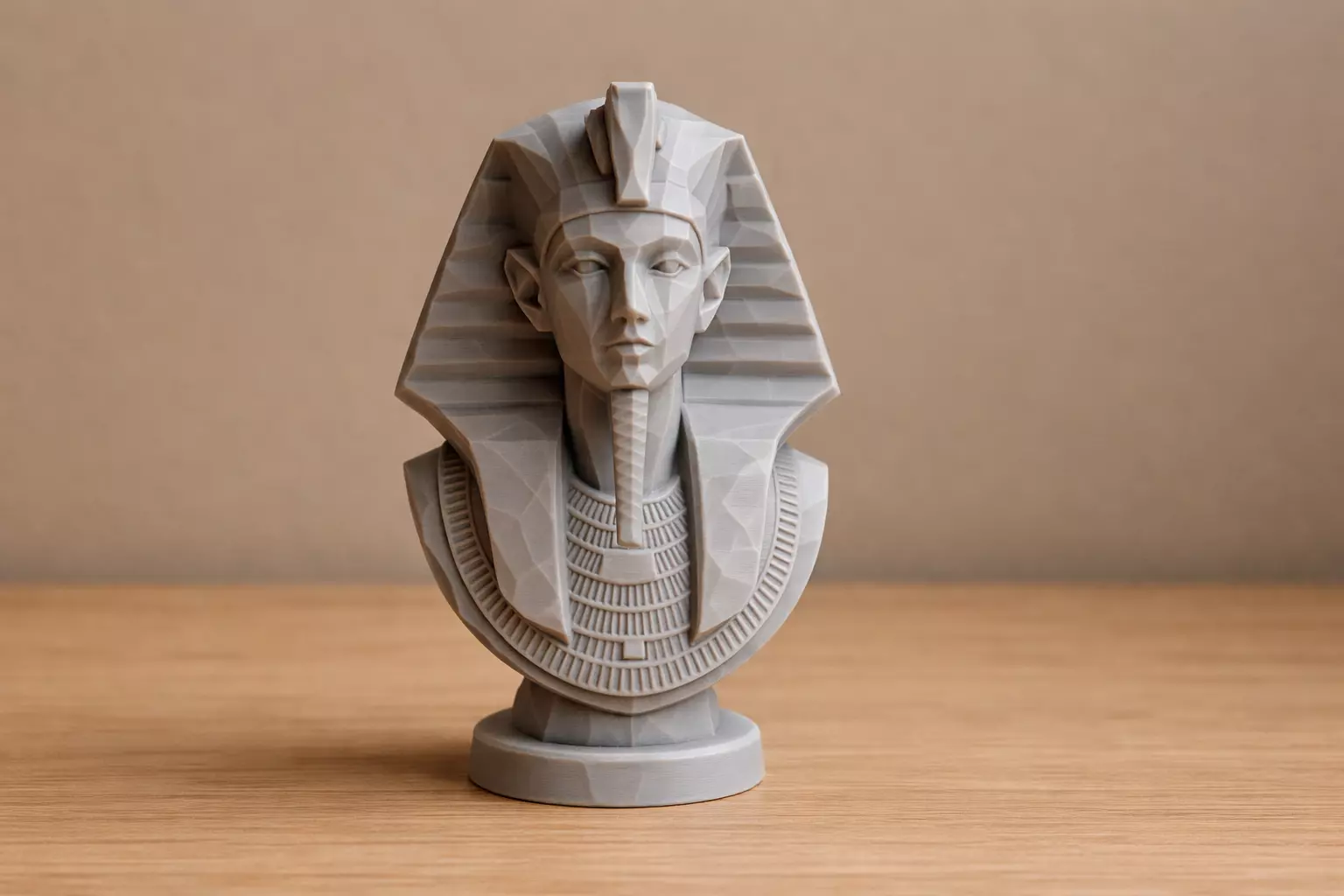
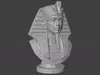
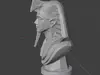
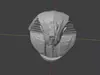
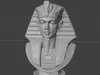
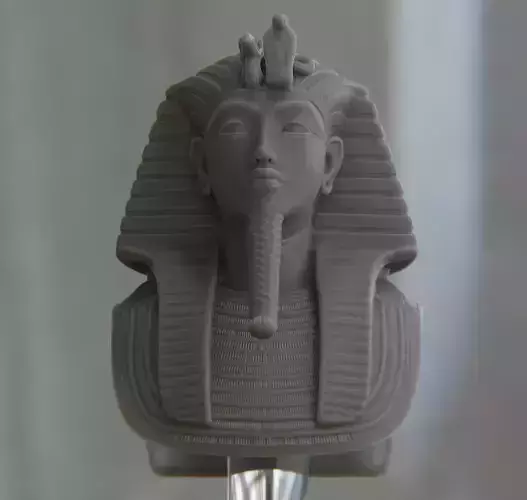
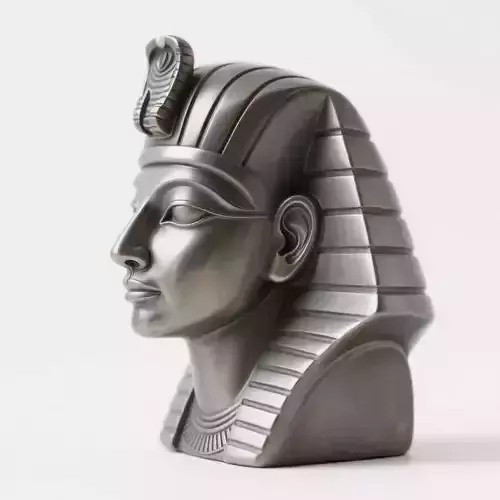
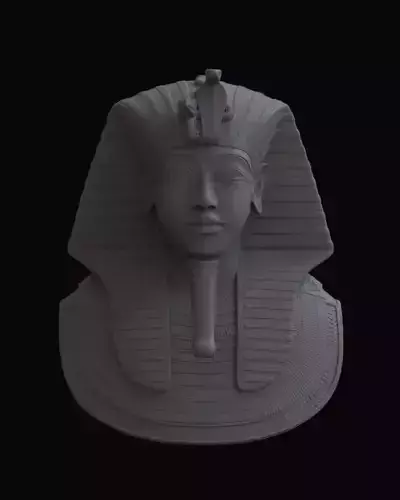
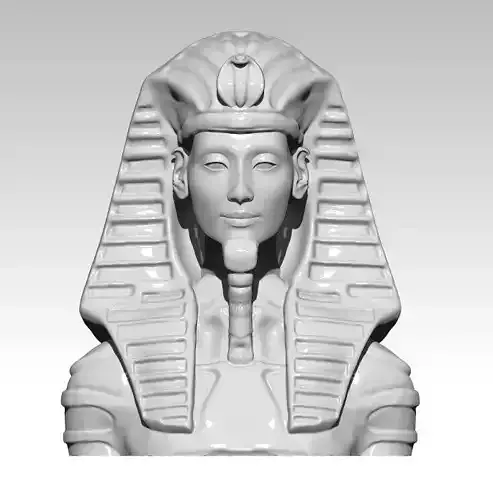
This Egyptian pharaoh bust features a clean low poly sculpting style combined with recognizable ancient Egyptian visual elements. The silhouette is vertically balanced with a symmetrical front-facing composition that gives the piece strong shelf readability and display presence. The headdress creates a wide upper profile that tapers naturally toward the pedestal base, producing a stable visual weight distribution suitable for both decorative display and collectible presentation.
The facial structure uses simplified geometric planes while preserving identifiable human proportions and historical styling cues. The elongated chin ornament, layered collar details, and angular headdress geometry reinforce the iconic pharaoh aesthetic without excessive surface clutter. The compact bust format makes the sculpture visually dense while remaining clean and easy to read from multiple viewing angles.
The model works effectively as a decorative desk collectible, shelf display statue, tabletop figure, or resin display piece for historical and stylized sculpture collections.
DESIGN DETAILS
The sculpt combines sharp polygonal transitions with smoother curved contour flow around the face and neck sections. The geometry density is concentrated primarily in the facial planes, collar detailing, and layered ornamental elements surrounding the chest area. Larger surfaces such as the headdress maintain broader polygon transitions that enhance the low poly appearance while preserving structural consistency.
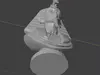
The edge treatment remains controlled throughout the model, with crisp transitions around the facial contours, ears, collar grooves, and ornamental sections. The layered necklace area introduces repeated recessed detailing that increases sculpt complexity while maintaining a clean overall structure. The pedestal base remains compact and stable, visually grounding the upper mass of the sculpture.
Most surfaces are enclosed and reinforced through thick continuous geometry, making the overall form appear structurally reliable for display-oriented printing. The design avoids excessive protrusions while maintaining enough depth variation to create strong lighting contrast in renders and physical prints.
The low poly styling gives the statue a modern decorative appearance while preserving recognizable Egyptian-inspired design language suitable for collectible sculpture markets, tabletop decor, and stylized historical displays.
PRINTING ANALYSIS
The model appears highly suitable for resin printing due to its layered ornamental detailing, facial surface transitions, and geometric edge definition. Resin output would likely preserve the low poly facets and recessed collar details with strong visual clarity.
The bust also appears compatible with FDM printing because of its broad stable surfaces and centralized weight distribution. The pedestal base provides a stable contact area for print adhesion and display positioning.
Likely support areas include the underside sections beneath the headdress extensions, lower collar overhangs, ear regions, and the elongated chin ornament. The face and front surfaces appear relatively accessible and should maintain good surface visibility depending on orientation.
The model contains mostly thick interconnected geometry with limited fragile extensions, making it visually appropriate for collectible printing and decorative handling. Upright orientation appears practical due to the integrated base structure and balanced vertical form.
COMMERCIAL USE CASESEgyptian collectible figurineDecorative bust sculptureShelf display statueHistorical desk collectibleResin display figureStylized tabletop miniatureAncient civilization decorPainting and finishing projectMuseum-inspired decorative pieceLow poly sculpture collectionGaming room or office decorHistorical fantasy display setup
This sculpture fits well within collectible statue markets, decorative miniature collections, and stylized historical display categories where recognizable silhouettes and clean printable geometry are commercially valuable.