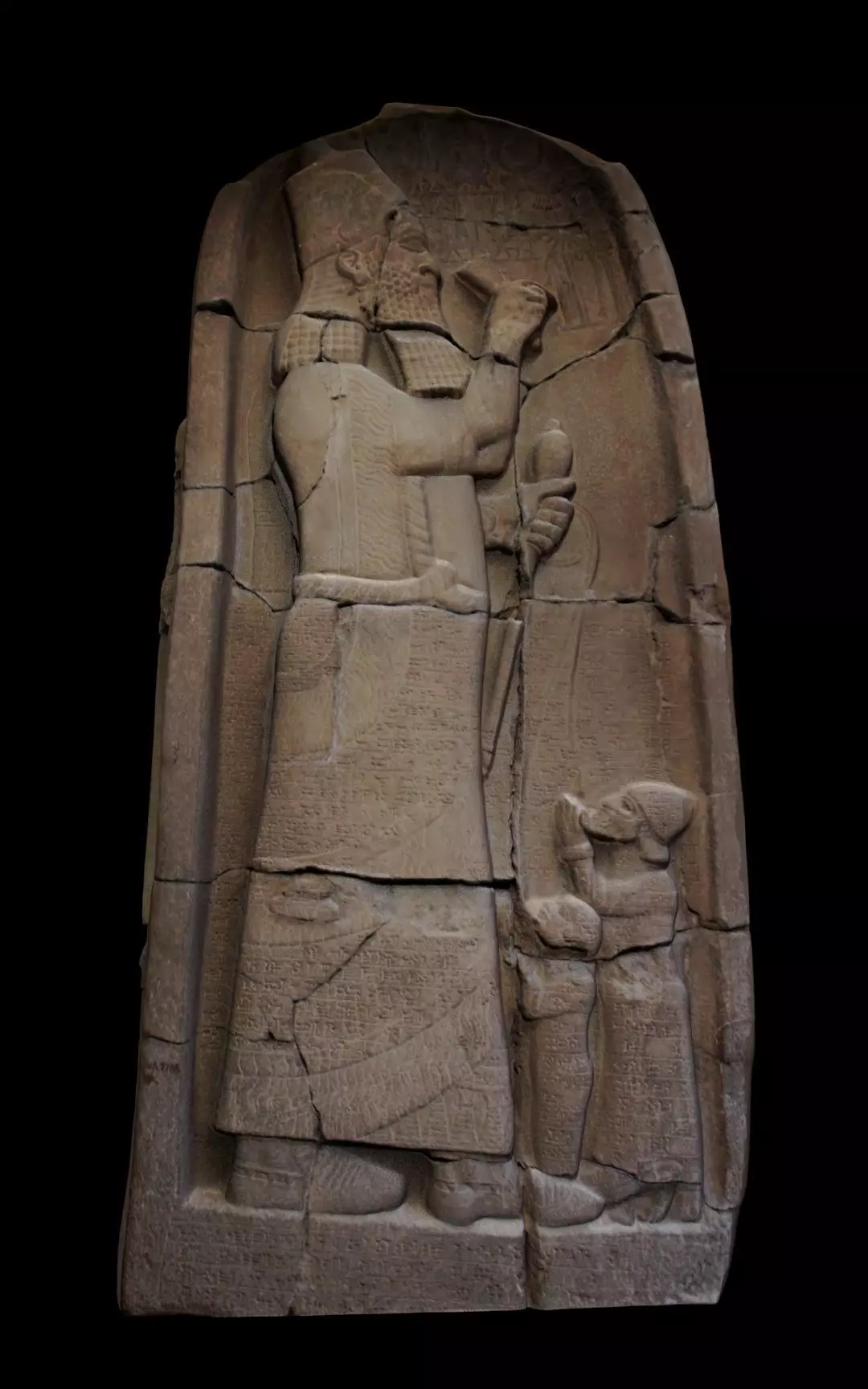
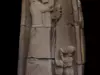
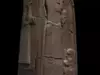
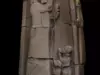
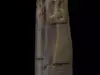
ARTIFACT IDENTIFICATIONOfficial Name: Victory Stele of Esarhaddon (also known as the Zinjirli or Zincirli Stele)Date: 7th century BCEMaterial: Dolerite (basalt)Original Location: Zincirli Höyük (ancient Sam'al/Yadiya), southern TurkeyCurrent Location: Pergamon Museum, Berlin (Staatliche Museen zu Berlin - Preußischer Kulturbesitz)Discovery: 1888 by German archaeologists Felix von Luschan and Robert KoldeweyLanguage & Script: Akkadian cuneiform inscriptionsHeight: Approximately 10+ feet (3 meters)Join the Facebook group: “Print Your Museum – 3D Printed Archaeology” https://www.facebook.com/groups/862838313343526
HISTORICAL SIGNIFICANCEThe Monument's Purpose
This monumental stele commemorates the military victory of King Esarhaddon (680–669 BCE) following his second successful campaign against Pharaoh Taharqa of Egypt in 671 BCE. It represents one of the most significant military achievements of the Neo-Assyrian Empire and serves as a primary archaeological witness to the power dynamics of the ancient Near East during the 7th century BCE.
The Connection to King Manasseh of Judah
The stele's inscription directly references Manasseh, King of Judah, establishing him as a vassal state under Assyrian hegemony. This is one of the few instances where biblical and Assyrian historical records intersect and corroborate each other:
Manasseh's reign: Approximately 687–642 BCE
Historical context: Manasseh ruled Judah during the reigns of two powerful Assyrian kings—Esarhaddon and Ashurbanipal
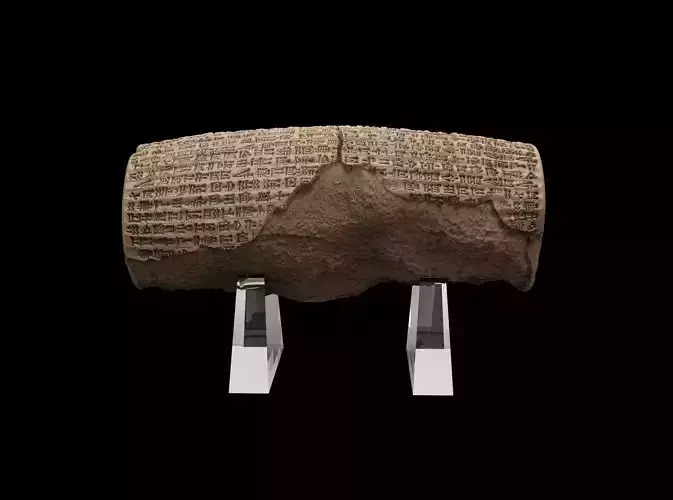
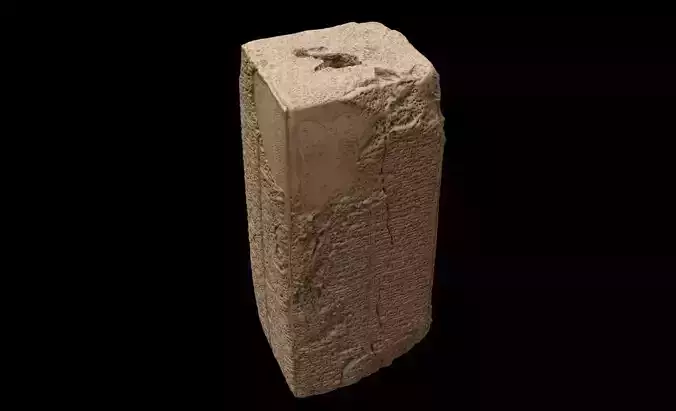
Vassal status: Esarhaddon's royal inscriptions (particularly Prism A) explicitly name Manasseh, King of Judah among the vassal kings who were required to provide tribute and building materials for Esarhaddon's palace construction
The Bible recounts that Manasseh was taken captive to Babylon by an Assyrian king, where he repented and was restored to his throne—an account that aligns with the documented vassalage relationship under Esarhaddon: And Jehovah bringeth in against them the heads of the host that the king of Asshur hath, and they capture Manasseh among the thickets, and bind him with brazen fetters, and cause him to go to Babylon. And when he is in distress he hath appeased the face of Jehovah his God, and is humbled exceedingly before the God of his fathers, and prayeth unto Him, and He is entreated of him, and heareth his supplication, and bringeth him back to Jerusalem, to his kingdom, and Manasseh knoweth that Jehovah -- He [is] God. 2 Chronicles 33:11–13 (YLT)
ARTISTIC & ICONOGRAPHIC ELEMENTS
Iconographic Composition
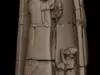
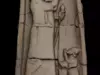
The relief depicts a powerful propaganda image showing:
Esarhaddon - Standing in an authoritative posture on the left side
Holding a royal mace (symbol of kingship and divine authority) in his left hand
Grasping two ropes that pass through the lips of conquered vassal kings
Right hand raised in a gesture of supplication or command to the gods
Elaborate royal regalia, including beard styling typical of Assyrian royalty
The Conquered Vassal Kings - Depicted kneeling before Esarhaddon
Two figures shown in positions of submission
Rope restraints symbolizing their subjugation and vassalage
Smaller stature relative to the king, emphasizing power hierarchy
Divine Elements - Upper register contains:
Symbols and representations of Assyrian gods
Winged divine emblems
Astral symbols
Cuneiform Inscriptions
The text covers the entire medium relief scene, providing:
Titulature and genealogy of Esarhaddon
Details of his military victories
References to vassal relationships and tribute obligations
Invocations to Assyrian deities
Specific mention of Manasseh as a tribute-paying vassal
ARCHAEOLOGICAL & BIBLICAL SIGNIFICANCE
Why This Artifact Matters
Extra-biblical Corroboration: The Esarhaddon stele and related inscriptions (Prism A) represent direct Assyrian written evidence confirming the biblical narrative of Manasseh's vassalage and interaction with Assyrian power
7th Century BCE Geopolitics: It illustrates the imperial structure of the Neo-Assyrian Empire and how smaller Levantine kingdoms like Judah were incorporated into the vassal system
Diplomatic-Military Hierarchy: The artistic depiction shows the visual propaganda language used by Assyrian rulers to demonstrate dominance—a system that included Judah's King Manasseh
Cross-Cultural Documentation: The existence of this monument demonstrates how ancient Near Eastern powers documented power relationships through monumental art and cuneiform inscription
3D MODEL SPECIFICATIONS FOR PRODUCTION
Model Scope
Ready for printing (3mf model is hollowed 20cm high, 2mm walls)
Detail Priorities
Figure Rendering: High-fidelity sculpting of Esarhaddon, vassal kings, and divine symbols
Material Authenticity: Weathering, patina, and surface irregularities reflecting 2,700+ years of preservation
File Formats for Export
3MF (for printing)
OBJ (for comprehensive asset compatibility with mtl and texture)
FBX (for animation and game engine integration)
ZTL (for modification)
Target Audience:
Academic institutions and biblical archaeology departments
Museum professionals and curators
Historical visualization specialists
Theological and religious education institutions
3D printing enthusiasts interested in ancient Near Eastern artifacts
Digital humanities researchers
Relevant Points:
Historically verified through archaeological publications and academic consensus
Direct connection to biblical narrative and King Manasseh
Museum-quality reproduction (based on Berlin Pergamon Museum artifact)
Exceptional rarity value—combines political, military, religious, and artistic significance
Ideal for educational digital exhibits and virtual museum displays and reproductions.
Get other models for free, visit https://www.arqreation.com/print-your-museum/