High-quality 3D assets at affordable prices — trusted by designers, engineers, and creators worldwide. Made with care to be versatile, accessible, and ready for your pipeline.
Included File Formats
This model is provided in 14 widely supported formats, ensuring maximum compatibility:
• - FBX (.fbx) – Standard format for most 3D software and pipelines
• - OBJ + MTL (.obj, .mtl) – Wavefront format, widely used and compatible
• - STL (.stl) – Exported mesh geometry; may be suitable for 3D printing with adjustments
• - STEP (.step, .stp) – CAD format using NURBS surfaces
• - IGES (.iges, .igs) – Common format for CAD/CAM and engineering workflows (NURBS)
• - SAT (.sat) – ACIS solid model format (NURBS)
• - DAE (.dae) – Collada format for 3D applications and animations
• - glTF (.glb) – Modern, lightweight format for web, AR, and real-time engines
• - 3DS (.3ds) – Legacy format with broad software support
• - 3ds Max (.max) – Provided for 3ds Max users
• - Blender (.blend) – Provided for Blender users
• - SketchUp (.skp) – Compatible with all SketchUp versions
• - AutoCAD (.dwg) – Suitable for technical and architectural workflows
• - Rhino (.3dm) – Provided for Rhino users
Model Info
• - All files are checked and tested for integrity and correct content
• - Geometry uses real-world scale; model resolution varies depending on the product (high or low poly)
• • - Scene setup and mesh structure may vary depending on model complexity
• - Rendered using Luxion KeyShot
• - Affordable price with professional detailing
Buy with confidence. Quality and compatibility guaranteed.
If you have any questions about the file formats, feel free to send us a message — we're happy to assist you!
Sincerely,
SURF3D
Trusted source for professional and affordable 3D models.
More Information About 3D Model :
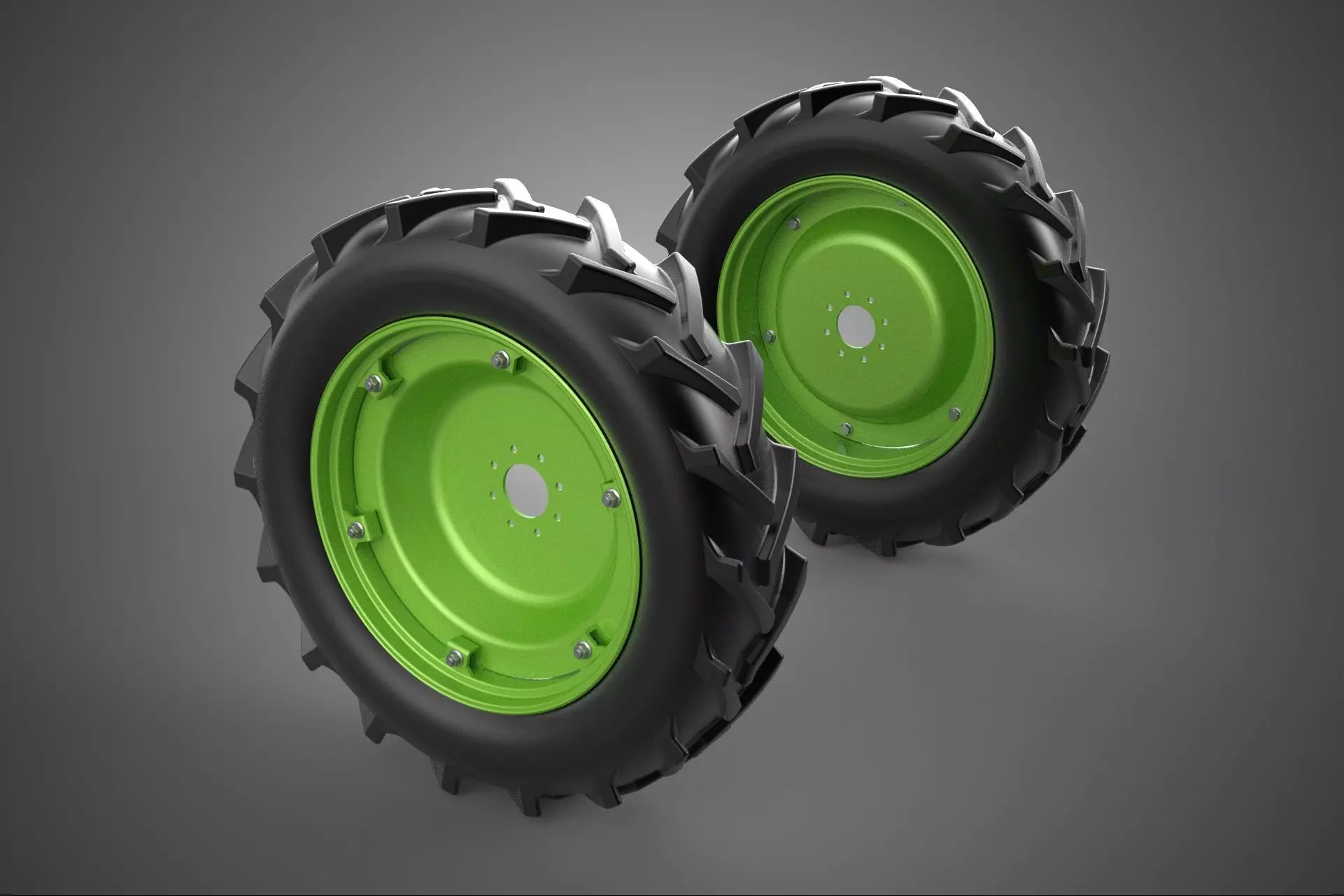
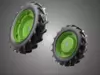
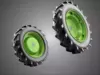
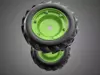
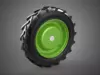
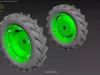
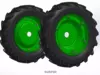
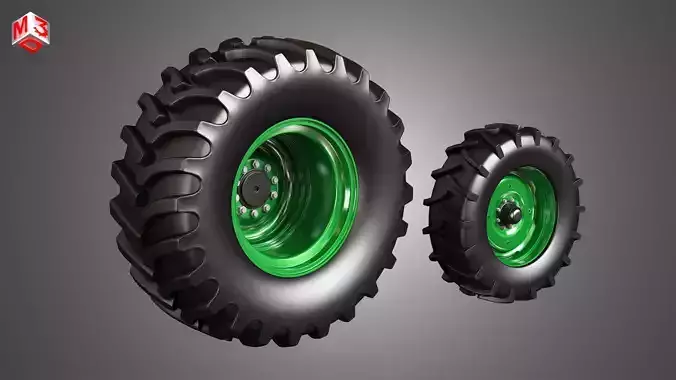
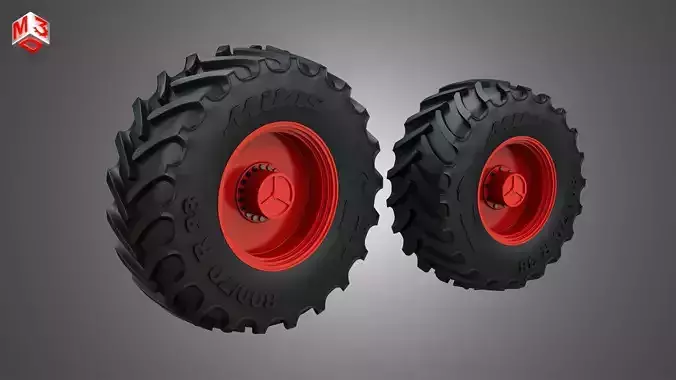
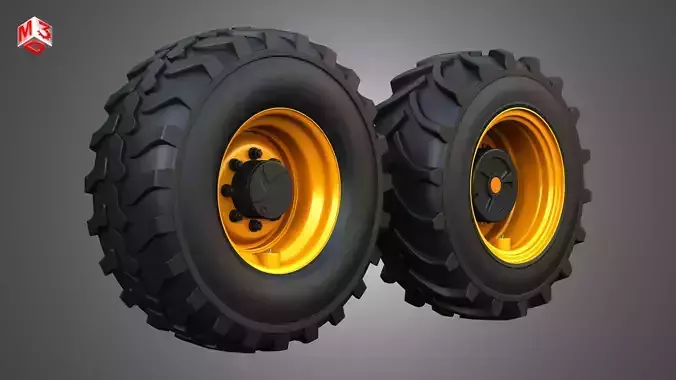
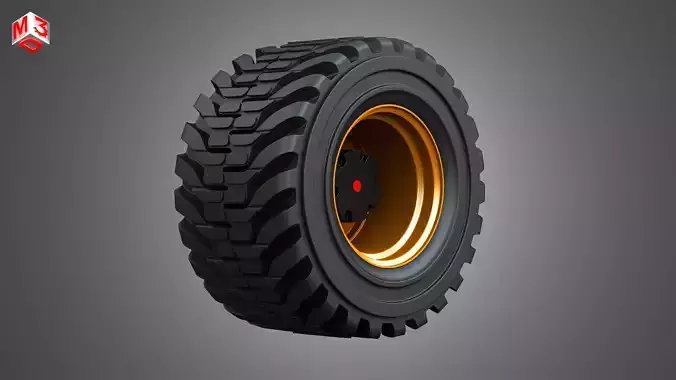
The large tire assembly utilized on agricultural and heavy earthmoving equipment is a highly specialized component engineered to facilitate maximum traction, load distribution, and operational stability across varied, often low-cohesion terrains such as tilled soil, mud, and gravel. This component consists of a robust pneumatic tire casing, defined by its massive scale and deeply sculpted exterior, mounted upon a corresponding heavy-duty metallic wheel rim.
Nomenclature and Component Structure
The term large tractor tire refers specifically to tires with substantial sectional width and diameter, often categorized as R-1 (standard lug), R-2 (deep lug for wet rice paddy applications), or R-4 (industrial/utility lug). Unlike highway tires, these assemblies are designed for low-speed, high-torque applications.
- Tire (Tyre): The flexible rubber and fabric casing. It dictates the interaction between the vehicle and the ground.
- Tread: The patterned rubber surface of the tire that contacts the ground.
- Lugs (Cleats or Grip Bars): The defining feature of the tread. These are deep, self-cleaning projections molded into the rubber, typically arranged in an aggressive, directional, chevron (V-shaped) pattern. Lugs convert engine torque into linear thrust by physically penetrating the soil surface.
- Rim (Wheel): The structural metal component, usually steel, which secures the tire’s bead and transfers the vehicle’s weight and braking forces to the tire structure. Rims must be highly robust to withstand the immense static and dynamic loads and potential impacts encountered in off-road environments.
- Rubber Compound: Specialized elastomers are utilized, formulated for exceptional resistance to abrasion, ozone degradation, UV exposure, and tearing, while maintaining flexibility under cold conditions.
### Design and Functional Requirements
The specific geometry of the large tractor tire tread is optimized for two critical performance parameters: traction and flotation.
#### Traction and Grip (The Role of the Lug)
Traction is achieved through the aggressive geometry of the lugs. The deep recessions between the lugs allow them to penetrate and shear against the soil stratum, generating the requisite resistance (drawbar pull) to propel the heavy vehicle and its implements. The directional, angled V-pattern ensures that shear forces are efficiently transmitted laterally and longitudinally, maximizing forward thrust.
A crucial design feature is the self-cleaning characteristic. As the wheel rotates, the deformation of the lugs and the angle of entry and exit from the soil facilitate the automatic ejection of mud and debris. This prevents the packing of material between the lugs, which would otherwise transform the tread surface into a smooth, traction-deficient circle. The lug height (depth) directly correlates with the tire's traction capability in soft media.
#### Flotation and Soil Compaction Management
The large overall dimensions of the tire, particularly the significant width and volume of air, are engineered to maximize the footprint—the area of contact with the ground. This design is critical for flotation, distributing the vehicle’s substantial mass over a larger area to minimize the ground contact pressure.
Minimizing ground pressure is essential in modern agriculture to mitigate soil compaction, a process that restricts water penetration, aeration, and root development, thereby reducing crop yield. Large tires operated at relatively low inflation pressures (often below 20 psi or 1.4 bar, depending on the load and speed) achieve superior flotation compared to conventional road tires.
### Construction and Load Management
Tractor tires are constructed using either Bias-Ply or Radial technologies. Radial tires, which feature belts running perpendicular to the direction of travel, are increasingly common due to their enhanced load capacity, reduced rolling resistance, superior heat dissipation, and the ability to maintain a more consistent contact patch under deflection. These tires often utilize reinforced sidewalls and high ply ratings or load indices to manage the heavy axle loads inherent in operating large implements. Ballasting—the addition of liquid weight (often calcium chloride solution or water) or solid weights to the rim—is frequently employed to enhance traction by increasing downward force, directly influencing the performance requirements of the tire structure.
KEYWORDS: Tractor, Agriculture, Off-Road, Traction, Lug, Tread, Flotation, Pneumatic, Radial, Bias-Ply, Ground Pressure, Self-Cleaning, Earthmoving, Heavy Duty, Vehicle Dynamics, Rubber Compound, Tire Rim, Cleat, Torque Transfer, Soil Compaction, Implement, Farm Equipment, Load Rating, Chevron Pattern, Sidewall, Bead, Ply Rating, Industrial Tire, Grip Coefficient, Axle Load, Tire Assembly.