Please, feel free to offer your price. Use the special button at the top right.
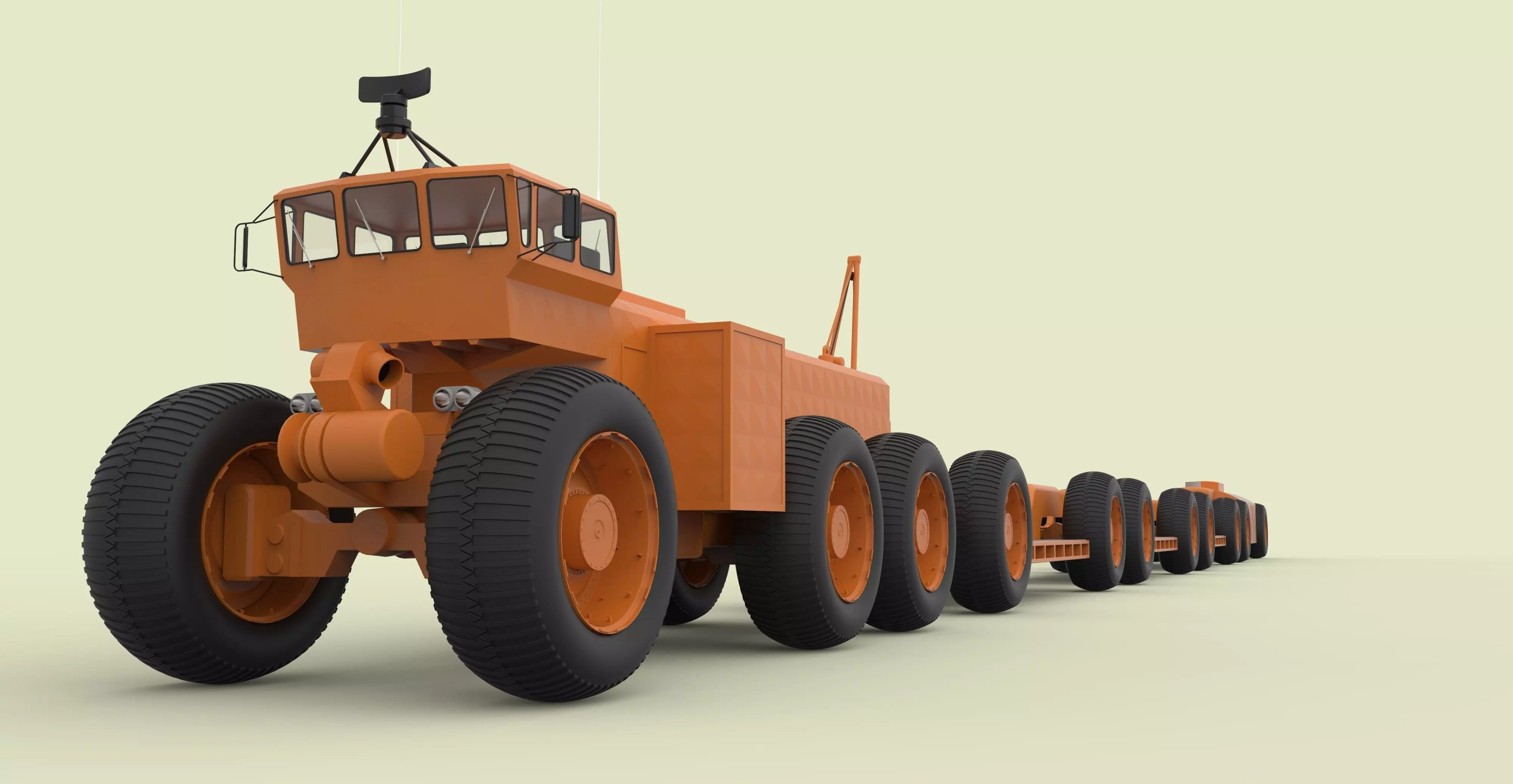
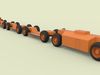
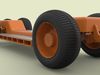
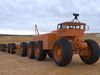
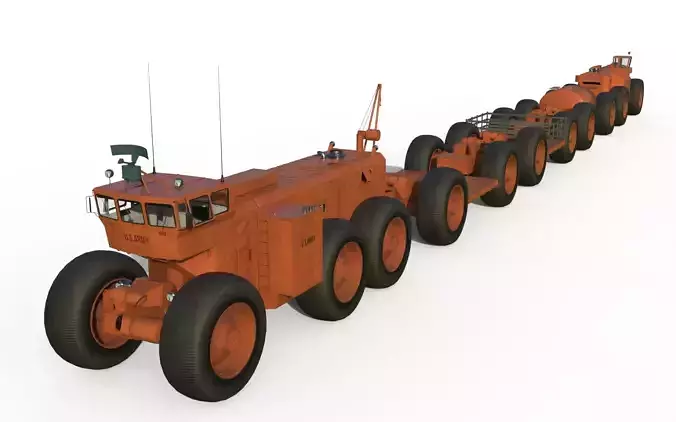
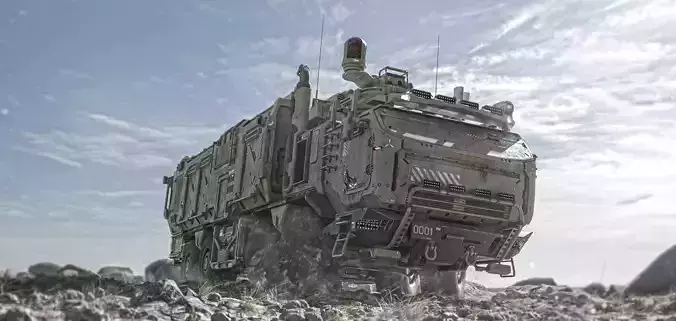
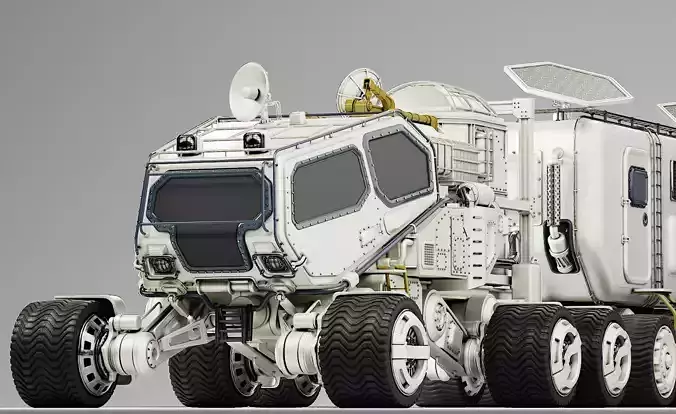
In the 1950s the LeTourneau company developed several overland trains, essentially oversized semi-trailer trucks that could travel over almost any terrain. Their intention was to be able to handle logistics needs without being dependent on local road or rail systems, allowing them to operate in back-country areas. The US Army had three experimental units built, the largest reaching almost 600 feet (183 m) long, which holds the record for the longest offroad vehicle. Road trains are in use in certain roles today, but the US Army examples and a few derivatives appear to be the only offroad examples built.LCC-1 was so successful that in 1958 the Army contracted for a larger version, the TC-497 Overland Train Mark II. Generally similar to the LCC-1 in concept, the Mark II included a number of features to allow the train to grow to any length.The Mark II had a much larger six-wheeled cab that was over 30 feet (9.1 m) tall and was no longer articulated due to the ability for all the wheels to be steered. The turbine engine was much smaller than the diesel it replaced, allowing the interior to support a crew of six with sleeping quarters, toilets and a galley. It was even equipped with a radar. An additional two power cars and ten cargo cars were built for testing. In total the train now stretched over 570 feet (170 m). On flat ground it could carry 150 tons of cargo at about 20 mph. Range at full load was normally 350 to 400 miles (560 to 640 km), but additional fuel trailers could be added to extend it.[8]Final specifications were completed in 1960, and construction took most of 1961. After preliminary testing, it was handed to the Army in February 1962, and shipped to the Yuma Proving Ground in Yuma, Arizona. In testing under the Project OTTER, for Overland Train Terrain Evaluation Research, the vehicle performed well. But in the end the Army gave up on the idea as newer heavy-lift helicopters like the S-64 Skycrane made the train concept outdated.The vehicle remained unused for a time, and was then put up for sale for $1.4 million in 1969. All that remains of the Mark II is the control cab which remains at Yuma, the rest was sold off to a local scrap dealer. The Mark II retains the record for the longest offroad vehicle in the world.
Control car model dimensions:
- length - 17469 mm
- width - 5850 mm
- height - 7568 mm
Enclosed payload car model dimensions:
- length - 16500 mm
- width - 5850 mm
- height - 3500 mm
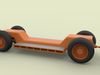
Repair module model dimensions:
- length - 16500 mm
- width - 5850 mm
- height - 4700 mm
Overall model dimensions:
- length - 89115 mm
- width - 5850 mm
- height - 7568 mm
Useful links:http://asmrb.pbworks.com/w/page/53070717/Morrow%20Project%20Overland%20Trainhttps://en.wikipedia.org/wiki/Overland_trainhttp://shusharmor.livejournal.com/782432.html?thread=9462112