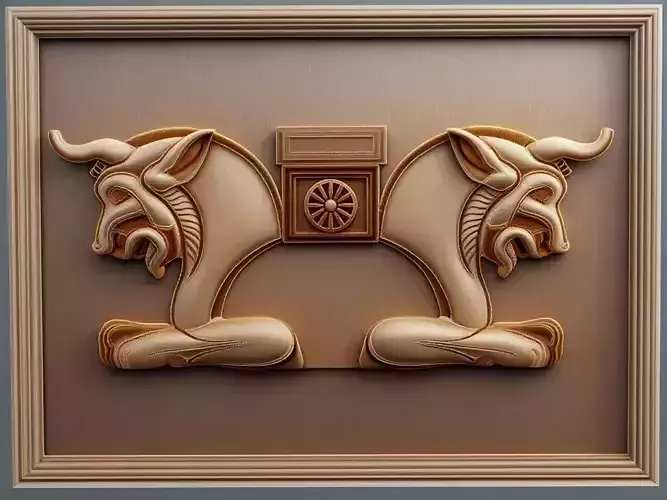
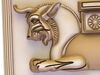
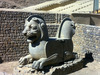
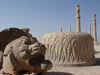
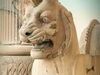
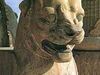
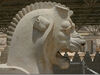
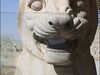
The Persian column, also known as the Persepolitan column, is a distinctive type of column developed during the Achaemenid architectural period in ancient Iran, likely beginning slightly before 500 BCE. These columns are primarily known from the remains of Persepolis, where the grand main columns feature a base, a fluted shaft, and a capital adorned with two back-to-back animals, most often bulls.
The Achaemenid palaces featured vast columned halls called Apadanas, supported internally by multiple rows of columns. The Throne Hall, or Hall of a Hundred Columns, in Persepolis, measuring 70 by 70 meters, was built by the Achaemenid king Artaxerxes I. There were even larger columned halls. These often included a royal throne for the king and were used for large ceremonial gatherings. Grand columned halls such as those at Persepolis and Susa could accommodate up to ten thousand people at once.
The Achaemenids had limited experience with stone architecture but succeeded in assembling artists and craftsmen from across their vast empire to create a hybrid-imperial style. This style was influenced by Mesopotamian, Egyptian, and Lydian (Anatolian) elements, as well as the Elamite civilization native to Iran. While it likely originated in the Apadana palace at Susa, the most extensive and best-preserved examples can be found at Persepolis, where several columns still stand.
Construction of royal buildings in this style came to a sudden halt with the invasion of Alexander the Great in 330 BCE and the burning of Persepolis. The bull capital was widely used in many palaces of the Achaemenid Empire due to the widespread belief among the peoples of its vast subject territories that the bull symbolized fertility and abundance.
Columns approximately 20 meters tall were used in the Apadana Palace, about 17 meters in the Gate of All Nations, around 12 meters in the Hall of a Hundred Columns, and 7 meters in the Treasury, the Hadish Palace, and the Queen’s Palace.
The lion capital was used in the Apadana Palace—the most important palace of Persepolis (and arguably of the entire empire)—due to the symbolic power and strength of the lion.
It stood at an approximate height of 20 meters.Of the 72 columns in the Apadana Palace at Persepolis, only 12 columns in the eastern portico were topped with lion capitals, while the rest bore bull capitals. This was likely due to the symbolic association of the lion with the sun and the deity Mithra (Mehr), as the sun rises in the east and the sacred mountain of Mithra is located to the east of Persepolis.