High-quality 3D assets at affordable prices — trusted by designers, engineers, and creators worldwide. Made with care to be versatile, accessible, and ready for your pipeline.
Included File Formats
This model is provided in 14 widely supported formats, ensuring maximum compatibility:
• - FBX (.fbx) – Standard format for most 3D software and pipelines
• - OBJ + MTL (.obj, .mtl) – Wavefront format, widely used and compatible
• - STL (.stl) – Exported mesh geometry; may be suitable for 3D printing with adjustments
• - STEP (.step, .stp) – CAD format using NURBS surfaces
• - IGES (.iges, .igs) – Common format for CAD/CAM and engineering workflows (NURBS)
• - SAT (.sat) – ACIS solid model format (NURBS)
• - DAE (.dae) – Collada format for 3D applications and animations
• - glTF (.glb) – Modern, lightweight format for web, AR, and real-time engines
• - 3DS (.3ds) – Legacy format with broad software support
• - 3ds Max (.max) – Provided for 3ds Max users
• - Blender (.blend) – Provided for Blender users
• - SketchUp (.skp) – Compatible with all SketchUp versions
• - AutoCAD (.dwg) – Suitable for technical and architectural workflows
• - Rhino (.3dm) – Provided for Rhino users
Model Info
• - All files are checked and tested for integrity and correct content
• - Geometry uses real-world scale; model resolution varies depending on the product (high or low poly)
• • - Scene setup and mesh structure may vary depending on model complexity
• - Rendered using Luxion KeyShot
• - Affordable price with professional detailing
Buy with confidence. Quality and compatibility guaranteed.
If you have any questions about the file formats, feel free to send us a message — we're happy to assist you!
Sincerely,
SURF3D
Trusted source for professional and affordable 3D models.
More Information About 3D Model :
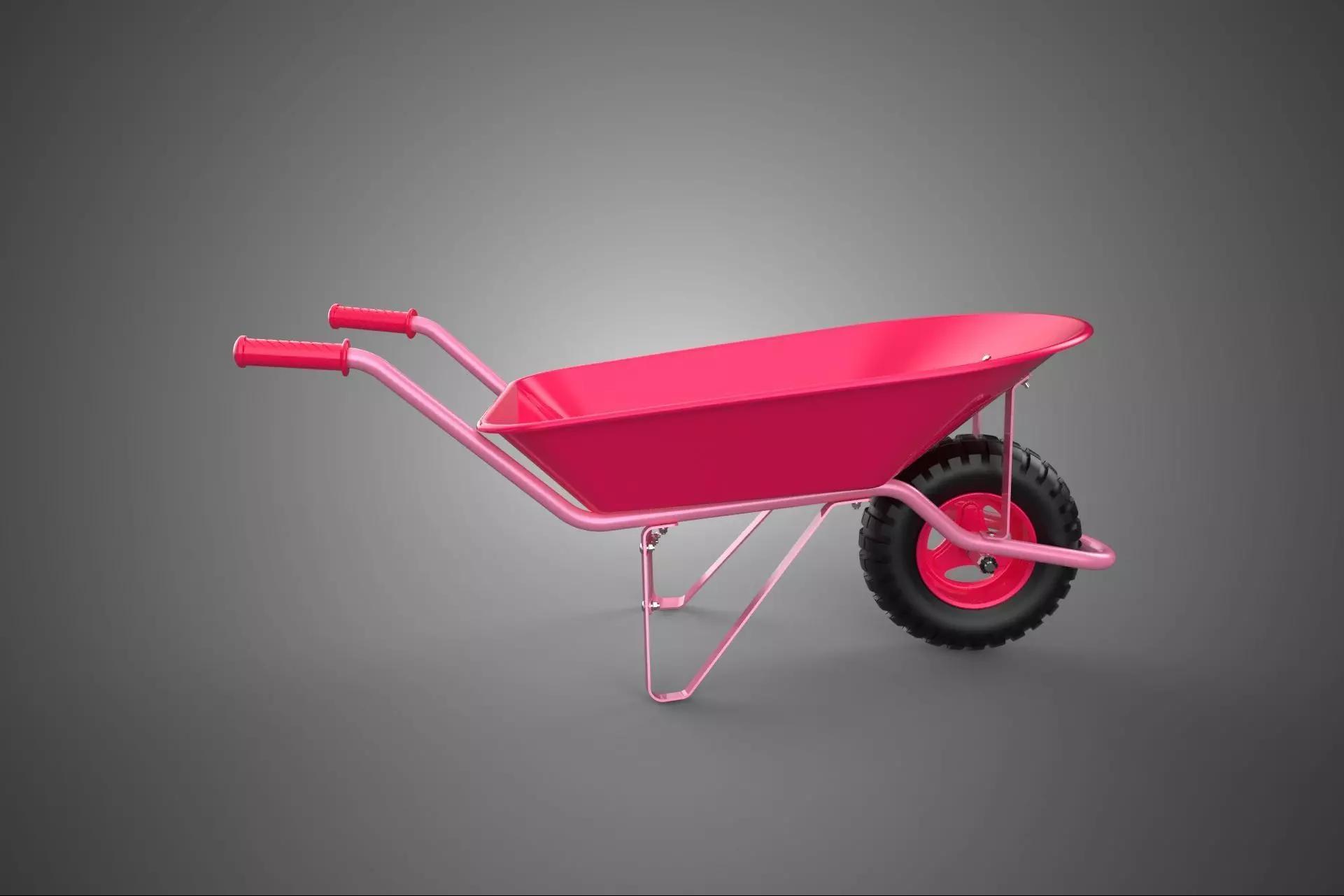
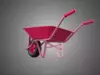
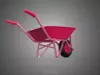
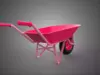
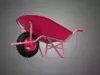
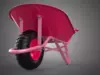
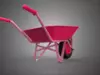
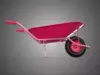
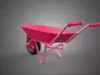
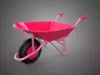
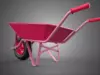
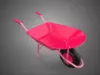
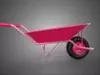
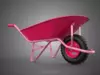
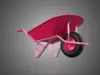
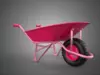
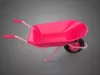
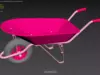
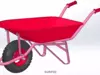
The Juvenile Recreational Transport Implement (Pink Variant)
This description details a category of juvenile recreational implements designed for early childhood use, specifically those styled as miniaturized replicas of material transport and horticultural equipment, generally categorized under the designation garden toys. The specific nomenclature, encompassing wagon, wheelbarrow, and cart, reflects the varied design configurations available, all sharing the distinguishing aesthetic characteristic of a pink coloration.
Nomenclature, Typology, and Design
The object serves as a functional, scaled-down version of professional utility equipment, intended for children often referenced in marketing as little kids or early elementary users.
Wagon Configuration: Characterized by a deep, typically rectangular bed supported by four wheels (two fixed, two pivoting, or four fixed axles). Transport is facilitated by a long handle attached to the front axle, allowing the user to pull the implement across a surface. Wagons prioritize stability and capacity over maneuverability in tight spaces.
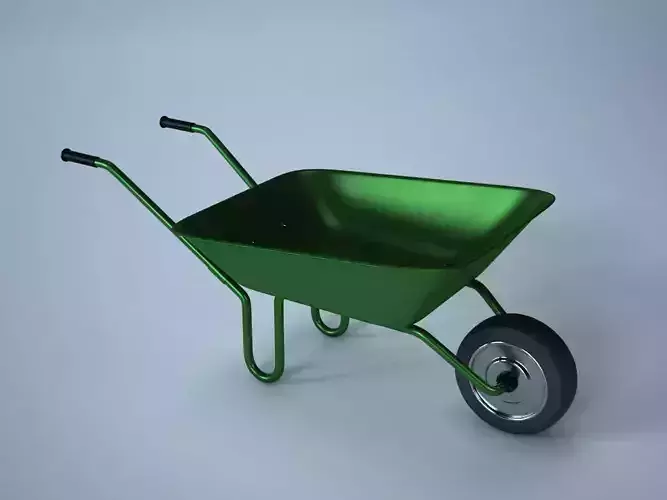
Wheelbarrow Configuration: Mimicking traditional construction or gardening equipment, this model typically features a single large frontal wheel (or sometimes two smaller frontal wheels) and two rear stabilizing supports (legs). Operation requires the child to lift the rear handles, balancing the load over the axle while pushing forward. This configuration actively promotes the development of gross motor skills, balance, and spatial awareness.
Cart/Utility Configuration: Often a hybrid design, the cart may feature deeper sides than a standard wagon and possess a shorter, fixed handle suitable for pushing or pulling in limited environments.
The use of the color pink is a defining aesthetic choice, positioning the product within established market segments that utilize gender-specific color coding in toy manufacturing. Functionally, the coloration does not alter performance, but it serves as a key differentiator from utilitarian yellow, red, or green models.
Materials and Construction Standards
These toys are overwhelmingly constructed from durable, non-toxic materials compliant with international safety standards (e.g., ASTM F963 in the United States or EN 71 in Europe). The primary material is frequently high-density polyethylene (HDPE) plastic, selected for its resistance to impact, ultraviolet (UV) degradation, moisture, and ease of cleaning. Higher-end or more robust models may incorporate powder-coated lightweight metal alloys (such as steel tubing for the frame or handles) to enhance durability, especially in the axle and wheel assemblies.
Construction is characterized by safety features requisite for juvenile use: rounded edges, limited inclusion of small or detachable parts, and handles designed for small grip dimensions. Wheel assemblies typically utilize solid plastic or rubberized plastic tires, avoiding pneumatic components for maintenance simplicity and puncture resistance. The load capacity is intentionally limited to weights manageable by the target age demographic, generally accommodating sand, water, small garden tools, or lightweight debris.
Pedagogical and Recreational Function
The Pink Wagon Toy Wheelbarrow Cart falls under the category of role-playing and imitation toys. Its primary function is to facilitate imaginative play, allowing children to mimic the labor, tasks, and activities associated with gardening, landscaping, or construction work undertaken by adults.
Beyond imaginative engagement, the use of these transport implements contributes significantly to physical and cognitive development:
- Gross Motor Skills: Operating the wagon or wheelbarrow—particularly navigating terrain, turning corners, and managing unbalanced loads—enhances coordination, strength, and locomotion.
- Early Utility Concepts: Children learn fundamental principles of leverage, weight distribution, hauling, and organization by physically moving materials from one location to another.
- Outdoor Engagement: As garden toys, they encourage active outdoor play, connecting children with natural environments and practical maintenance tasks.
The item thus serves as both a recreational tool and a subtle apparatus for early practical education, simulating real-world labor in a safe, controlled manner suitable for young children.
KEYWORDS: Toy, Wheelbarrow, Wagon, Cart, Juvenile, Pink, Children, Garden, Play, Role-playing, HDPE, Miniaturization, Outdoor, Transport, Hauling, Developmental, Motor Skills, Equipment, Recreational, Simulation, Utility, Non-toxic, Plastic, Gardening, Early childhood, Imaginative play, Infant, Garden tools, Kids, Aesthetic.