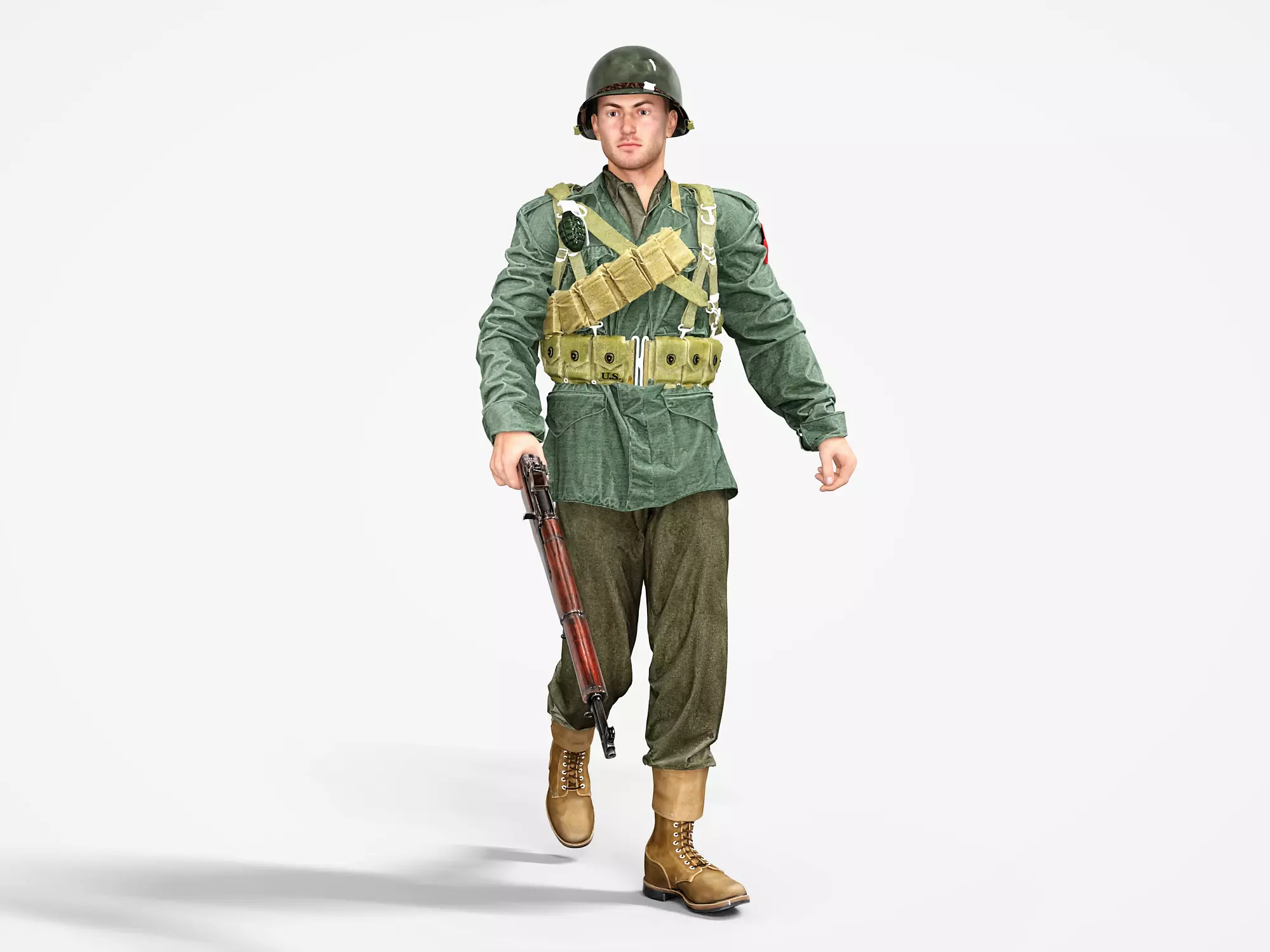
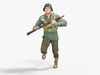
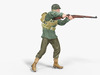
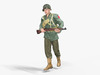
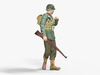
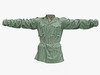
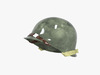
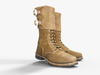
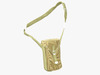
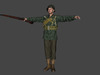
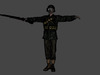
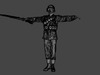
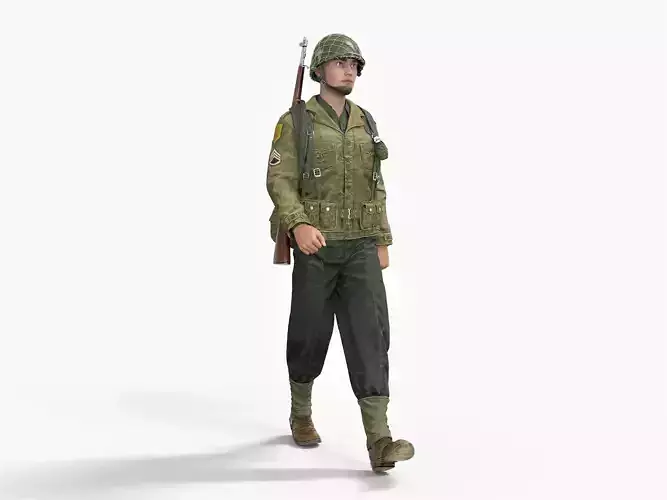
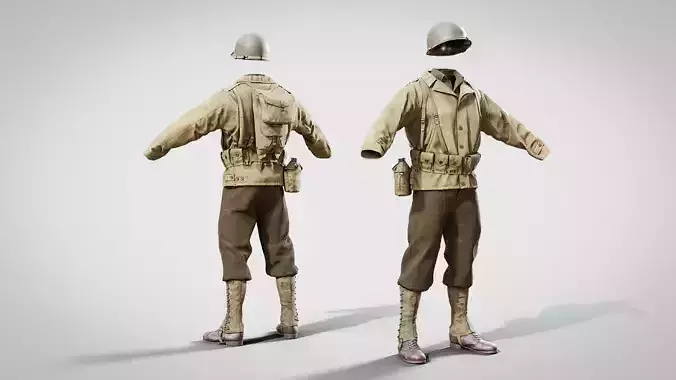
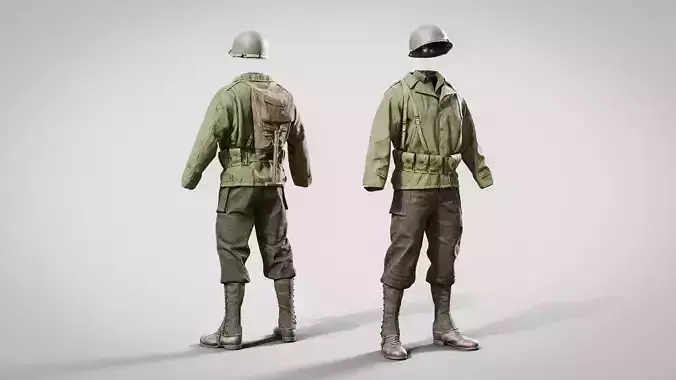
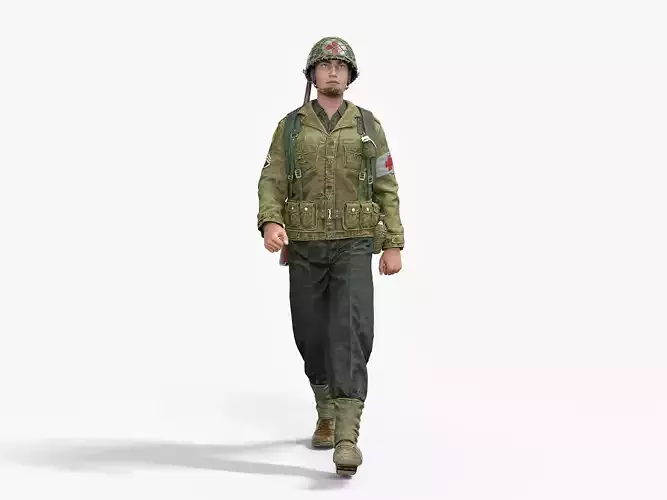
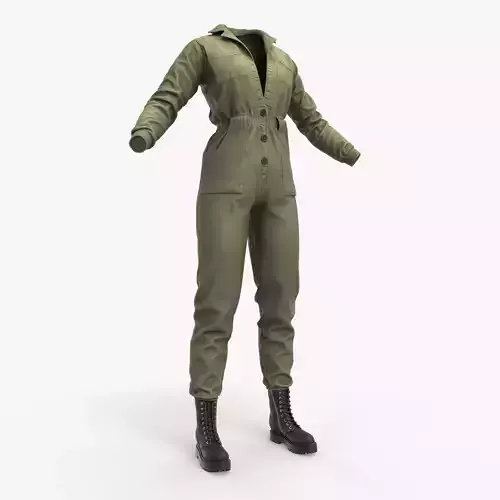
World War II US Uniform Soldier Props
Photorealistic
Low-poly
PBR/Gameready
4K High Quality Texture Maps
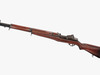
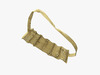
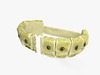
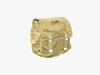
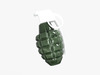
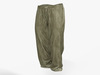
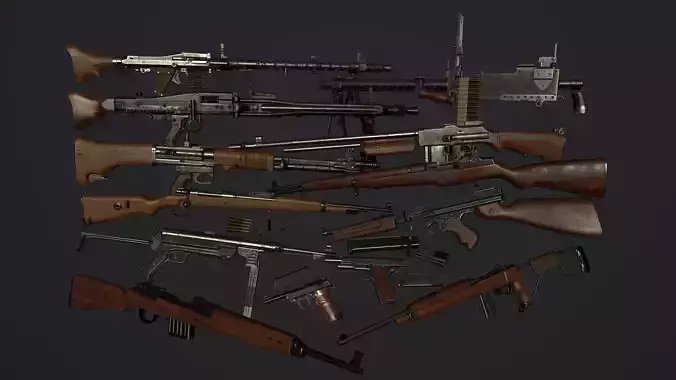
POLYGONS AND VERTCIESUSBackpack 11887 vertices, 11417 polygons USBracer 288 vertices, 256 polygons USHarness 21347 vertices, 20892 polygons, USHelmetA21749 vertices, 21916 polygonsUSJacket13342 vertices, 12015 polygons, USLeggings5376 vertices, 5253 polygons, USShirt 8708 vertices, 8503 polygons, USShoes 7306 vertices, 7184 polygons, USTrousers 5146 vertices, 5015 polygons, USGrenade 2742 vertices, 2232 polygons USRifle 9761 vertices, 9746 polygons USWaterBottle 1767 vertices, 1720 polygons
The United States Army in World War II used a variety of standard and non-standard dress and battle uniforms, which often changed depending upon the theater of war, climatic environment, and supply exigencies.
U.S. Army basic service uniforms consisted of a winter service uniform of olive drab wool worn in temperate weather, and a summer service uniform of khaki cotton fabric worn in tropical weather. In addition to the service uniforms worn for ordinary duty and dress purposes there were a variety of fatigue and combat uniforms. Summer and winter service uniforms were worn during their respective seasons in the continental United States. During the war, the European Theater of Operations (Northwestern Europe) was considered a year-round temperate zone and the Pacific Theater of Operations a year-round tropical uniform zone. In the Mediterranean Theater of Operations, U.S. soldiers wore both seasonal uniforms
The military history of the United States during World War II covers the nation's role as one of the major Allies in their victory over the Axis Powers. The United States is generally considered to have entered the conflict with the 7 December 1941 surprise attack on Pearl Harbor by the Empire of Japan and exited it with the 2 September 1945 surrender of Japan. During the first two years of World War II, the US maintained formal neutrality, which was officially announced in the Quarantine Speech delivered by US President Franklin D. Roosevelt in 1937. While officially neutral, the US supplied Britain, the Soviet Union, and China with war materiel through the Lend-Lease Act signed into law on 11 March 1941, and deployed the US military to replace the British forces stationed in Iceland. Following the 4 September 1941 Greer incident involving a German submarine, Roosevelt publicly confirmed a shoot on sight order on 11 September, effectively declaring naval war on Germany and Italy in the Battle of the Atlantic.[1] In the Pacific Theater, there was unofficial early US combat activity such as the Flying Tigers.