DESCRIPTION

The earliest rocket launchers documented in imperial China consisted of arrows modified by the attachment of a rocket motor to the shaft a few inches behind the arrowhead. The rocket is propelled by the burning of the black powder in the motor. (These rockets should not be confused with rocket arrows which are conventional arrows carrying small tubes of black powder as an incendiary that ignites only after the arrow reaches its target. A fuse is lit before release of the arrow.) The rocket launchers were constructed of wood, basketry, and bamboo tubes.[1] The launchers divided the rockets with frames meant to keep them separated, and the launchers were capable of firing multiple rockets at once. Textual evidence and illustrations of various early rocket launchers are found in the 1510 edition of the Wujing Zongyao translated by Needham and others at Princeton University. (The original Wujing Zongyao was compiled between 1040 and 1044 and described the discovery of black powder but preceded the invention of the rocket. Partial copies of the original survived and Wujing Zongyao was republished in 1231 during the Southern Song Dynasty, including military developments since the original 1044 publication. The British scientist, sinologist, historian Joseph Needham asserts that the 1510 edition is the most reliable in its faithfulness to the original and 1231 versions, since it was printed from blocks that were re-carved directly from tracings of the edition made in 1231 AD.)[6] The 1510 Wujing Zongyao describes the long serpent rocket launcher, a rocket launcher constructed of wood and carried with a wheelbarrow, and the hundred tiger rocket launcher, a rocket launcher made of wood and capable of firing 320 rocket arrows.[2] The text also describes a portable rocket carrier consisting of a sling and a bamboo tube.[3]

Rockets were introduced to the West during the Napoleonic Wars; the Congreve rocket was a British weapon devised by Sir William Congreve in 1804 after experiencing Indian rockets at the Siege of Seringapatam (1799). Congreve rockets were launched from an iron trough about 18 inches (45 centimetres) in length, called a chamber.[4] These chambers could be fixed to the ground for horizontal launching, secured to a folding copper tripod for high angle fire or mounted on frames on carts or the decks of warships.[5]

During the American Civil War, both the Union and the Confederate Military experimented upon and produced rocket launchers.[6] Confederate forces used Congreve rockets in limited uses due to its inaccuracies, while the Union forces used Hale patent rocket launcher which fired seven to ten inch rockets with fin stabilizers at a range of 2000 yards.

REVIEWS & COMMENTS

See what other buyers think about this model - real feedback on quality,
accuracy, and usability.
There are no reviews or comments yet. Please be the first one to write it.
BEST PRICE GUARANTEED
Found this model cheaper on another marketplace? Let our support team know - we’ll match it.

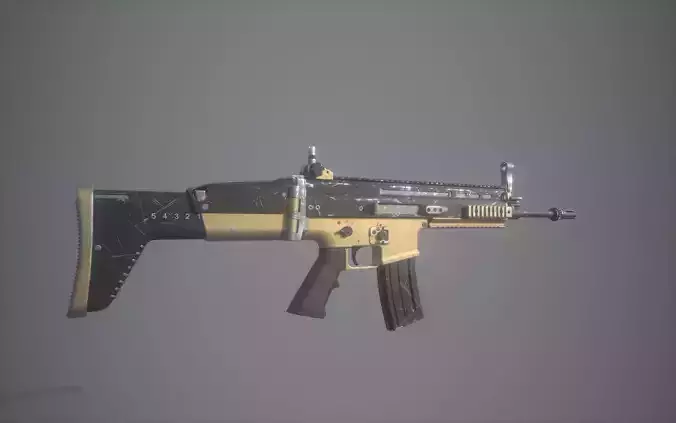
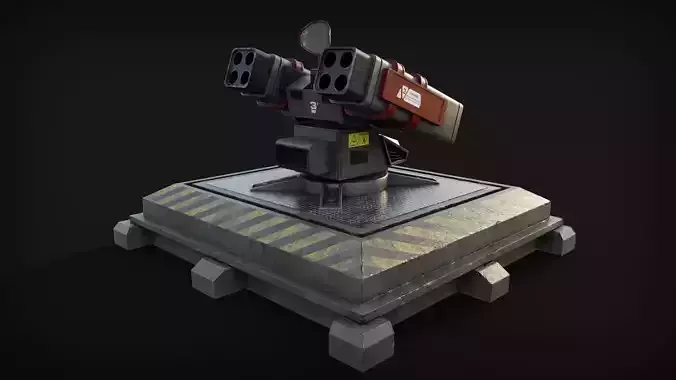
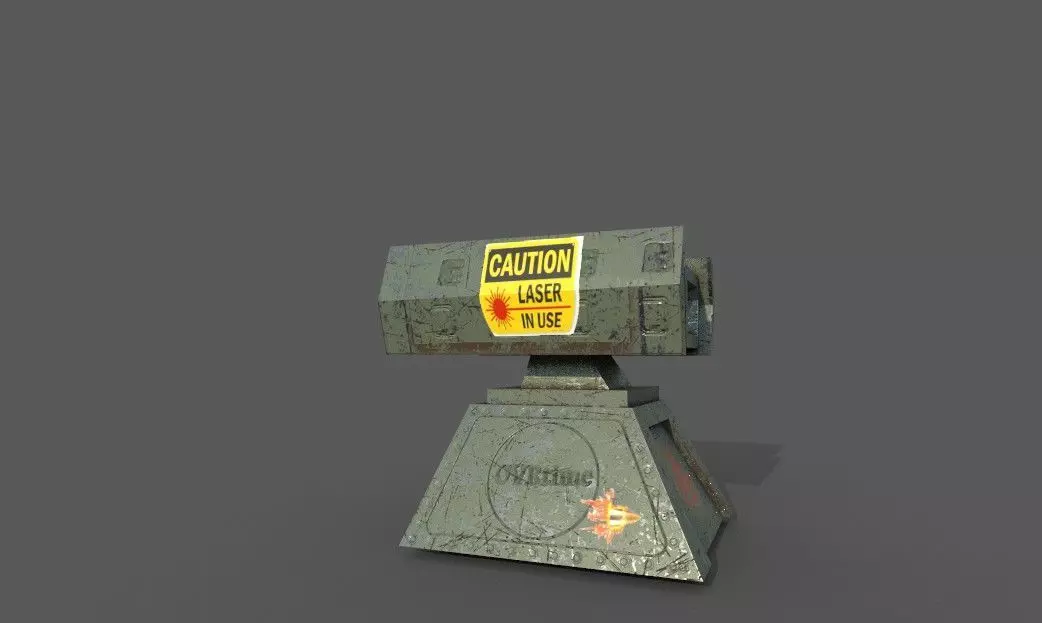
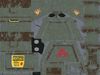
low poly rocket launcher Low-poly 3D model

Royalty Free License
Hire
Like this model to show appreciation to the designer.
See how many times this model was viewed.
Share this model to support the designer and boost their visibility.
Native file format
MAX
Size: 340 KB
Exchange formats
OBJ
OBJ | 2 files<br />File Size: 38.7 KB
FBX
Autodesk FBX<br />File Size: 70.9 KB
3DS
3D Studio<br />File Size: 11.4 KB
Verified by CGTrader
Verified models are of higher quality as they have
passed CGT Standard technical and visual checks,
making them more professional-grade 3D assets.
Learn more.
FBX
This FBX file has successfully passed the CGT Standard technical and visual checks. The verification results are detailed in the section below.
File & scene
Binary FBX
Binary FBX file is more compact and faster to load and process.
Learn more
No unsupported objects
Unsupported objects:
- Lights
- Cameras
Learn more
Geometry
No N-gons
N-gons are polygons with five or more sides which might cause issues in certain processes like rendering or animation. Learn more
No faceted geometry
Faceted geometry uses flat surfaces without smoothing, which can look unrealistic on curves.
Learn more
Manifold geometry
Manifold geometry ensures all surfaces are properly connected, avoiding issues like edges shared by more than two faces.
Learn more
Textures & material
PBR textures
PBR textures simulate how light interacts with materials, making the model look realistic under different lighting.
Required PBR textures:
- Base Color
- Roughness
- Metalness
- Normal
Learn more
No embed textures
Embedded textures are stored inside the model file, increasing its size and sometimes causing compatibility issues.
Learn more
Square textures
Texture aspect ratio is the width-to-height ratio of a texture. Expected texture aspect ratio: 1:1
Learn more
Power of 2 texture sizes
Textures with dimensions in power of two (e.g. 512x512px, 1024x1024px) are used to optimize performance and memory usage.
Learn more
Assigned materials
Materials are applied to the 3D model to allow visualize a model's surface properties and appearance.
Learn more
UVs & naming
No UV overlaps
UVs overlap when multiple points on the 3D model's surface are mapped to the same point on the UV island causing texture stretching.
Learn more
UV unwrapped model
A UV unwrapped model means its 3D surface is flattened into 2D space, allowing textures to be applied accurately.
Learn more
Allowed characters
Allowed ASCII characters: a-zA-Z0-9-_
Learn more
Provided by designer
Information and details shared directly by the model's designer.
3D Features
The model includes animations (movement or actions) that can be played in supported software or engines.
The model has a skeleton or bone structure, making it ready for posing or animation.
PBR
Uses Physically Based Rendering materials, which give the model realistic lighting and surface properties.
Textures
The model includes image files (textures) that add color, patterns, or detail to its surfaces.
Materials
The model has material settings that define how surfaces look (color, shine, transparency, etc.).
UV Mapping
The model's surfaces are mapped to a 2D image, allowing textures to display correctly.
Plugins Used
Some external plugins were used to create the model. These may be required for full functionality.
3D printing
Indicates whether the designer marked this model as suitable for 3D printing.
Model is not 3D printable
The designer indicates this model is intended for digital use only (rendering, animation, or AR/VR) and not for 3D printing.
Geometry
Polygon mesh
A model built from polygons (triangles or quads) connected in a mesh.
Unwrapped UVs
Publish date
Model ID
Chat