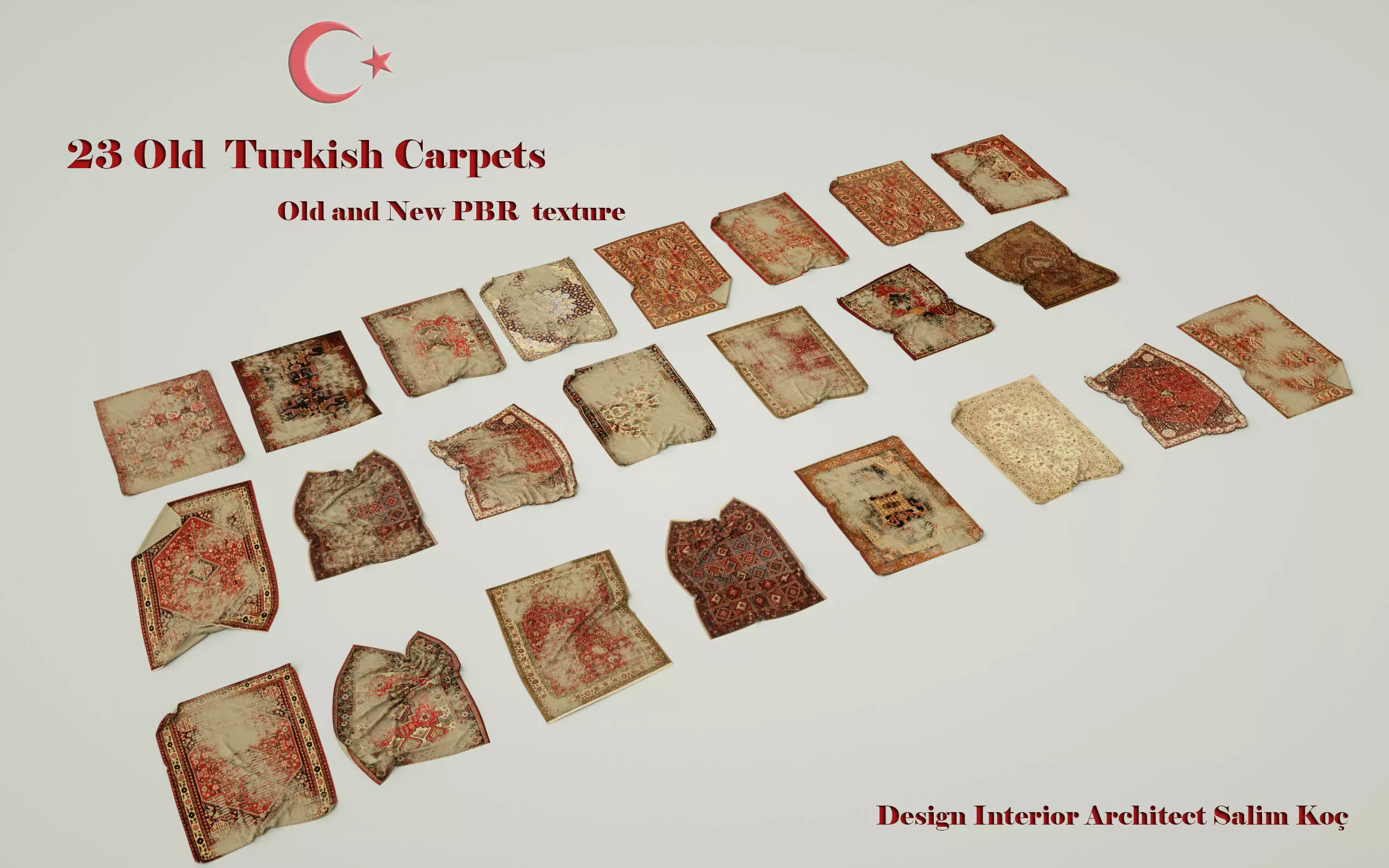
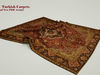
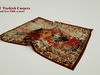
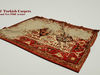
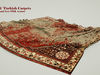
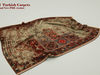
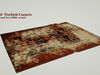
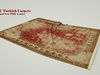
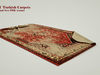
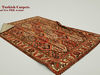
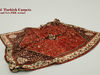
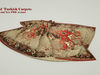
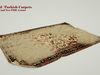
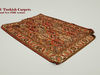
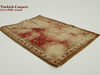
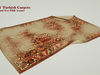
Old and New PBR texture..............................................
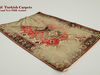
Turkish carpet history.............................................Anatolian rug is a term of convenience, commonly used today to denote rugs and carpets woven in Anatolia and its adjacent regions. Geographically, its area of production can be compared to the territories which were historically dominated by the Ottoman Empire. It denotes a knotted, pile-woven floor or wall covering which is produced for home use, local sale, and export. Together with the flat-woven kilim, Anatolian rugs represent an essential part of the regional culture, which is officially understood as the Culture of Turkey today,[1] and derives from the ethnic, religious and cultural pluralism of one of the most ancient centres of human civilisation.
Rug weaving represents a traditional craft dating back to prehistoric times. Rugs were woven much earlier than even the oldest surviving rugs like the Pazyryk rug would suggest. During its long history, the art and craft of the woven carpet has absorbed and integrated different cultural traditions. Traces of Byzantine design can be observed in Anatolian rugs; Turkic peoples migrating from Central Asia, as well as Armenian people, Caucasian and Kurdic tribes either living in, or migrating to Anatolia at different times in history contributed their traditional motifs and ornaments. The arrival of Islam and the development of the Islamic art has profoundly influenced the Anatolian rug design. Its ornaments and patterns thus reflect the political history and social diversity of the area. However, scientific research was unable, as yet, to attribute any particular design feature to any specific ethnic or regional tradition, or even to differentiate between nomadic and village design patterns.[2]
Within the group of oriental carpets, the Anatolian rug is distinguished by particular characteristics of its dyes and colours, motifs, textures and techniques. Examples range in size from small pillows (yastik) to large, room-sized carpets. The earliest surviving examples of Anatolian rugs known today date from the thirteenth century. Distinct types of rugs have been woven ever since in court manufactures and provincial workshops, village homes, tribal settlements, or in the nomad's tent. Rugs were simultaneously produced at all different levels of society, mainly using sheep wool, cotton and natural dyes. Anatolian rugs are most often tied with symmetrical knots, which were so widely used in the area that Western rug dealers in the early 20th century adopted the term Turkish or Ghiordes knot for the technique. From the 1870s onwards, the Ottoman court manufactures also produced silk-piled rugs, sometimes with inwoven threads of gold or silver, but the traditional material of the majority of Anatolian rugs was hand-spun, naturally-dyed wool.
In Europe, Anatolian rugs were frequently depicted in Renaissance paintings, often in a context of dignity, prestige and luxury. Political contacts and trade intensified between Western Europe and the Islamic world after the 13th century AD. When direct trade was established with the Ottoman Empire during the 14th century, all kinds of carpets were at first indiscriminately given the trade name of Turkish carpets, regardless of their actual place of manufacture.[3] Since the late nineteenth century, oriental rugs have been subject to art historic and scientific interest in the Western world.[3][4][5] The richness and cultural diversity of rug weaving were gradually better understood. More recently, also flat woven carpets (Kilim, Soumak, Cicim, Zili) have attracted the interest of collectors and scientists.
The art and craft of the Anatolian rug underwent serious changes by the introduction of synthetic dyes from the last third of the 19th century onwards. The mass production of cheap rugs designed for commercial success had brought the ancient tradition close to extinction. In the late twentieth century, projects like the DOBAG Carpet Initiative have successfully revived the tradition of Anatolian rug weaving using hand-spun, naturally-dyed wool and traditional designs.
..............................Many motifs are used in traditional kilims, handmade flat-woven rugs, each with many variations. In Turkish Anatolia in particular, village women wove themes significant for their lives into their rugs, whether before marriage or during married life. Some motifs represent desires, such as for happiness and children; others, for protection against threats such as wolves (to the flocks) and scorpions, or against the evil eye. These motifs were often combined when woven into patterns on kilims. With the fading of tribal and village cultures in the 20th century, the meanings of kilim patterns have also faded.
In these tribal societies, women wove kilims at different stages of their lives, choosing themes appropriate to their own circumstances. Some of the motifs used are widespread across Anatolia and sometimes across other regions of West Asia, but patterns vary between tribes and villages, and rugs often expressed personal and social meaning
....................................A Turkish kilim is a flat-woven rug from Anatolia. Although the name kilim is sometimes used loosely in the West to include all type of rug such as cicim, palaz, soumak and zili, in fact any type other than pile carpets, the name kilim properly denotes a specific weaving technique. Cicim, palaz, soumak and zili are made using three groups of threads, namely longitudinal warps, crossing wefts, and wrapping coloured threads. The wrapping threads give these rugs additional thickness and strength. Kilim in contrast are woven flat, using only warp and weft threads. Kilim patterns are created by winding the weft threads, which are coloured, backwards and forwards around pairs of warp threads, leaving the resulting weave completely flat. Kilim are therefore called flatweave or flatware rugs.[1]
To create a sharp pattern, weavers usually end each pattern element at a particular thread, winding the coloured weft threads back around the same warps, leaving a narrow gap or slit. These are prized by collectors for the crispness of their decoration. The motifs on kilims woven in this way are constrained to be somewhat angular and geometric.[2]
In tribal societies, kilim were woven by women at different stages of their lives: before marriage, in readiness for married life; while married, for her children; and finally, kilim for her own funeral, to be given to the mosque. Kilims thus had strong personal and social significance in tribal and village cultures, being made for personal and family use. Feelings of happiness or sorrow, hopes and fears were expressed in the weaving motifs. Many of these represent familiar household and personal objects, such as a hairband, a comb, an earring, a trousseau chest, a jug, a hoo.....................................The meanings expressed in kilims derive both from the individual motifs used, and by their pattern and arrangement in the rug as a whole.[3] A few symbols are widespread across Anatolia as well as other regions including Persia and the Caucasus; others are confined to Anatolia.[4]
An especially widely used motif is the Elibelinde, Elibelinde (hands on hips): Anatolian symbol of the mother goddess, mother with child in womb, fertility, and abundance. [5][6] Other motifs express the tribal weavers' desires for protection of their families' flocks from wolves with the wolf's mouth or the wolf's foot motif (Turkish: Kurt Aǧzi, Kurt İzi), or for safety from the sting of the scorpion (Turkish: Akrep).[1] Several protective motifs, such as those for the dragon (Turkish: Ejder), scorpion, and spider (sometimes called the crab or tortoise by carpet specialists) share the same basic diamond shape with a hooked or stepped boundary, often making them very difficult to distinguish.[4][7]
Several motifs hope for the safety of the weaver's family from the evil eye (Turkish: Nazarlık, also used as a motif), which could be divided into four with a cross symbol (Turkish: Haç), or averted with the symbol of a hook (Turkish: Çengel), a human eye (Turkish: Göz), or an amulet (Turkish: Muska; often, a triangular package containing a sacred verse).[1][8] The carpet expert Jon Thompson explains that such an amulet woven into a rug is not a theme: to the weaver, it actually is an amulet, conferring protection by its presence. In his words, to people in the village and tribal cultures that wove kilims, the device in the rug has a materiality, it generates a field of force able to interact with other unseen forces and is not merely an intellectual abstraction.[9]
..........................................thank youThe meanings expressed in kilims derive both from the individual motifs used, and by their pattern and arrangement in the rug as a whole.[3] A few symbols are widespread across Anatolia as well as other regions including Persia and the Caucasus; others are confined to Anatolia.[4]
An especially widely used motif is the Elibelinde, Elibelinde (hands on hips): Anatolian symbol of the mother goddess, mother with child in womb, fertility, and abundance. [5][6] Other motifs express the tribal weavers' desires for protection of their families' flocks from wolves with the wolf's mouth or the wolf's foot motif (Turkish: Kurt Aǧzi, Kurt İzi), or for safety from the sting of the scorpion (Turkish: Akrep).[1] Several protective motifs, such as those for the dragon (Turkish: Ejder), scorpion, and spider (sometimes called the crab or tortoise by carpet specialists) share the same basic diamond shape with a hooked or stepped boundary, often making them very difficult to distinguish.[4][7]